A Bayesian Look at Funnel Graphs to Detect Publication Bias: A New Model and Application

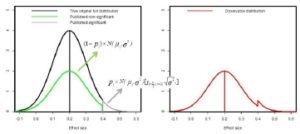
Publication bias – when non-significant results (from smaller studies) become underrepresented in the literature – results in an overestimation of average effect sizes. Several statistical methods have been developed to detect and describe publication bias, and to provide adjusted average effect sizes. However, these approaches generally oversimplify reality. Here, a novel Bayesian model is developed which can explicitly model changes in publication bias with covariates leading to a better understanding of the sampling procedure of publication bias, and more realistic adjusted effect sizes. This new approach is applied to simulated data and to empirical data from a recent meta-analysis of associations between fluctuating asymmetry and health and quality in humans.


View Full Article: HERE

Go through the Journal: http://www.enlivenarchive.org/biostatistics-and-metrics 

Contact Us: biostatistics-metrics@enlivenarchive.org
The Role of Induction Therapy in Heart Transplant. Is it Obligatory?

The first solid organ to be transplanted was a cadaveric kidney in 1933.
The immunosuppression used was total body radiation which was
unsuccessful. In 1960, 6-mercaptopurine and azathioprine, considered as
breakthrough drugs, had become the standard of care in pharmacological
immunosuppression. In the year 1960, Richard Lower and Norman
Shumway reported the survival of up to 3 weeks in dogs that were given a
heart transplant, at the University of Stanford. The development of donor and
recipient matching in 1962, in addition to the immunosuppressive regimens,
helped in performing successful organ transplants for the next 20 years. In
1964, the first heart to be transplanted to a human using a chimpanzee donor
heart was James Hardy. In 1967, Christian Bernard performed the human to
human heart transplantation, who died on the 18th post-operative day.


View Full Article : HERE

Go Through The Journal : http://www.enlivenarchive.org/surgery-and-transplantation

Contact Us : surgery-transplantation@enlivenarchive.org


The Journey of Trauma from Kashmir Valley

We are all aware and fresh with the memories of the recent turmoil that shook us to shambles last year and is still chasing us in Kashmir valley. Trauma is not something new for us as we have been already handling all varieties of trauma since last three decades. Trauma is growing menace and is listed as one of the major killer diseases of the mankind, assuming a significance of a global disease. Trauma is engulfing and mopping up human lives in its different facies. Natural catastrophes like earthquakes, floods, avalanches, land-slides, fire outbreaks, tsunamis consume human lives in bulk and bring massive destruction and devastation. Over the last few decades yet another form of trauma has cropped up globally owing to urbanisation. The road traffic accidents is yet another challenge to handle. Man to man conflicts, war weaponry have explored a newer horizon of trauma. According to a recent WHO report you will be surprised to know that by 2020 trauma will be the third largest killer disease in the developing world. It is going to be the global pandemic. Rapid urbanisation, industrialisation, crimes and violence have led to an alarming increase in the rate of accidental injuries. It is estimated that in the developing countries over 6 million will die and 60 million will be injured in the next 10 years. Road traffic accidents are increasing at an alarming annual rate of 3%. It may not surprise you to know that a vehicular accident is reported every 3 minutes and a consequent death every 10 minutes on Indian roads. A trauma related death occurs in India every 1.9 minutes. It is alarming to note that the magnitude of the problem is growing and growing and little has been done in this regard to handle this meanace.


VIew Full  Article : HERE

Go Through The  Journal :  http://www.enlivenarchive.org/surgery-and-transplantation

Contact Us : surgery-transplantation@enlivenarchive.org


Calcific Pulmonary Valve Stenosis in Patient with Ostium Secundum Defect

Dystrophic calcification of the pulmonary valve in a Ostium secundum defect patient requiring valve replacement is a rare occurrence.

In this paper, we report one such patient, a case of Ostium Secundum atrial septal defect with calcific pulmonary valve stenosis in middle age. Infective
endocarditis was the most probable etiology for the calcification of the pulmonary valve. He underwent a pulmonary valve replacement with a bioprosthetic
valve, pericardial patch closure of the atrial septal defect and tricuspid valve annuloplasty. The literature review shows four such reported cases.


View Full Article : HERE

Go Through The Journal : http://www.enlivenarchive.org/surgery-and-transplantation

Contact Us : surgery-transplantation@enlivenarchive.org


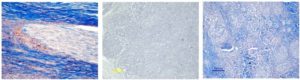
Reconstruction of the Facial Nerve in Pigs with Facial Nerve Allografts Wrapped in a Fibrin Scaffold Containing Fibroblasts Transduced with Adenovirus Encoding VEGF 156

Nerve allografts, which are nerves transplanted between genetically non-identical individuals of the same species, have been studied in experimental and
clinical works and seem to be an effective method for nerve reconstruction. We aim to evaluate the effects of VEGF-secreting scaffold holding fibroblasts
transduced with an adenovirus on the survival of facial nerve allografts in a model developed in pigs. We operated on 10 white large pigs using one of the
following surgical protocols: protocol I, 5 subjects receiving nerve allografts wrapped with a fibrin scaffold holding fibroblasts; and protocol II, 5 subjects
with nerve allografts wrapped in a scaffold containing fibroblasts transduced with adenovirus encoding VEGF 156. Statistically significant differences
were found by the Mann–Whitney test between protocols I and II for the number of neurofilaments, the number of vessels per field, the number of nerve
bundles, and the percentage of neural tissue, with the scores higher for protocol II subjects (p= 0.008 for the above variables). There were no differences
in the diameter of the nerve between the protocols. When Student’s t was used, the number of neurofilaments and the percentage of neural tissue were
significantly different (p= 0.002). This experiment showed that in pigs receiving a 4-cm facial nerve allograft, conditioning with adenovirus-mediated
VEGF-secreting heterologous fibroblasts embedded in a fibrin scaffold, improved axonal passage throughout the nerve allograft and helped to maintain
the continuity and structure of the new facial nerve.


View Full Article : HERE 

Go Through The Journal : http://www.enlivenarchive.org/surgery-and-transplantation

Contact Us : surgery-transplantation@enlivenarchive.org

The State of Current and Future Therapies for Congestive Heart Failure: A Review

Heart failure is a significant cause of morbidity and mortality globally. An estimated 38 million patients suffer from heart failure worldwide, and its
prevalence is expected to increase. In Canada, 1% of the population suffers from heart failure and the number of admissions for this disease is expected
to increase 300% from 1996 to 2050. In the United States, the number of patients with heart failure is estimated to increase 25% by 2030 with an
estimated cost of $69.8 billion. Despite advances in modern medical care, heart transplantation remains the definitive treatment. Heart transplantation
has had progressive, improved success in survival due to improvements in immuno-suppression. However, the availability of donor organs remains
limited. Mechanical circulatory support has been an increasingly utilized option for patients with end-stage heart failure as bridge-to-transplantation, or
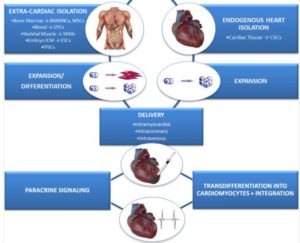
for permanent destination therapy, but multiple complications can occur. As an alternative, stem cell therapy has emerged as a promising new field for the
treatment for heart failure. It brings the possibility of regenerating new functional myocardium from donated or autologous cells. However, this field is still
in its early stages and clinical success has been modest, to date. This field may gain assistance by developments in nanotechnology and tissue engineering where patches, grafts, and even whole replacement organs may shape the future of heart failure therapy. We review the current and future states of these advancing technologies.


View Full Article : HERE

Go Through The Journal : http://www.enlivenarchive.org/surgery-and-transplantation

Contact Us : surgery-transplantation@enlivenarchive.org

Advancements and Challenges in Islet Transplantation

Islet transplantation is an established therapeutic procedure in which islets isolated from pancreas of cadaveric organ donors are transplanted into the
portal vein of a subset of type 1 diabetic patients with complicated glycemic control. Over the last eight years, more than 850 islet transplants have
been performed in more than 30 international transplant centers according to the International Islet Transplant Registry. Islet transplantation is being
performed by normothermic perfusion, a minimally invasive procedure with fewer potential complications than full pancreas transplantation.


View Full Article : HERE

Go through The Journal : http://www.enlivenarchive.org/surgery-and-transplantation

Contact Us : surgery-transplantation@enlivenarchive.org


The Current and Future Trends in Coronary Artery Bypass Graft Surgery

The roots of current day coronary artery bypass graft surgery (CABG) date back towards the end of 18th century. In 1899, Francois Franck proffered
the first surgical treatment for angina pectoris. He believed that ligation of sympathetic pain pathways would result in relief of angina. The internal
mammary artery (IMA) formed an area of interest early on, particularly after the report of Fieschi in 1939. He ligated the right IMA at the second
intercostal space to increase blood flow to the coronary circuit through smaller anastomotic collaterals from the IMA bed. It was not until the
work by Arthur Vineberg in 1946 that the use of the IMA was starting to show promising results. He skeletonized the left IMA and tunneled the
artery next to the left anterior descending (LAD) coronary artery.


View Full Article : HERE

Go Through The Journal : http://www.enlivenarchive.org/surgery-and-transplantation

Contact Us : surgery-transplantation@enlivenarchive.org


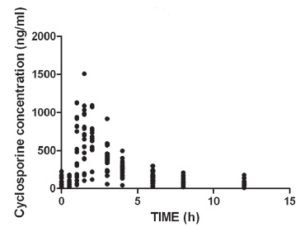
Cyclosporine (Equoral®) Population Pharmacokinetics and Bayesian Estimation in Tunisian Renal Transplant Recipients

Objectives:
Equoral® is a generic formulation of cyclosporine widely used in Tunisian renal transplant patients. The purposes of this study were to explore the
pharmacokinetic variability of Equoral® in Tunisian renal transplant, to develop a population pharmacokinetic model and a MAP-BE of Equoral®
PK parameters and global exposure.


VIew Full Article : HERE

Go Through The Journal : http://www.enlivenarchive.org/surgery-and-transplantation

Contact Us : surgery-transplantation@enlivenarchive.org