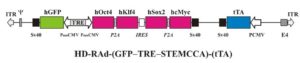
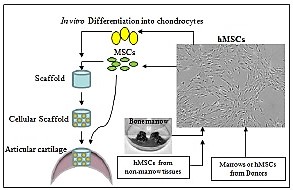
Mesenchymal Stem Cells and Cartilage Regeneration in Traumatic and OsteoarthriticCartilage Defects

Osteoarthritis (OA) affects several hundred million people and is one of the leading causes of disability around the world. Aging is the most influential risk factor for developing OA. Cartilage has a limited ability to spontaneously heal; therefore, it needs surgical intervention in case of cartilage defects caused by traumatic injury or degenerative disease. Due to the shortage of autologous chondrocytes and autografts that require additional defects, adult human mesenchymal stem cells (MSCs), the precursors of chondrocytes, become possible options for cartilage regeneration in traumatic and Osteoarthritic cartilage defects.
Read full article HERE

Reach journal at stemcells@enlivenarchive.com or stemcell-research@enlivenarchive.org

Visit journal at: http://www.enlivenarchive.org/stem-cell-research-regenerative-medicine/
 

Got Crystals? Try Racemic Protein Crystallography

Verification of bioinformatics structure predictions depends heavily on the protein data bank. The best protein structures are generally acquired through X-ray crystallography, but the main difficulty of this technique is crystallization. One approach to generating crystals is to start with a solution containing one half the original protein and one half the mirror image protein, a racemic mixture. The mirror image protein can be directly synthesized from D-amino acids, up to 50 amino acids long. These molecules can be combined together with a technique called chemical ligation to create larger proteins. Racemic crystals generally form centrosymmetricachiral crystals which is a constraint that aids in the computation of the structure. Achiral racemic crystals are also energetically favored to crystallize relative to chiral crystals. Racemic protein crystallography is an essential approach for proteins that do not form a normal crystal.

View complete article HERE

Reach journal at bioinfo@enlivenarchive.com or bioinfo@enlivenarchive.org

Visit Journal at http://www.enlivenarchive.org/bioinformatics-open-access/


Body Composition Changes in Hemodialysis Patients: Implications for Prognosis

Background: Overhydration, inflammation and protein-energy wasting have been related to all-cause mortality in dialysis patients, being lean mass loss, a poor prognostic factor.

Objective: to monitor body composition changes (BCC) in hemodialysis (HD) patients and to relate BCC to mortality. Methods: Prospective follow up study: Bioimpedance spectroscopy (BIS) and nutritional parameters were performed every 6 months during three years.

Results : Overall data show a significant loss of weight at 12m, 24m, and 36m, with decrease of lean tissue index and phase angle (PA) in each period measured. Fat tissue index (FTI) diminished in the third year’s measurements. End of first year, 41 % of patients gain weight, them at baseline had lower age, higher serum albumin, lower Extracelular/intracellular water index (ECW/ICW) and higher PA, showing a significant FTI increase. Higher baseline
PA was gain weight predictor by binary logistic regression. Cox regression analyses: Age, diabetes, HD technique, albumin, ECW/ICW, and PA were mortality predictors in univariate analysis; being PA the main mortality predictor in multivariate analysis. BCC were not associated with mortality. ROC curve: PA higher than 4.85° is protective for mortality.

Conclusions: Lean mass loss was the most important change during follow up; we have not observed association between BCC with mortality. PA was
the main mortality predictor.

Read Full Article HERE

Contact journal at nephrology@enlivenarchive.com

Visit journal at http://www.enlivenarchive.org/nephrology-and-renal-studies-open-access/

A Case of Steven’s Johnson Syndrome Probably Related to Antibiotic- Indomethacin/Caffeine/Prochlorperazine Coadministration

Steven Johnson syndrome (SJS) is a skin reaction commonly related to drug treatment. In this case we report a woman who developed a Steven Johnson syndrome during antibiotic treatment, probably related to concomitant administration of indomethacin/caffeine/prochlorperazine.

Steven Johnson syndrome (SJS) is a mucocutaneous cell-mediated hypersensitivity reactions, characterized by fever, malaise, facial puffiness, mucous membrane eruptions, skin lesions, vomiting, and skin eruptions. In this paper we report a case of SJS during a drug co-administration.

Go through the Full Article HERE

Reach the journal at pharma@enlivenarchive.com

Journal Website: http://www.enlivenarchive.org/pharmacovigilance-and-drug-safety-open-access/

Regenerative Medicine for the Aging Brain

In the central nervous system, cholinergic and dopaminergic (DA) neurons are among the cells most susceptible to the deleterious effects of age. Thus, the basal forebrain cholinergic system is known to undergo moderate neurodegenerative changes during normal aging as well as severe atrophy in Alzheimer’s disease (AD). Parkinson’s disease (PD), a degeneration of nigro-striatal DA neurons is the most conspicuous reflection of the vulnerability of DA neurons to age. In this context, cell reprogramming offers novel therapeutic possibilities for the treatment of these devastating diseases. In effect, the generation of induced pluripotent stem cells (iPSCs) from somatic cells demonstrated that adult mammalian cells can be reprogrammed to a pluripotent state by the overexpression of a few embryonic transcription factors (TF). This discovery fundamentally widened the research horizon in the fields of disease modeling and regenerative medicine. Although it is possible to re-differentiate iPSCs to specific somatic cell types, the tumorigenic potential of contaminating iPSCs that failed to differentiate, increases the risk for clinical application of somatic cells generated by this procedure. Therefore, reprogramming approaches that bypass the pluripotent stem cell state are being explored. A method called lineage reprogramming has been recently documented. It consists of the direct conversion of one adult cell type into another by transgenic expression of multiple lineage-specific TF or microRNAs. Another approach, termed direct reprogramming, features several advantages such as the use of universal TF system and the ability to generate a rejuvenated multipotent progenitor cell population, able to differentiate into specific cell types in response to a specific differentiation factors. These novel approaches offer a new promise for the treatment of pathologies associated with the loss of specific cell types as for instance, nigral DA neurons (in PD) or basal forebrain cholinergic neurons in the early stages of AD. The above topics are reviewed here.

Read Full Article HERE

Contact us at stemcells@enlivenarchive.org

Journal Website: http://www.enlivenarchive.org/stem-cell-research-regenerative-medicine/

Gender-Related Differences in Risk Profile in Young Patients with St-Elevation Myocardial Infarction a 7-Year Single Centre Experience

Few studies have focused on acute ST-elevation myocardial infarction (STEMI) in young patients. We aimed to analyze the incidence, risk factors, management, and prognosis of STEMI in 182 consecutive young patients (age < /= 50 years) (2004 to 2012), focusing on gender-related differences.

Males (87.4%) showed higher BMI values (p=0.004), a higher incidence of overweight and obesity (p=0.016). Diabetes was more frequent in females (p=0.02).

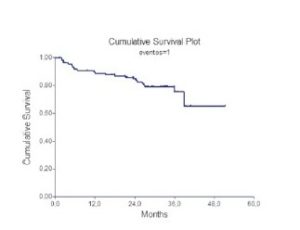
The main findings of your investigation are as follows: a) over the 7 year-study period the percentage of young STEMI patients did not change; b) the risk profile of males was different from that of females who showed a higher incidence of diabetes, while the frequency of smoking and hypertension was comparable between the two subgroups; c) no gender-related difference was detectable in management also in regard to medical therapy at discharge; d) young STEMI patients showed a good prognosis at short and long term.

Follow the Full length Article HERE

Contact us at: cardiology@enlivenarchive.org

Journal Website: http://www.enlivenarchive.org/clinical-cardiology-and-research/