Waddington?s Assimilation, A Fact or A Mere Philosophy Shaped in The Lamarckian Mold: A Genomic Inquiry

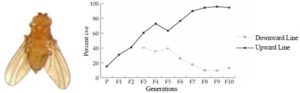
Wadington’s genetic assimilation experiment, in 1953, was one of the first experiments that claimed the inheritance of an acquired character. In this experiment, he applied a heat shock to flies triggering a low frequency of a “crossveinless” (cve) phenocopy (posterior crossvein defects in the adult wing). Through repeated selection of this trait with heat-shock, he was able to fix cve in the population. Waddington also believed that if the classic experiment were to be repeated with a different foundation stock, the same phenotypic effect might be produced. Microarray analysis comparing RNA expression in the wing imaginal discs of heat-shocked pupae between two laboratory fly stocks (wild-type canton S flies and w1118 strain) identified novel genes that were differentially expressing in the w1118 strain. Thus showing that both strains differ considerably in their capacities for cve production Resequencing the whole genome suggests that cve alleles are common, naturally occurring polygenes spread on all three major chromosomes of Drosophila, and that they act additively to produce wings with disturbed posterior crossveins. Widespread position effects in the genome alter key epigenetic and developmental processes to produce the phenocopy.

View Full Article: HERE

Go through the Journal: http://www.enlivenarchive.org/bioinformatics-open-access

Contact us: bioinfo@enlivenarchive.org
Coupled ROS and Ca2+ Sustained Activation in Cancer Cells Induced by Near-Infrared Laser Pulse: Application for Cancer Therapy

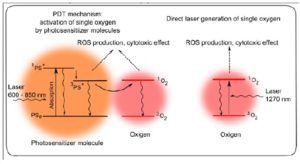
Infrared quantum-dot laser diode irradiation (1268 nm) was observed to induce irreversible oxidative stress in cancer cells through direct triplet→singlet oxygen transition designating a novel cancer treatment equally with photodynamic therapy, PDT (Sokolovski, et al. Sci. Rep. 3:3484, 2013). A single laser pulse induction of reactive oxygen species (ROS) was attended with Ca2+ release and coupled ROS and Ca2+ sustained activation occurs far beyond the initial laser pulse exposure. Cancerous cells (HeLa) were observed to be more sensitive to laser-induced ROS generation then normal keratinocytes. The developed model of the laser-induced oxidative stress showed that the main impact on the cell oxidative state makes a cascade of secondary ROS triggered by primary laser-induced singlet oxygen and irreversible depletion of cellular antioxidant system in cancerous cells. We proposed the model of the amplification of laser-induced ROS generation due to the coupled ROS and Ca2+ activation through endoplasmic reticulum (ER) and mitochondria crosstalk.


View Full Article: HERE

Go through the Journal: http://www.enlivenarchive.org/bioinformatics-open-access

Contact Us: bioinfo@enlivenarchive.org

On the Internal Coordinates in the Potential Energy Distribution (PED) Analysis: Bending or Torsion?

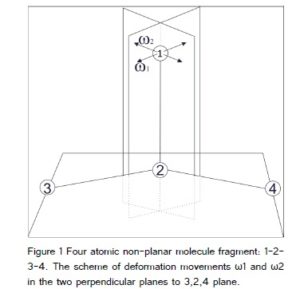
The discussion on the Potential Distribution Analysis (PED) and internal coordinate definitions are presented. The VEDA program written by the author, reads the input data automatically from the Gaussian program output files. Then, VEDA automatically proposes an introductory set of local mode coordinates. Next, the more adequate coordinates are proposed by the program and optimized to obtain maximal elements of each column (internal coordinate) of the PED matrix. In that way the theoretical spectrum become understandable in category of chemical structure elements: skeleton, bonding and functional groups. The final goal of the proper representation of the theoretical vibrational spectra is always to give possibility of the most accurate interpretation of the experimental spectra, what gives the chemist the desired knowledge. As VEDA program can manage with over 200 atoms – it can be useful for peptides/proteins spectra elucidation.

View Full Article: HERE

Go through the Journal: http://www.enlivenarchive.org/bioinformatics-open-access

Contact Us: bioinfo@enlivenarchive.org

Impact of Large Likelihood Distribution Shift on Bayesian Estimation

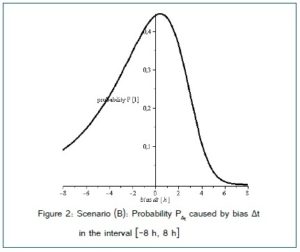
A major problem arising frequently in Bayesian estimation (BE) is to cope with a shift (e.g. a bias) of the likelihood probability. This paper investigates the impact of a severely shifted continuous likelihood probability on the output of BE in the real numbers. The result can be interpreted as a classification of asymptotic conditional probability distributions induced on a bounded interval by the far tail of probability distributions. It can be applied to a wide range of probability distributions. A hypothetical example of BE in death time estimation in a homicide trial, which is designed similar to a real case, illustrates the practical relevance of the results.


View Full Article: HERE

Go through the Journal: http://www.enlivenarchive.org/bioinformatics-open-access

Contact Us: bioinfo@enlivenarchive.org

Dynamic Reprogramming of Signalling Networks – A New Challenge in Cancer Therapy

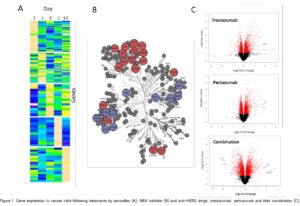
The reprogramming of cellular signalling networks that leads to new phenotypes is a common phenomenon in morphogenesis, stem cell transformation, and tissue remodelling and cancer progression. Research in this area seeks to discover those newly activated and deactivated pathways, and in doing so obtain key drivers and biomarkers of the signalling network reprogramming and attendant cell transformation. This reprogramming of signalling networks is of growing importance in anti-cancer therapy design. The effects of reprogramming on cancer cell function can lead to oncogene addiction, aberrant epithelial–mesenchymal transitions, remodelling of tumor bioenergetics, changes in response to hypoxia, tumor invasion and others. Following substantial investigation into the genetic and epigenetic mechanisms of network reprogramming, key biomarkers for the majority of these transformations have been obtained and applied to cancer diagnostics, grading and prediction of therapeutic response to cancer therapy. An emerging issue in this field of research, stimulated by clinical observations of adaptive resistance to monotherapy regimes, is signalling network reprogramming induced by targeted drug therapy in cancer.


View Full Article: HERE

Go through the Journal: http://www.enlivenarchive.org/bioinformatics-open-access

Contact Us: bioinfo@enlivenarchive.org

A Human Promoter Prediction using MACA-CLONAL Classifier

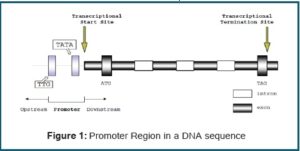
DNA is a very important component in a cell, which is located in the nucleus. DNA contains lot of information. For DNA sequence to transcript and form RNA which copies the required information, we need a promoter. So promoter plays a vital role in DNA transcription. It is defined as “the sequence in the region of the upstream of the transcriptional start site (TSS)”. If we identify the promoter region we can extract information regarding gene expression patterns, cell specificity and development. So we propose a novel fast multiple attractor cellular automata (MACA) with modified Clonal classifier for promoter prediction in eukaryotes. We have used three important features like TATA box, GC box and CAAT box for developing this classifier. We have also used context future 6-mer for predicting the same. The proposed classifier is trained and tested with datasets from DBTSS, EID, UTRdb datasets . In training phase of the classifier 100% specificity was obtained. In testing phase 84.5% sensitivity and 92.7% specificity was achieved in an average. The time taken to predict the promoter region of length 252 in an average is 4 micro seconds.


View Full Article: HERE

Go through the Journal: http://www.enlivenarchive.org/bioinformatics-open-access

Contact Us: bioinfo@enlivenarchive.org

Distinct Structural and Functional Characteristics of Stress-Related Genes of Different Plants Revealed by In-silico Analysis

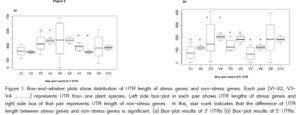
Plants always have to fight against various environmental stress conditions like cold, drought, salinity, submergence, etc. The prime target of recent research in plant biology is to unveil the intricate series of events in responses and adaptation to different stress conditions. Sufficient in-silico computational studies are yet to be done to distinguish the stress related genes from the non-stress related ones.

View Full Article: HERE

Go through the Journal: http://www.enlivenarchive.org/bioinformatics-open-access

Contact Us: bioinfo@enlivenarchive.org

Got Crystals? Try Racemic Protein Crystallography

Verification of bioinformatics structure predictions depends heavily on the protein data bank. The best protein structures are generally acquired through X-ray crystallography, but the main difficulty of this technique is crystallization. One approach to generating crystals is to start with a solution containing one half the original protein and one half the mirror image protein, a racemic mixture. The mirror image protein can be directly synthesized from D-amino acids, up to 50 amino acids long. These molecules can be combined together with a technique called chemical ligation to create larger proteins. Racemic crystals generally form centrosymmetricachiral crystals which is a constraint that aids in the computation of the structure. Achiral racemic crystals are also energetically favored to crystallize relative to chiral crystals. Racemic protein crystallography is an essential approach for proteins that do not form a normal crystal.


View Full Article: HERE

Go through the Journal: http://www.enlivenarchive.org/bioinformatics-open-access

Contact Us: bioinfo@enlivenarchive.org


The Power of Biological Analysis

Bioinformatics a multidisciplinary field brings together people from different walks of biological science to address a problem leading to quick solutions. With the advent of state-of the art technologies chasing the time factor, this field has emerged to be pivotal both in the academia and in the industry as well. Enliven: Bioinformatics is a landmark of the highest quality peer reviewed publishing platform, thanks to genuinely collaborative interactions between authors and editors, who include some of the world’s best academicians. Our journal is well aware of the potential impact of published research both on future research and on society and hence, supports review, research works, short communications and research publishing models. Research must be certified by peers before entering a stream of knowledge that may eventually reach the public – and shape society. Therefore, Enliven: Bioinformatics applies the most rigorous and unbiased publications establishing high standards by being gentle on the platform.

View Full Article: HERE

Go through the Journal: http://www.enlivenarchive.org/bioinformatics-open-access

Contact Us: bioinfo@enlivenarchive.org


Occupational Allergic Contact Dermatitis Caused by the Extracts of Crude Drugs

A 29-year-old female, an aesthetician, developed occupational allergic contact dermatitis caused by extracts of crude drugs. The results of 48-hour closed patch testing showed positive reactions to the moisturizing cream and oil that she used in her work. This cream and oil included Scutellraria Baicalensis, mugwort (Artemisia vulgaris), and Artemisia capillaris,Gardenia. The results of patch testing using extracts of the cream and oil showed positive reactions. The extracts of these plants are common and are often used for cosmetics and medicines. This is a rare case of allergic contact dermatitis as an occupational disease.


View Full Article: HERE

Go through the Journal: http://www.enlivenarchive.org/clinical-dermatology

Contact Us: dermatology@enlivenarchive.org