Clinicopathological Significance of Urinary N-acetyl-beta-D Glucosaminidase (NAG) in Nephrotic Syndrome

Background:
We previously experienced two patients, who were diagnosed with nephrotic syndrome (NS), who did not exhibit a large enough quantity of urine protein
to cause NS and reported the utility of scintigraphy (3). We here in recommend urinary N-acetyl-beta-D glucosaminidase (NAG) as a potential marker
for the diagnosis of these NS.


View Full Article: HERE

Go through the Journal: http://www.enlivenarchive.org/nephrology-and-renal-studies-open-access

Contact Us: nephrology-renalstudies@enlivenarchive.org


Influence of Chronic Hepatitis B and C Infections on Anemia in Hemodialysis Patients

Background:
Hepatitis B virus (HBV) and hepatitis C virus (HCV) infections are frequent among Egyptians hemodialysis patients. Anemia is the most common hematological abnormality in end stage renal disease (ESRD). Long-term effects of HBV and HCV on red blood cell status in ESRD patients are unknow.


View Full Article: HERE

Go through the Journal: http://www.enlivenarchive.org/nephrology-and-renal-studies-open-access

Contact Us: nephrology-renalstudies@enlivenarchive.org


A Second Pregnancy may Possibly Worsen the Course of IgA Nephropathy – Ten Year’s Experience in a Single Kidney Disease Center

Background:
Whether the long-term prognosis of IgA nephropathy is influenced by pregnancy is controversial.

Study Design:
A single center, prospective observational study.


View Full Article: HERE

Go through the Journal: http://www.enlivenarchive.org/nephrology-and-renal-studies-open-access

Contact Us: nephrology-renalstudies@enlivenarchive.org

Cytokine Gene Polymorphisms are Associated with Serum Levels of Cardiovascular Risk Markers in Renal Transplant Recipients

Introduction:
Cardiovascular disease represents the main cause of morbidity and mortality after renal transplantation. We have previously reported that functional cytokine gene polymorphisms affecting their expression and serum levels are candidates as potential cardiovascular risk factors in kidney transplant recipients. This study investigated the influence of cytokine production genotypes on the serum levels of the some well-assessed cardiovascular risk markers after renal transplant.


View Full Article: HERE

Go through the Journal: http://www.enlivenarchive.org/nephrology-and-renal-studies-open-access

Contact Us: nephrology-renalstudies@enlivenarchive.org


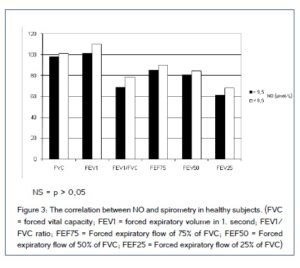
The Correlation Between Nitric Oxide Levels and Spirometry in Dialyzed Patients Compared to Healthy Subjects

Several studies demonstrated increase in plasma concentration of nitric oxide (NO) in dialyzed patients (hemodialysis – HD and peritoneal dialysis – CAPD) compared to healthy control subjects. However, the effects of NO on respiratory function in these patients are less known. The aim of this study was to determine the potential differences in spirometry related to the serum levels of NO.


View Full Article: HERE

Go through the Journal: http://www.enlivenarchive.org/nephrology-and-renal-studies-open-access

Contact Us: nephrology-renalstudies@enlivenarchive.org

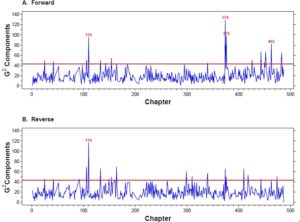
A Note on Change-Point Estimation in a Multinomial Sequence

We revisit the multinomial change-point problem posed by Riba and Ginebra relative to a putative change in authorship of Tirant lo Blanc. We utilize Lancaster partitions of chi-squared tests of homogeneity, as well as techniques suggested from cluster analysis, in our investigations. Our findings are largely congruent with those of Girón, Ginebra, and Riba, with strong evidence for two authors.


View Full Article: HERE

Go through the Journal: http://www.enlivenarchive.org/biostatistics-and-metrics

Contact Us: biostatistics-metrics@enlivenarchive.org
Notes on Crossover Design

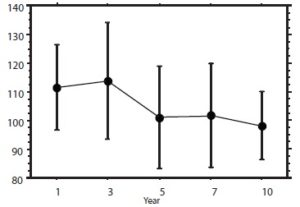
When studying treatments for non-curable chronic diseases, including asthma, angina pectoris, hypertension, epilepsy, migraine etc., the crossover design, in which each eligible patient is randomly assigned to receive more than one treatment according to a pre-determined treatment sequence, has been often proposed to improve power or save the number of patients needed for a parallel groups design. This is because each patient serves as his/her own control in a crossover trial and thereby, we can eliminate the variation of responses between patients when comparing treatments. The simplest crossover design is the AB/BA design, in which patients are randomly assigned to either the AB group in which patients receive treatment A first and then crossover to receive treatment B, or the BA group in which patients receive treatment B first and then crossover to receive treatment A. Because of its simplicity, the AB/BA design, also called the simple crossover or 2 x 2 design, has accounted for a large proportion of crossover trials used in practice. Although the crossover design is of use, there are limitations due to its design features.


View Full Article: HERE

Go through the Journal: http://www.enlivenarchive.org/biostatistics-and-metrics

Contact Us: biostatistics-metrics@enlivenarchive.org


Causal Mediation Analysis in a Survival Context

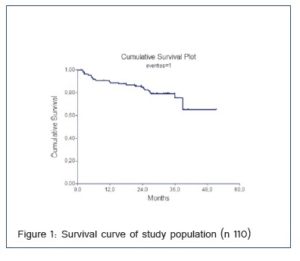
The importance of mediation analysis in health and medical research relies on the need to illuminate the mechanisms by which an exposure exerts a causal effect on an outcome variable. In practice, a mediational model hypothesizes that the exposure variable causes one or more measured intermediate variables (mediators), which in turn affects the outcome variable. Traditionally, causal mediation analysis has been implemented within the framework of linear structural equation modeling (LSEM) involving a series of liner regression models and two approaches have been proposed to quantify mediation as difference in coefficients method and product of coefficients method. For regression models using standard least squares without missing data, the estimators from both approaches are identical. Recently, the methods developed in the LSEM framework were generalized to nonlinear models, e.g. proportional hazards model for survival data. Warner et al. and Lu et al. compared the hazard ratios of the exposure from Cox model both with and without adjusting for the potential mediators and a change in hazard ratios is taken as evidence of mediation through the mediators. Lange and Hansen argued that, such mediation analysis for survival data has severe shortcomings. First of all, the observed changes in hazard ratios cannot be given a causal interpretation, and also it cannot be satisfied that the proportional hazards assumption holds for both models with and without the mediator.


View Full Article: HERE

Go through the Journal: http://www.enlivenarchive.org/biostatistics-and-metrics

Contact Us: biostatistics-metrics@enlivenarchive.org