Laparoscopy- An Overview

The art of surgery has undergone a massive metamorphosis over the past few decades. From open surgery to minimal access surgery and laparoscopy, surgeons have geared up with numerous techniques that have become gold standards for different operating procedures. Owing to constant research for better techniques, modifications and innovations in the field of laparoscopic surgery, operating on a patient has become a pleasure for both the doctor and the patient.


View Full Article : HERE

Go Through The Journal : http://www.enlivenarchive.org/surgery-and-transplantation

Contact Us : surgery-transplantation@enlivenarchive.org


Trends in Heart Transplantation

The first heart transplant was performed in 1966 by Christian Bernard in South Africa, remained relatively unknown until the development of more effective anti-rejection drug regimens in 1970s and 1980s. The current indications for heart transplantation are patients with severely impaired left ventricular function, intractable angina, unmanageable arrhythmias and severe diastolic failure.


View Full Article : HERE

Go Through The Journal : http://www.enlivenarchive.org/surgery-and-transplantation

Contact Us : surgery-transplantation@enlivenarchive.org


Is Creatinin Always Reflecting Kidney Function in AKI?

The reduction in the filtration function of the kidney is not always in parallel with the global renal function impairment encountered in acute kidney injury (AKI). Nor it is an absolute surrogate marker for its ultimate function, giving the vast diversity of the functions allocated to the different parts of renal structures. Moreover the exact nature of the injury is yet to be contemplated in different stages of acute kidney injury (AKI), whether tubular, glomerular, filtration related, hormonal homeostasis or all. In addition, the precise nature of acute tubular necrosis (ATN) and its interplay to impair the glomerular filtration is yet to be elucidated. I would like to share with you this particular case of AKI, elaborating on its distinctive features, which highlight the concept we mentioned earlier.


View Full Article : HERE

Go Through The Journal : http://www.enlivenarchive.org/surgery-and-transplantation

Contact Us : surgery-transplantation@enlivenarchive.org


The Place of Skin Cancer Screening in Heart Transplant Recipient Follow-Up Protocols: A Case Series

Objectives:
For solid organ transplant recipients the risk of skin cancer is markedly increased due to immunosuppression. Many studies propose an annual, or more frequent, skin screening program by a dermatologist. As the number of transplant recipients increases and survival times improve, the need for screening and rapid response (as required) access is increasing.


View Full Article : HERE

Go Through The Journal : http://www.enlivenarchive.org/surgery-and-transplantation

Contact Us : surgery-transplantation@enlivenarchive.org


Barth Syndrome and Left-Ventricular Non-Compaction: Case Report and Surveillance Plan Prior to Cardiac Transplantation

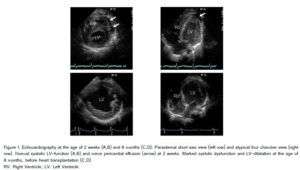
Barth syndrome, an X-linked disorder of cardiolipin metabolism, shows cardioskeletal cardiomyopathy, neutropenia, psychomotor and growth retardation. A limiting factor is heart function. We present a ten year old boy who underwent heart transplantation after bridging with an assist device at 8 months, and propose a surveillance plan prior to transplantation.


View Full Article : HERE

Go Through The Journal : http://www.enlivenarchive.org/surgery-and-transplantation

Contact Us : surgery-transplantation@enlivenarchive.org

Clinical Impact of Anti-Endothelial Cell Antibodies in Kidney and Pancreas Transplantation

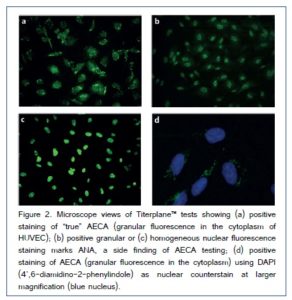
Background: Anti-endothelial cell antibodies (AECA) have been associated with graft dysfunction and rejection, but lack of scalable, cheap testing has hindered routine screening. Indirect immunofluorescence on human umbilical vein endothelial cells (HUVEC) aims to fill this niche, and a high incidence of severe multiple rejections has been reported in a large study of deceased-donor kidney transplant recipients.


View  Full Article : HERE

Go Through The Journal : http://www.enlivenarchive.org/surgery-and-transplantation 

Contact Us : surgery-transplantation@enlivenarchive.org


Liver Transplantation in Cirrhosis: Results of Two Randomized Controlled Trials of Emergency Treatment of Bleeding Esophageal Varices

Background:
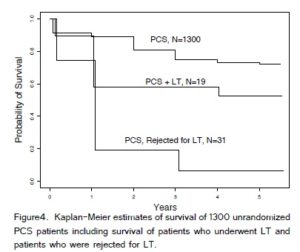
Bleeding esophageal varices (BEV) in cirrhosis has been considered an indication for liver transplantation (LT) by some respected LT programs. This important issue was examined in two recent randomized controlled trials (RCTs) in 365 unselected, consecutive cirrhotic patients with acute BEV conducted from 1988 to 2011. The RCTs were undertaken to determine the most effective treatment of BEV.


VIew Full Article : HERE

Go Through The Journal : http://www.enlivenarchive.org/surgery-and-transplantation

Contact Us : surgery-transplantation@enlivenarchive.org

Probiotics for Total Health : Better Today and Tomorrow

Probiotics are live bacteria and yeasts that are good for your health, especially your digestive system. We usually think of bacteria as something that causes diseases. But your body is full of bacteria, both good and bad. Probiotics are often called “good” or “helpful” bacteria because they help keep your gut healthy. Probiotics are naturally found in your body. You can also find them in some foods and supplements.


View Full Article : HERE

Go Through The Journal : http://www.enlivenarchive.org/pediatrics-and-neonatal-biology

Contact Us : pediatrics-neonatal@enlivenarchive.org
 

Neonatal Chylothorax in a Level III Neonatal Intensive Care Unit

Introduction Neonatal chylothorax results from the accumulation of chyle in the pleural spaceand may be either a congenital or an acquired condition. Objectives To determine the etiology, clinical course and responseto treatment of neonatal chylothorax. Methods Retrospective observational study of all newborns with the discharge diagnosis of chylothorax between 2000 and 2015 in a tertiary neonatal intensive care unit. Results Seven cases of chylothorax were reported and all were preterm (gestational age 32-36 weeks):four congenital and three traumatic. One case of congenital chylothorax was idiopathic and the others were associated with hydropsfetalis (n=1), Noonan Syndrome (n=1) and Trisomy 21 (n=1).Traumatic chylothorax occurred after surgical repair of congenital diaphragmatic hernia (n=2) and esophageal atresia (n=1). Treatment consisted of pleural taps, total parental nutrition, and respiratory support as required. Four cases who did not respond to total parental nutrition were successfully treated with continuous infusion of octreotide. Resolution time of chylothorax ranged between 15 and 86 days.Two newborns died. Conclusion Clinical outcome of chylothorax is generaly good but etiology seems to be decisive in the evolution, with more prolonged course and associated morbility in congenital cases. Octreotide seems to be an important adjuvant treatment among the conservative strategies and appear to have a good safety profile in newborn. More studies are still necessary to investigate all aspects of octreotide treatment to determine the amount of its dose, initiation time and treatment duration


View Full Article : HERE

Go Through The Journal : http://www.enlivenarchive.org/pediatrics-and-neonatal-biology

Contact Us : pediatrics-neonatal@enlivenarchive.org
 

Airway Anomalies in Neonates with Complex Congenital Heart Disease

The presence of severe airway anomalies in infants with congenital heart disease is linked to poor prognosis. Our short report describes the outcomes of seven infants with complex congenital heart disease and tracheoesophageal fistula with esophageal or tracheal atresia. We reviewed the prenatal and postnatal course of the mothers and infants to identify prenatal markers and overall outcomes. There was prenatal suspicion for tracheal anomaly in only two of the patients. Morbidity and mortality was high among our patients: four neonates died within the first days of life, and one of the three living infants required tracheostomy. Our report indicates a need for heightened awareness of potential airway anomalies in patients with complex congenital heart disease in order to improve prenatal diagnosis and counseling.


View Full Article : HERE

Go Through The Journal : http://www.enlivenarchive.org/pediatrics-and-neonatal-biology

Contact Us : pediatrics-neonatal@enlivenarchive.org