Factor VII Deficiency and Sepsis in Pregnancy Treated with Recombinant Factor VIIa

Inherited factor VII deficiency is a rare autosomal recessive coagulation disorder, classified as type 1 or type 2 depending on the absence or presence of factor VII antigen in plasma. There are only few published case reports in the literature guiding management of factor VII deficiency specifically in obstetric patients. We would like to report anaesthetic management of a factor VII deficiency during pregnancy, which was complicated by sepsis.

View Full Article: HERE

Go through the Journal: http://www.enlivenarchive.org/anesthesiology-open-access/

Contact Us: anesthesia@enlivenarchive.org


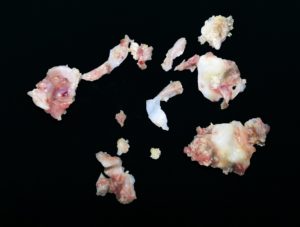
A Complication of Tracheaesophageal Fistula Treatment with Glue: Endotracheal Cuff Adhesion

The repair of tracheoesophageal fistula (TEF) requires an important surgical process, surgical ligation of the fistula with a cervical or thorasic approach. Surgical treatment is associated with high morbidity and mortality rates of up to 50% .
Recovery is hard and painful for the patient. Different endoscopic fistula treatment techniques, such as electrocautery, tissue adhesives, sclerosants, and laser have been reported. Approximately all endoscopic management was performed by bronchoscopy. Some authors reported compensating results with the use of stents or endoscopic gluing . We present a case of endotracheal cuff adhesion, after TEF treatment with histoacrylate and glubran applied around the fistula via esophagoscopy.

View Full Article: HERE

Go through the Journal: http://www.enlivenarchive.org/anesthesiology-open-access/

Contact Us: anesthesia@enlivenarchive.org

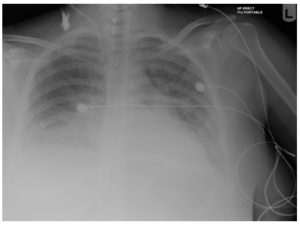
Severe Unilateral Atelectasis after Induction of General Anesthesia: Due to Aspiration of Oropharyngeal Secretion?

A 27-year-old man underwent general anesthesia for arthroscopic Bankart repair surgery. Glycopyrrolate was administered for premedication and anesthesia was induced with propofol and rocuronium. After tracheal intubation, the patient’s position was changed to right lateral position for operation. Gradual elevation of airway pressure and decrease of oxygen saturation occurred, and was suspected to be due to endobrochial intubation. Nonetheless, the endotracheal tube was drawn to 22 cm at the upper incisor and breathing sound was not auscultated overthe right lung field. Bronchoscopy was performed for diagnosis, right main bronchus was filled withclear mucus secretion. After suction of the secretion, ventilation was improved. After finishing the operation, a chest X-ray showed aspiration pneumonia overthe right lung. The patient was treated with antibiotics and discharged uneventfully 5 days postoperatively.


View Full Article: HERE

Go through the Journal: http://www.enlivenarchive.org/anesthesiology-open-access

Contact Us: anesthesia@enlivenarchive.org

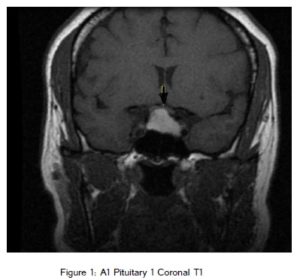
Accidently Discovered Postpartum Pituitary Apoplexy after Epidural Anesthesia

Anesthetic consideration of obstetric patients with pituitary disorders is an important topic to deal with. Few cases were reported with accidently discovered pituitary tumor complications especially in the postpartum period. A 26 years old primigravida lady with 39 weeks gestational period was reported to have severe headache and sudden loss of conscious after normal vaginal delivery with lumbar epidural anesthesia. Accidently discovered pituitary adenoma was proved after neurology, endocrine and ophthalmology consultations. Hence, undiagnosed pituitary adenomas should be taken in to consideration with unexplained postpartum generalized weakness and loss of conscious especially after exclusion of epidural anesthesia complications.


View Full Article: HERE

Go through the Journal: http://www.enlivenarchive.org/anesthesiology-open-access

Contact Us: anesthesia@enlivenarchive.org

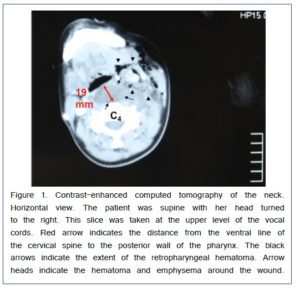
Difficult Airway due to Retropharyngeal Hematoma after Stabbing to the Neck

Reports of retropharyngeal hematoma have been scarce in the anesthesiology literature. We report a patient whose trachea was difficult to intubate due to retropharyngeal hematoma after stabbing to the neck. A woman with a knife injury to the common carotid artery required emergency carotid arterioplasty. When tracheal intubation was attempted, marked swelling of the posterior pharyngeal wall made the vocal cords impossible to visualize. Preoperative computed tomography showed a retropharyngeal hematoma. The patient required mechanical ventilation for 2 days.


View Full Article: HERE

Go through the Journal: http://www.enlivenarchive.org/anesthesiology-open-access

Contact US: anesthesia@enlivenarchive.org

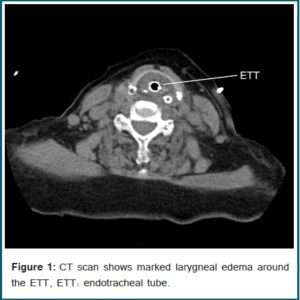
Delayed Intractable Postextubation Laryngeal Edema after General Anesthesia

We report a case of delayed intractable postextubation laryngeal edema after extubation in 78-year-old female patient who underwent uneventful operation. The patient had underwent tracheostomy 30 years ago. After 14 hours extubation, she developed postextubation laryngeal edema. Reintubation was done, and she was transferred to the intensive care unit. After this, tracheal intubation is repeated, postextubation laryngeal edema occurs again 48 hours after extubation the last, after all, the patient underwent a tracheostomy. postextubation laryngeal edema can happen any time after the extubation despite of intensive treatment, particularly in patients with history of previous tracheostomy. It seems ideal to avoid tracheal manipulation if other anesthetic plan is available and careful history taking and evaluation of airway will be helpful for these patients.

View Full Article: HERE

Go through the Journal: http://www.enlivenarchive.org/anesthesiology-open-access/

Contact US: anesthesia@enlivenarchive.org

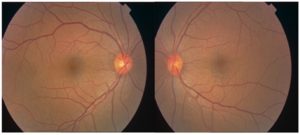
Topiramate Induced Bilateral Simultaneous Angle Closure Glaucoma in A Steroid Responde

To report a case of topiramate induced bilateral simultaneous angle closure glaucoma in a young male patient who also developed steroid response following conventional treatment ie, cessation of the causative drug (Topiramate),topical and oral steroids along with antiglaucoma medication. There was an initial drop in Intra-ocular Pressure (IOP) subsequently followed by a secondary rise in IOP due to steroid response despite the resolution of topiramate induced bilateral ciliochoroidal effusions.

View Full Article: HERE

Go through the journal: http://www.enlivenarchive.org/clinical-ophthalmology-research

Contact Us: clinicalophthalmology-research@enlivenarchive.org
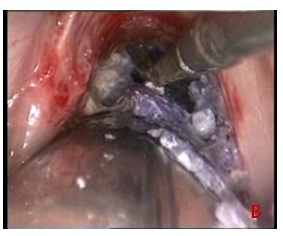
Visual and Anatomic Outcomes in Eyes with Idiopathic Juxtafoveal Macular Telangiectasia (MacTel) and Full Thickness Macular Holes Undergoing Surgical Repair

Purpose: To report visual and anatomic outcomes in eyes with idiopathic juxtafoveal telangiectasia (MacTel) type 2 undergoing small gauge vitrectomy surgery with gas tamponade for full thickness macular holes (FTMH).

Methods: Medical records of all adult patients with the diagnoses code for retinal telangiectasia were reviewed. Preoperative and postoperative data were obtained including visual acuity and OCT imaging. These cases were then compared with historical controls that also underwent surgical repair.

Results: Between the years of 2003-2013 34 patients met the inclusion criteria. Of the 34 patients, only 4 patients developed a FTMH. Of the 4 patients, 2 underwent surgical repair. Of these surgical cases one hole closed and one hole remained open at final follow-up.

Conclusion: In our cases of FTMH in patients with MacTel type 2, we had mixed results with hole closure and preservation of visual acuity. When adding our cases to the current cases in literature, the hole closure percentage is 47% with stabilization of visual acuity with or without surgical repair. It seems reasonable in these cases to observe unless visual acuity is significantly diminished.

View Full Article: HERE

Go through the journal: http://www.enlivenarchive.org/clinical-ophthalmology-research

Contact Us: clinicalophthalmology-research@enlivenarchive.org
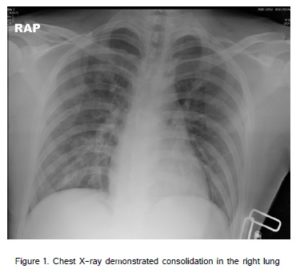
 

Calcific Pulmonary Valve Stenosis in Patient with Ostium Secundum Defect

Dystrophic calcification of the pulmonary valve in a Ostium secundum defect patient requiring valve replacement is a rare occurrence.

In this paper, we report one such patient, a case of Ostium Secundum atrial septal defect with calcific pulmonary valve stenosis in middle age. Infective
endocarditis was the most probable etiology for the calcification of the pulmonary valve. He underwent a pulmonary valve replacement with a bioprosthetic
valve, pericardial patch closure of the atrial septal defect and tricuspid valve annuloplasty. The literature review shows four such reported cases.


View Full Article : HERE

Go Through The Journal : http://www.enlivenarchive.org/surgery-and-transplantation

Contact Us : surgery-transplantation@enlivenarchive.org


Adult Onset Still?s Disease Complicated by Chlamydia pneumoniae in Pregnancy

Adult onset Still’s disease in pregnancy (AOSD) is a rarely made diagnosis- in this case it emerged from a presentation complicated by Chlamydia
pneumoniae and did a fair job in mimicking a much more common obstetric syndrome of HELLP (Haemolysis, Elevated Liver enzymes, Low platelets)
syndrome. Case reports have associated pregnancy, Chlamydia infection and AOSD, but both in combination together with thrombocytopenia appear to
be unique to the literature.


View  Full Article : HERE 

Go Through The Journal : http://www.enlivenarchive.org/gynecology-and-obstetrics 

Contact Us : gynecology-obstetrics@enlivenarchive.org