Occupational Allergic Contact Dermatitis Caused by the Extracts of Crude Drugs

A 29-year-old female, an aesthetician, developed occupational allergic contact dermatitis caused by extracts of crude drugs. The results of 48-hour closed patch testing showed positive reactions to the moisturizing cream and oil that she used in her work. This cream and oil included Scutellraria Baicalensis, mugwort (Artemisia vulgaris), and Artemisia capillaris,Gardenia. The results of patch testing using extracts of the cream and oil showed positive reactions. The extracts of these plants are common and are often used for cosmetics and medicines. This is a rare case of allergic contact dermatitis as an occupational disease.


View Full Article: HERE

Go through the Journal: http://www.enlivenarchive.org/clinical-dermatology

Contact Us: dermatology@enlivenarchive.org


Nipple Inflammation: An Unusual Adverse Effect from Vemurafenib, A V600E BRAF Inhibitor during Off-Lable Treatment for Anaplastic Thyroid Carcinoma

Anaplastic thyroid cancer is regarded as one of the most aggressive of all solid malignant tumors. Until recently the prognosis for patients with these cancers was almost universally bleak with an expected median life expectancy of about 5-months. Although traditional chemotherapy or radiation therapy offers little chance of cure, targeted therapy against mutant tyrosine kinase inhibitors such as BRAF-V600, may give some hope in treatment of these aggressive cancers. The following case report adds information to the well-known cutaneous adverse effects associated with targeted therapy with vemurafenib, an inhibitor of BRAF-V600.


View Full Article: HERE

Go through the Journal:  http://www.enlivenarchive.org/clinical-dermatology

Contact Us: dermatology@enlivenarchive.org


Treatment of Dermatofibrosarcoma Protuberans with Imatinib before Minimal Surgery could Prevent Local Relapses

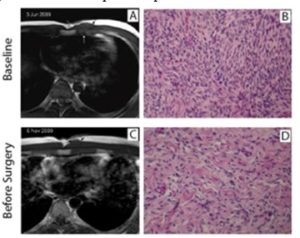
Dermatofibrosarcoma protuberans (DFSP) is cutaneous soft tissue sarcoma affecting mainly young adults and characterized by an indolent slow dermal growth leading to late diagnosis when large tumours cause important aesthetics and functional impairments. Local relapses due to insufficient excision are common. Therefore, complete excision of the primary tumour with free margins is the cornerstone therapeutic option with subsequent potential mutilations decreasing the quality of life patients.

The genetic landmark of DFSP is a unique chromosomal translocation displacing the promoter of the collagen type1 α1 next to the platelet-derived growth factor (PDGF) gene. This leads to an unregulated production of PDGF activating the tumour growth after binding on its dedicated receptors. Based on the pathogenesis of this lesion, the option of treating DFSP patients with imatinib mesylate, a tyrosine kinase inhibiting this loop, has raised.

We have treated consecutively four patients affected by a dermatofibrosarcoma with imabinib mesylate in order to downsize the tumour before surgery. All of them responded and curative surgery was thereafter performed. No relapse was observed after a median follow up of 32 months. Therefore, our results assess the value of using Imatinib as neoadjuvant treatment of DFSP and we put into perspectives with the existing literature observations.


View Full Article: HERE

Go through the Journal: http://www.enlivenarchive.org/clinical-dermatology

Contact Us: dermatology@enlivenarchive.org

Patient with Eisenmenger’s Syndrome and Severe Progressive Kyphoscoliosis presents for Posterior spinal fusion

A fourteen year old male patient with Eisenmenger’s syndrome (ES) and severe, progressive kyphoscoliosis presented for posterior spinal fusion, T2-L2. A thorough, preoperative evaluation and multidisciplinary conference was completed to discuss patient management and the very high risk nature of this procedure. The patient underwent the procedure, but decompensated with reduction of the spinal curvature, which we believe produced right ventricular compression leading to an irreversible pulmonary, hypertensive crisis. The patient expired later the same day.

View Full Article: HERE

Go through the Journal: http://www.enlivenarchive.org/anesthesiology-open-access/

Contact Us: anesthesia@enlivenarchive.org
 

Awake Retromolar Bonfils Intubation in Patient with Very Low Mouth Opening

According to the Italian Society of Anesthesiology (SIAARTI) guidelines, an awake fiberoptic intubation is the gold standard to manage a predicted difficult airway. At our institution, we are experienced in the use of the Bonfils Fiberscope® (Karl Storz), a rigid fiber optic metallic stylet, to intubate patients with expected difficult airways as well as patients with unexpected difficult airways after failed direct laryngoscopic intubation. We performed an awake retromolar fiber optic intubation in a 42-yr-old man with a temporo-mandibular anchilosis, with a very low mouth opening, with a Mallampati class 4 and an interincisor distance of 1,2 cm. A conscious sedation was performed by the administration of i.v. midazolam 0.03 mg/kg and fentanyl 2 mcg/kg. The topical anesthesia consisted in the administration of lidocaine spray 10% puffs in the oral cavity, in particular in the right vestibule with the adjunct of an instillation of lidocaine 1 % on the glottis aditus through an atomizer (Optispray®) under endoscopic vision. The retromolar approach is the method of choice in patients with limited mouth opening compared to the paraglossic technique; since the device is introduced laterally in the vestibule of the oral cavity, it can be well tolerated by the patient.

View Full Article: HERE

Go through the Journal: http://www.enlivenarchive.org/anesthesiology-open-access/

Contact Us: anesthesia@enlivenarchive.org
 

Perioperative Fetal Monitoring during Acute Heart Valve Surgery in the 16th Week of Pregnancy: A Case Study with Follow up after Five Years

Cardiac surgery during pregnancy carries an extremely high fetal risk. When conducting anesthesia in the gravid patient care must be taken to avoid uterine contractions, and fetal hypoxia. Thus, in such cases, monitoring the fetal heart rate is of special importance, as early detection of fetal bradycardia can potentially prevent fetal harm.

We present a mother in the 16th week of pregnancy with endocarditis of the aortic valve associated with NYHA IV stage heart failure undergoing successful mechanical aortic valve implantation and reconstruction of the anterior leaflet of the mitral valve. The surgery was remarkable for an episode of serious maternal circulatory failure which was treated with several cycles of reperfusion and ephedrine. Perioperative fetal heart rate monitoring was carried out using Doppler ultra-sound technology. There was no critical fetal bradycardia encountered in the intra and perioperative period.

Birth was on term via vaginal delivery, with satisfactory weight and Apgar score. Dysmorphic face and multiple tarsal syndactylia were detected with accompanying partial dysgenesis of the corpus callosum on cranial ultrasound testing. These were attributed to an inherited gene mutation as a part of Pfeiffer syndrome, which, in fact, had familial aggregation on further investigation. Additionally, the newborn demonstrated symptoms of secondary hypadrenia possibly resulting from the serious maternal condition during the pregnancy, although the use of anesthetics in the 2nd trimester cannot be excluded as a cause.

During our follow up, both the somatic and mental development of the child remained unaffected. No cognitive or learning disabilities were apparent.

View Full Article: HERE

Go through the Journal: http://www.enlivenarchive.org/anesthesiology-open-access/

Contact Us: anesthesia@enlivenarchive.org


Postoperative Myocardial Infarction following Noncardiac Surgery; A Case Report

Postoperative myocardial infarction (PMI) is associated with mortality and morbidity in patients undergoing cardiac or noncardiac surgery. In this case report a patient with PMI and cardiac arrest with successful outcome is presented. Aspirin should not be routinely discontinued for elective noncardiac surgery, and the risks of stopping aspirin should be evaluated more seriously. Cardiac arrest in the postoperative care unit (PACU) may have better prognosis because diagnosis and apropriate cardiopulmonary resuscitation (CPR) can be performed immediately.

View Full Article: HERE

Go through the Journal: http://www.enlivenarchive.org/anesthesiology-open-access/

Contact Us: anesthesia@enlivenarchive.org


Asymptomatic Pheochromocytoma Interpreted as Non-Functioning Incidentaloma: A Major Challenge: Case Report and Review

Introduction
Adrenal incidentaloma (AI) is a result of easy availability of imagiological diagnostic techniques and may include many primary, metastatic, benign, and malignant entities, the majority of which are benign and nonfunctioning adrenal adenomas. However to 7% prove to be pheochromocytomas.

Case Report
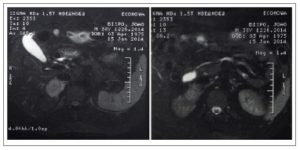
38 year old male with right adrenal adenoma associated co-morbidity was pre-diabetic without symptoms suggesting pheochromocytoma, biochemically with a borderline increase on urinary norepinephrine. He was proposed for laparoscopic right adrenalectomy with no preoperative pharmacological preparation. Intra operatively, the tumor manipulation resulted in manifestations typical of pheochromocytoma, refractory to treatment, with biochemical signs of myocardial ischemia.

Discussion

Usual recommendations are on favor of measuring plasma and urinary fractionated metanephrines in all patients with adrenal incidentaloma, this evaluation should be complemented with imagiological findings. There is no universal consensus on when to start preoperative preparation, in which patients or which pharmacological scheme should be used.

Conclusion

Based upon ours and reported experience, we recommend that every asymptomatic patient with adrenal mass and biochemical evaluation suggestive of pheochromocytoma should be preoperatively submitted to alpha-antagonism to avoid potentially life threatening hemodynamic fluctuations on intraoperative and postoperative period

View Full Article: HERE

Go through the Journal: http://www.enlivenarchive.org/anesthesiology-open-access/

Contact Us: anesthesia@enlivenarchive.org

Sugammadex: Safe for Ambulatory Surgery in Patients with ALS?

Amyotrophic lateral sclerosis (ALS) is an autosomal- dominant disease which characterized by degeneration of upper and lower neurons. Sugammadex, is an agent acts encaplulating steroidal muscular relaxant to form a stable compel, thereby reduction of free concentration of the muscle relaxant from the plasma, which provides rapidly recovery from neuromuscular blocage effect. This complex of sugammadex and muscle relaxant is freely excreted through the kidneys. Sugammadex in recent years frequently has been used, with neuromuscular disease patients, who require neuromuscular blocage in the implimentation of general anesthesia. But in ambulatory surgery it is hard to use muscle relaxant in patients with a neuromuscular disease. In this case report, we described general anesthesia administration and use of sugammadex – rocuronium in a patient with ALS in ambulatory surgery.

View Full Article: HERE

Go through the Journal: http://www.enlivenarchive.org/anesthesiology-open-access/

Contact Us: anesthesia@enlivenarchive.org


Anesthetic Management in a Pediatric Patient Posted for Bronchoscopy

Anesthetic management in a pediatric patient posted for an impacted foreign body in bronchus is quite challenging, Hemorrhage, Tension pneumothorax during rigid bronchoscopy for foreign body removal is a rare but life threatening complication. We hereby present a case of 3yrs old child who underwent bronchoscopy for foreign body removal from bronchus under general anesthesia where hemorrhage and tension pneumothorax was successfully managed.

View Full Article: HERE

Go through the Journal: http://www.enlivenarchive.org/anesthesiology-open-access/

Contact Us: anesthesia@enlivenarchive.org