Intestinal Endometriosis Revealed by a Ileocolic Intussusception

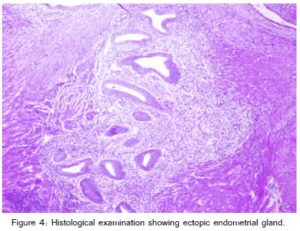
Intestinal endometriosis is very rarely manifested by an acute bowel obstruction secondary to ileo-cecal intussusception. We report a case of a 47-year-old female patient with symptoms and signs of an acute small bowel obstruction. CT scan confirmed the intussusception. A right colectomy for suspected malignancy was performed with an ileocolic anastomosis. Histological examination revealed an endometriosis of the ileocecal junction.


View Full Article : HERE

Go Through The Journal : http://www.enlivenarchive.org/gynecology-and-obstetrics

Contact Us : gynecology-obstetrics@enlivenarchive.org
Abdominal Ectopic Pregnancy: An Important Cause of Haemoperitoneum and Shock

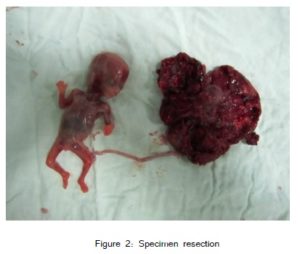
Abdominal pregnancy is rare and is usually diagnosed late. It has a higher mortality rate than other ectopic gestations. Delayed diagnosis can lead to catastrophic hemorrhage. This report describes an abdominal ectopic pregnancy, revealed by a massive haemoperitoneum and hemorrhagic shock in a young woman.


View Full Article : HERE

Go Through The Journal : http://www.enlivenarchive.org/gynecology-and-obstetrics

Contact Us : gynecology-obstetrics@enlivenarchive.org
 

A Case of Steven’s Johnson Syndrome Probably Related to Antibiotic- Indomethacin/Caffeine/Prochlorperazine Coadministration

Steven Johnson syndrome (SJS) is a skin reaction commonly related to drug treatment. In this case we report a woman who developed a Steven Johnson syndrome during antibiotic treatment, probably related to concomitant administration of indomethacin/caffeine/prochlorperazine.


Steven Johnson syndrome (SJS) is a mucocutaneous cell-mediated hypersensitivity reactions, characterized by fever, malaise, facial puffiness, mucous membrane eruptions, skin lesions, vomiting, and skin eruptions [1,2]. In this paper we report a case of SJS during a drug co-administration.


View Full Article: HERE

Go through the Journal: http://www.enlivenarchive.org/pharmacovigilance-and-drug-safety-open-access

Contact Us: pharmacovigilance-drugsafety@enlivenarchive.org

Schwannoma of Lumbar Spine: A Medical Case Study

Schwannomas refer to benign, encapsulated tumors that derive from the nerve sheath. This report presents the case of a 53 year old patient with chronic
back pain which was initially misdiagnosed as unilateral meningoceles but, later on, MRI scan with contrast disclosed the presence of lumbosacral
schwannoma which appeared as solid heterogeneous lesion which would lie within and expand the left neural exit foramen, extending into the
paravertebral soft issues with marked mass effect on the adjacent psoas muscle. Instead of surgically removing the schwannoma, musculoskeletal
imaging guided nerve root injection of corticosteroid was administered to the patient as a palliative treatment. Clinical and radiological features of this
rare and often misdiagnosed medical finding will be accentuated in this case report and treatment strategy will be discussed.

View Full Article: HERE

Go through the Journal: http://www.enlivenarchive.org/neurology-and-neurotechnology

Contact Us: neurology-neurotechnology@enlivenarchive.org

A Case of Steven’s Johnson Syndrome Probably Related to Antibiotic- Indomethacin/Caffeine/Prochlorperazine Coadministration

Steven Johnson syndrome (SJS) is a skin reaction commonly related to drug treatment. In this case we report a woman who developed a Steven Johnson syndrome during antibiotic treatment, probably related to concomitant administration of indomethacin/caffeine/prochlorperazine.

Steven Johnson syndrome (SJS) is a mucocutaneous cell-mediated hypersensitivity reactions, characterized by fever, malaise, facial puffiness, mucous membrane eruptions, skin lesions, vomiting, and skin eruptions. In this paper we report a case of SJS during a drug co-administration.

Go through the Full Article HERE

Reach the journal at pharma@enlivenarchive.com

Journal Website: http://www.enlivenarchive.org/pharmacovigilance-and-drug-safety-open-access/

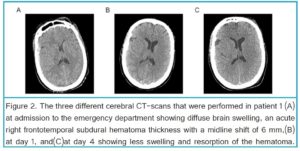
Plateau Waves, Intracranial Hypertension and Prognosis. How Identical Waves can Lead to Different Outcomes in Two Patients with Traumatic Brain Injury

Elevated intracranial pressure (ICP) can lead to secondary brain damage and is associated with worst outcome in patients with traumatic brain injury. We present two clinical cases of high ICP due plateau waves. This, frequently occurring cause of high ICP, can cause confusion at the bedside if not recognized. High ICP due to plateau waves has a different prognostic implication and treatment algorithm compared to other causes of high ICP. We describe the pathophysiology and management of this phenomenon.

Please find the entire article HERE

Contact us at anesthesia@enlivenarchive.org

Journal Website: http://www.enlivenarchive.org/anesthesiology-open-access/