Patent Foramen Ovale and Atrial Septal Defect: Diagnosis and Therapy

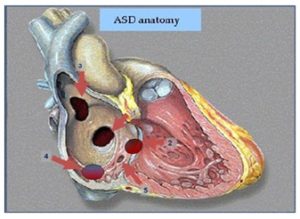
Patent foramen ovale (PFO) and atrial septal defect (ASD) are frequent congenital heart defects in adults. While the indication for surgical or interventional closure of an ASD is sufficiently evaluated, the necessity of closing a PFO remains a topic of academic discussions. In this article we present epidemiological data, show the actual anatomic classification, highlight relevant aspects of periinterventional imaging and review the latest trials. Moreover, we present the actual evidence relating to antiplatelet medication following device closure.

Full Article: HERE

Go through the Journal: http://www.enlivenarchive.org/clinical-cardiology-and-research/

Contact Us: clinicalcardiology-research@enlivenarchive.org


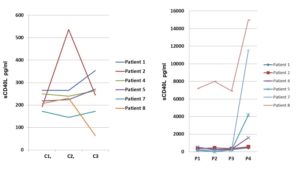
Analysis of Soluble Factors During Percutaneous Coronary Intervention in ST Elevated MI

Aims/Objective: To analyze soluble thrombotic and inflammatory factors responsible for reperfusion injury followed by PCI in patients of ST elevated Myocardial Infarction (STEMI).

Material and Methods: Ten patients with STEMI who were also thrombolysed and came for routine PCI from 24 hours and after were recruited in the study. Peripheral and coronary sinus blood samples before angioplasty, after balloon dilatation, after stenting and a peripheral blood sample at 24 hours were collected successfully for 6 patients out of 10 recruited. The components analyzed were sCD40L, P-selectin, MCP-1, MMP-9, CKMB and Troponin I.

Results: There was not much variation in the components analysed in the peripheral and coronary blood samples before angioplasty, after balloon dilatation and after stenting. However, in peripheral blood sample at 24 hours significant increase (p<0.05) in soluble (s) CD40L, MCP-1, MMP-9, and sP-Selectin was observed as compared to the peripheral samples before angioplasty.

Conclusion: The present study demonstrated elevated levels at 24 hours of increased soluble inflammatory and thrombotic components following reperfusion by intervention. Modulation of these components may protect the heart from reperfusion injury over and above the conventional management of reperfusion injury for insoluble particulate matter.

Full Article: HERE

Go through the Journal: http://www.enlivenarchive.org/clinical-cardiology-and-research/

Contact Us:  clinicalcardiology-research@enlivenarchive.org

Figure: Soluble levels of MCP-1

Cardiac Autonomic Neuropathy and Two Insulin Resistance Indices

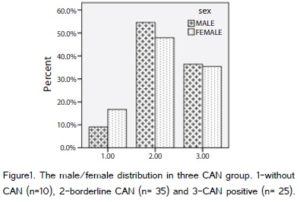
Background and objectives: Cardiac autonomic neuropathy (CAN) is a common and poor prognosis complication of diabetes. There are documents regarding the causative role of autonomic nervous system in the pathogenesis of insulin resistance (IR). As a predisposing factor for diabetes and metabolic syndrome, the IR by itself is also associated with increased risk of cardiovascular disease. Very limited studies concern the relation of IR with CAN. Therefore the values of the homeostasis model assessment of insulin resistance (HOMA-IR) and the triglyceride-glucose (TyG) indices were studied in diabetic patients with CAN.

Methods: This descriptive cross sectional study was carried on 70 volunteer diabetic’s participants in endocrine clinic of Fifth AZARE hospital in Gorgan that full fit the inclusion criteria. The following tests were used for diagnosis of CAN: resting heart rate, orthostatic challenge tests and corrected QT interval. Two IR indices were calculated for patients based on fasting levels of glucose, insulin and triglyceride.

Results: The mean±SD for age and weight were 55.19±9.79 years and 76.1±10.22 kilograms. The CAN was diagnosed in 54 cases (85.3%). The mean±SD for TyG and HOMA-IR were 10.11±0.69 and 1.6±0.98 respectively. The TyG but not the HOMA-IR index was more than the considered cutoff in all cases including CAN negatives. The difference of HOMA-IR index in CAN positive and CAN negative subjects was not significant (P value = 0.059).

Conclusion: The changes of TyG index seem to be much more than HOMA-IR in diabetics with CAN and may be considered to have screening potential for CAN.

Full Article: HERE

Go through the Journal: http://www.enlivenarchive.org/clinical-cardiology-and-research/

Contact Us:  clinicalcardiology-research@enlivenarchive.org

Inflammation and Oxidative Stress in Acute Coronary Syndromes: A Continuum from Plaque Vulnerability to Thrombus Formation

Acute coronary syndromes are caused by plaque rupture and thrombus formation. Inflammation and oxidative stress play a pivotal role in atherosclerosis progression and plaque instability. Recruited inflammatory cells produce several cytokines, chemokines and adhesion molecules stimulating the biosynthesis of further pro-inflammatory factors. Mediators of inflammation are able to trigger several pathophysiological processes involved in plaque vulnerability such as neoangiogenesis, MMPs activity, extracellular matrix degradation, ROS production, lipid peroxidation and others. Several studies investigated the role of markers of inflammation and oxidative stress in the pathophysiology of plaque formation and progression, basis of clinical epiphenomena.

Full Article: HERE

Go through the Journal: http://www.enlivenarchive.org/clinical-cardiology-and-research/

Contact Us: clinicalcardiology-research@enlivenarchive.org


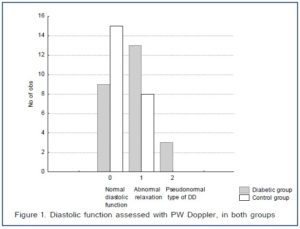
Tissue Doppler Imaging in the Early Detection of Diastolic Dysfunction in Asymptomatic Diabetic Patients

Introduction: Tissue Doppler Imaging (TDI) is a new technique, able to record early changes of subclinical ventricular diastolic dysfunction and potentially identifies diabetic patients who may benefit from earlier treatment in order to prevent heart failure.

The Aim: To assess the role of TDI in early detection of diastolic dysfunction in asymptomatic diabetic patients (free of dyspnoe, fatigue, exercise intolerance, increased extracellular volume, angina).

Methods and Materials: Twenty-five asymptomatic diabetic patients and 23 healthy subjects underwent echocardiography (Pulsed-wave Doppler and TDI) to assess diastolic function. We compare the results from both echo-techniques and analyzed the relation of echo cardiographic parameters of diastolic dysfunction (DD) with different risk factors.

Results: We found statistically significant difference between TDI and PW Doppler (E/E´ vs E/A) in diabetic (Z=-3.17, p<0.001) and control group (Z=-2.4, p<0.003). There was no significant difference in E/A between the groups (Z=0.0, p<1.0). But, TDI identified significantly lower E´ (Z= 2.11, p<0.03) and higher E/E´(Z= -2.12, p<0.03) in diabetic vs control group (Z= -2.12, p<0.03). Also, there is statistically significant difference between the two echocardiographic techniques, TDI vs PW Doppler, in terms of detection of DD in both groups (p<0.00 for diabetic and p<0.01 for control group).

Diastolic dysfunction strongly correlate with duration of DM (p<0.00001), age (p<0.00001), female gender (p<0.0001) and obesity indices (BMI, BSA) (p<0.00001, p<0.00001), in both groups.

Conclusion: TDI identifies DD more frequently than transmitral PW Doppler in asymptomatic patients with or without diabetes.

Full Article: HERE

Go through the Journal: http://www.enlivenarchive.org/clinical-cardiology-and research/

Contact Us: clinicalcardiology-research@enlivenarchive.org 
 

Coronary Artery Disease and Carotid Artery Disease Progress Despite Normal Lipid Levels by Standard Statin Therapy in Asymptomatic Patients without Known Coronary Artery Disease: Implications for Statin Therapy

Many mega-trials of statin therapy demonstrate that a 28% drop in LDL-cholesterol (LDL-C) in 5-year statin trial is associated with a 25% to 35% drop in CAD risk, leaving a substantial residual risk. We studied whether standard statin therapy would prevent progression of coronary artery disease (CAD) and carotid artery disease in asymptomatic patients without known CAD. We retrospectively selected 45 patients who continued statin therapy for one year and underwent multidetector computed tomography and carotid ultrasound measurement one year apart. Follow-up period was 1.37±0.49 (1.0 to 2.5) years. Total cholesterol changed from 213.2±46.2mg/dl to 196.0±34.3mg/dl (p=0.045). Triglyceride changed from 125.5±72.3mg/dl to 107.1±58.2mg/dl (p=0.184). HDL-cholesterol changed from 60.8±15.8mg/dl to 60.0±12.3mg/dl (p=0.789). LDL-cholesterol changed from 101.7±25.2mg/dl to 102.7±23.0mg/dl (p=0.844). However coronary calcium score significantly increased (230.1±414.5 to 298.3±479.2, p=0.009) and the number of coronary plaques significantly increased (2.5±1.7 to 3.0±1.7, p=0.001). Also carotid IMT significantly increased (1.42±0.81 to 1.78±0.92, p=0.049) and the number of carotid plaques significantly increased (0.5±1.1 to 1.1±1.5, p=0.001). In conclusion, our results showed that CAD and carotid artery disease progressed significantly despite normal lipid values using standard statin therapy in asymptomatic patients without known CAD. This suggests that more intense lipid lowering will be needed to prevent progression of CAD and carotid artery disease.

Full Article: HERE

Go through the Journal: http://www.enlivenarchive.org/clinical-cardiology-and-research/

Contact Us: http://www.enlivenarchive.org/contact.php


Gender-Related Differences in Risk Profile in Young Patients with St-Elevation Myocardial Infarction a 7-Year Single Centre Experience

Few studies have focused on acute ST-elevation myocardial infarction (STEMI) in young patients. We aimed to analyze the incidence, risk factors, management, and prognosis of STEMI in 182 consecutive young patients (age </= 50 years) (2004 to 2012), focusing on gender-related differences.

Males (87.4%) showed higher BMI values (p=0.004), a higher incidence of overweight and obesity (p=0.016). Diabetes was more frequent in females (p=0.02).

The main findings of your investigation are as follows: a) over the 7 year-study period the percentage of young STEMI patients did not change; b) the risk profile of males was different from that of females who showed a higher incidence of diabetes, while the frequency of smoking and hypertension was comparable between the two subgroups; c) no gender-related difference was detectable in management also in regard to medical therapy at discharge; d) young STEMI patients showed a good prognosis at short and long term.

Full Article: HERE

Go through the Journal: http://www.enlivenarchive.org/clinical-cardiology-and-research/

Contact Us: clinicalcardiology-research@enlivenarchive.org
Type and Timing of Reversal Agents in Patients Receiving Warfarin Who are Hospitalized for Major Bleeding

Background: In patients with warfarin-induced major bleeding, prompt administration of reversal agents increases coagulation factors and may allow early surgical correction of bleeding. However even with reversal agents, mortality is high. In this analysis the type and timing of reversal agents were evaluated.

Methods: Review of warfarin treated non-trauma patients admitted to a University Hospital with ISTH defined major bleeding between October 2009 and January 2013.

Results: 84 patients met entry criteria with a mean age 67.8 ± 14.3 years including 46 % females. The mean INR on admission was 3.6 ± 2.4. The site of major bleeding was central nervous system in 33 (39%), abdomen in 28 (33%), chest in 6 (7%) and other in 15 (18 %). Reversal agents including vitamin K, fresh frozen plasma (FFP), or prothrombin complex concentrate (PCC) were given to 83 patients. Forty patients required either major surgery (25 patients) or a therapeutic procedure (14 patients) to stop bleeding. Death occurred in 15 patients (18%) but the admission INR was not predictive of mortality (p=0.52, Kruskal-Wallis test). The INR was never completely corrected (INR<1.1) in 31 (37%) patients, 9 of whom died.

Conclusions: Patients with warfarin-induced major bleeding receive ineffective anticoagulation reversal, have delayed times to therapeutic procedures, and have a high mortality rate. Whether earlier administration of these agents or administration of newer agents would reduce hospital mortality requires further study.

Full Article: HERE

Go through the Journal: http://www.enlivenarchive.org/clinical-cardiology-and-research/

Contact Us: http://www.enlivenarchive.org/contact.php


Teenage Pregnancy: Risk Factors, Outcomes, and Possible Targets for Prevention: A Retrospective Cohort Study

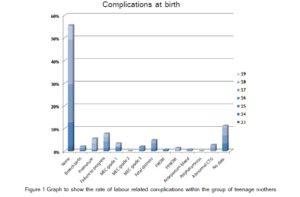
Aim : To identify the important risk factors as well as observe some short and long term maternal and perinatal outcomes associated with teenage pregnancy.

Methods: A retrospective cohort study of 142 teen age adolescent mothers was carried out over a 2 year period in an inner city teaching hospital and tertiary referral centre in South East London. Results were compared with a control group of 4004 22-29 year old pregnant women over the same period.

Results: Our study demonstrates associations between teenage pregnancy and some adverse outcomes, namely low birth weight, low Apgar scores and lower incidence of artificial first feed. But contrary to the published literature, no correlation was found with pre-eclampsia, fetal growth restriction, preterm labour, operative vaginal delivery and caesarean section.

Conclusion: Teen age pregnancy is not always associated with adverse perinatal outcome.

View Full Article HERE

Reach Journal at: http://www.enlivenarchive.org/gynecology-and-obstetrics/

Reach us through mail at gynecology-obstetrics@enlivenarchive.org

Mesenchymal Stem Cells and Cartilage Regeneration in Traumatic and OsteoarthriticCartilage Defects

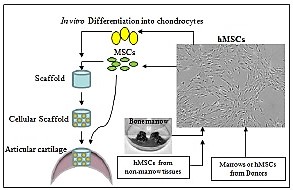
Osteoarthritis (OA) affects several hundred million people and is one of the leading causes of disability around the world. Aging is the most influential risk factor for developing OA. Cartilage has a limited ability to spontaneously heal; therefore, it needs surgical intervention in case of cartilage defects caused by traumatic injury or degenerative disease. Due to the shortage of autologous chondrocytes and autografts that require additional defects, adult human mesenchymal stem cells (MSCs), the precursors of chondrocytes, become possible options for cartilage regeneration in traumatic and Osteoarthritic cartilage defects.

Read full article HERE

Reach journal at stemcells@enlivenarchive.com or stemcell-research@enlivenarchive.org

Visit journal at: http://www.enlivenarchive.org/stem-cell-research-regenerative-medicine/