Can Multiple Babies Be Breastfed Successfully?

Mother’s milk is the most appropriate food for infants. There is no other food to replace. The World Health Organization recommends that exclusive breastfeeding continue for at least 6 months. The health benefits of breastfeeding newborn infants are well known. These benefits are multiplied with twins and higher–order multiples who often are born at risk such as, twins who are frequently born prematurely and thus are exceptionally susceptible to many infections. During the past two decades, the number of multiple gestations has increased dramatically in many countries.

Full Article: HERE

Go through the Journal: http://www.enlivenarchive.org/dietetics-research-and-nutrition/

Contact Us: nutritiondietetics@enlivenarchive.org


Evaluation of A New Detection and Quantification Method of Total Coliforms and Escherichia coli in Water

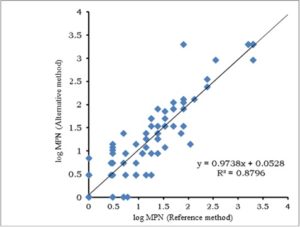
The discovery of chromogenic and fluorogenic substances for their application in tests has brought about huge advantages over the use of tests based on traditional culture media. In the field of drinking water microbiology, many studies are addressed at reviewing methods of analysis of coliform bacteria and Escherichia coli. The main objective of this study was to evaluate a new method of detection and quantification of total coliforms and E. coli in water by the Most Probable Number (MPN) technique using as broth culture a chromogenic-fluorogenic medium (CCL) according to the fundamental aspects of the validation guidelines of qualitative and quantitative methods of AOAC International and the standard ISO 16140 by analyzing 99 water amples from different origins. The new method is based on the splitting of specific substrates for glucuronidase and tryptophanase activity by E. coli, and for β-galacosidase by E. coli and coliform bacteria, and also on the gas production by the coliform group. A method described by ISO 9308-3 was choosed as reference, which is based on the fermentation of lactose with acid production, on the oxidase-negative character of total coliforms (for confirmation) and, additionally, on the production of indole from tryptophan at 44°C (E. coli confirmation). By different validation methodologies of alternative methods it was proven that the new chromogenic fluorogenic method using the Most Probable Number, employing methylumbelliferyl-β-D-glucuronide and ortho-nitrophenyl-β-D-galactopyranoside as enzymatic markers for the detection and counting of coliforms and E. coli, is equivalent to the procedures described in the ISO reference method for the same purpose in terms of diagnostic accuracy and precision of the count. The composition of the culture medium used allowed for the correct determination of the target microorganisms. The new procedure allowed obtaining results in less time, with less reagents, and more easily.

Full Article: HERE

Go through the Journal: http://www.enlivenarchive.org/microbes-and-microbial-techniques/

Contact Us: microbes-microbial@enlivenarchive.org

Selecting A Biological Indicator for Sterilization Processes

The selection of a biological indicator organism for use with a new or existing sterilization method is an important endeavor because it will serve as a benchmark for validation, safety, and quality assessments across a range of current and future sterilization systems and machines. By convention, the process for bioindicator selection is to choose an organism demonstrating high relative resistance for the sterilization agent and method under examination and, therefore, includes the evaluation and comparison of the resistance of multiple candidate organisms and spores. This report reviews the basic tenants and principles of modern sterilization science as they relate to the determination and comparison of microbial resistance, uses the pulsed light treatment of Bacillus pumilus spore preparations, and spore stocks prepared via different methods to illustrate how different preparation procedures can affect the results seen with resistance testing, particularly survival/end point testing, and provides insights and experiences into microbial spore resistance testing and examines relevant cases in point.

Full Article: HERE

Go through the Journal: http://www.enlivenarchive.org/microbes-and-microbial-techniques/

Contact Us: microbes-microbial@enlivenarchive.org


Susceptibility of Salmonella Serovars Recovered from Hospitalized Saudis to Commercial Drugs and to A Chemically and Safety-Characterized Essential Oil Blend

Background:

This study aimed at the identification of the Salmonella serovars involved in human salmonellosis outbreaks in Saudi Arabia, determination of their susceptibility to drugs, and determination of Minimum Inhibitory Concentration (MIC) of an essential oil-blend of eucalyptus and peppermint.

Material and Methods:

The identification of the O and H antigens of the Salmonella serovars was according to WHO protocol, while their susceptibility to active ingredients of 23 drugs was accomplished by single disk diffusion assay. The MIC was determined by a standard protocol, while the safety of the blend was assessed by Draize Eye and Ames tests.

Results:

The distribution of the 16 separately admitted Saudi patients, due to their infection with different Salmonella serovars were: 4 (S.enteritidis), 4 (S.typhimurium), 3 (S.kentucky), 3 (S.anatum), and 2 (S.typhi). The three in vitro effective drugs against all 14 non-typhoid isolates were Cefepime, Chloramphenicol, and Norfloxacin, while 10 drugs were effective against S.typhi isolates. A positive correlation (R=??) between the frequency of drugs that the Salmonella isolates were resistant to and the MIC of the essential oil-blend was observed (P<0.05). The essential oil blend was found to be safe for use.

Conclusion:

Only three drugs out of 23 were effective in vitro against the Non-Typhoids, while 10 drugs were fortunately effective against the Typhoids. The safety and MIC data related to the novel blend of the essential oils encourage to pursue its efficacy in vivo to help for future use against Salmonella infections.

Full Article: HERE

Go through the Journal: http://www.enlivenarchive.org/microbes-and-microbial-techniques/

Contact Us:  microbes-microbial@enlivenarchive.org


The Optimization of L-Isoleucine Fermentation Conditions by Brevibacterium flavum KM011

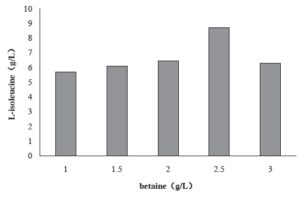
In order to improve the production of L-isoleucine, the seed culture medium and the fermentation culture medium were examined by L-isoleucine
producing strain Brevibacterium flavum KM011(Met-+Ethr+α-ABr+LysL+AECr). Under the optimizing seed culture medium and fermentation culture
medium, L-isoleucine productions were increased to 9.493 g/L and 13.35 g/L in shake flasks, respectively. The strain KM011 got a final titer of 35.26
g/L under the optimal conditions by using 5L fermenter.

Full Article: HERE

Go through the Journal: http://www.enlivenarchive.org/microbes-and-microbial-techniques/

Contact Us: microbes-microbial@enlivenarchive.org

Comparison of Mechanical Tissue Grinders and the Mini Beadbeater 96 for Homogenization of Murine Lung and Thigh Tissue for Subsequent Quantitation of Bacterial Density

Background:
Quantitation of bacterial density in animal tissues is commonplace in pre-clinical antibacterial drug discovery and development research. Routinely used
tissue homogenization methods are labor intensive, time consuming processes that can lead to repetitive motion related injuries to laboratory personnel.

Findings:
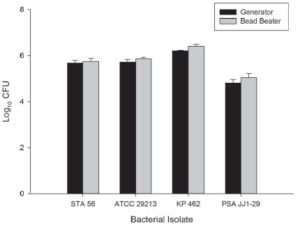
In this study, we compared our standard method of tissue homogenization, mechanical tissue grinders, to the Mini Beadbeater 96 for the homogenization
of murine lung and thigh tissue from standard neutropenic infection models. The Mini Beadbeater 96 proved to be an effective method for homogenizing
murine lung and thigh tissues for subsequent bacterial quantitation, with results comparable to those obtained with mechanical tissue grinders.

Conclusion:
This method proved to be a practical, high throughput, time efficient, cost effective, ergonomically friendly method for tissue homogenization.

Full Article: HERE

Go through the Journal: http://www.enlivenarchive.org/microbes-and-microbial-techniques/

Contact Us: microbes-microbial@enlivenarchive.org

The Role of the European Microbial Resource Research Infrastructure Project

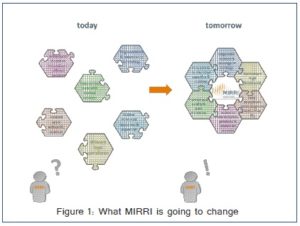
MIRRI, the Microbial Resource Research Infrastructure, is a pan-European project that supports research and development in academia and industry by improving access to microbial resources. To date the landscape of mBRCs (microbial domain Biological Resource Centres) is fragmented: for researchers it is time consuming to find the appropriate place for a deposited resource, what kind of associated data for this resource exists and who he would find the expert to contact for more detailed information. There is a disadvantage for the mBRCs too, because, due to the lack of coordination of policy and practice, financial resources are wasted in duplication of biological material and of human efforts. As a result researchers and technical staff are slowed down in their attempts to provide optimal service to the user community. Put more dramatically and in a global way: not even a mere glimpse of biodiversity is currently visible in public microbial resource holdings. This situation clearly impedes the research and development across Europe. MIRRI will address the challenge of access to microbial diversity and its potential by providing a single virtual portal facilitating access to microbial resources, the related data as well as expertise, thereby accelerating discovery and fostering innovation in the field of biotechnology.

Full Article: HERE

Go through the Journal: http://www.enlivenarchive.org/microbes-and-microbial-techniques/

Contact Us: microbes-microbial@enlivenarchive.org

Proprotein Convertase Subtilisin/Kexin Type 9 Inhibitors: an Emerging Chapter in the Field of Clinical Lipidology

The role of low-density lipoprotein cholesterol (LDL-C) in the pathophysiology of atherosclerosis is well recognized, and statin therapy represents the standard of care for LDL-C lowering and reduction of cardiovascular risk. However, many patients fail to achieve LDL-C goals, while others are intolerant to statins due to side effects. Unfortunately, until recently, the efficacy of other non-statin LDL-C-lowering agents was limited, achieving an LDL-C reduction of no more than 20%. Proprotein Convertase Subtilisin/Kexin Type 9 (PCSK9) Inhibitors represent a new class of LDL-lowering agents, producing large reductions in LDL-C. The present review aims to provide the current clinical and scientific data pertaining to this promising new class of LDL-C-lowering agents.

Full Article: HERE

Go through the Journal: http://www.enlivenarchive.org/clinical-cardiology-and-research/

Contact Us:  clinicalcardiology-research@enlivenarchive.org
 

Endothelial Cell Survival under High Glucose Condition: Effect of Rivaroxaban

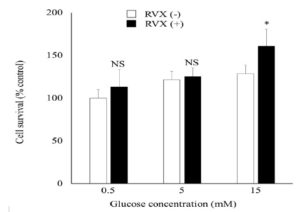
Background: Endothelial injury is regarded as a key early event in the development of atherosclerosis. High level of glycemic excursion has been reported to play an important role in the pathogenesis of atherosclerosis. Recently, proteinase-activated receptor-2 (PAR2), activated by factor (F) Xa, has been shown to play a pivotal part in diabetes-induced endothelial dysfunction. In the present study, we have investigated the effect of rivaroxaban, a direct FXa-inhibitor by analyzing cellular biological function of human umbilical vein endothelial cells (HUVECs) in a glycemic excursion-model.

Methods: HUVECs were starved in 1% fetal calf serum media with 0.5% glucose for 4 hours and treated with or without rivaroxaban 0.1μg/mL, followed by stimulation of glucose in concentration of 0.5 mM, 5mM, 15mM and 30 mM. Cell viability was measured after 3 hours of stimulation by glucose using 3-(4, 5-dimethylthiazol-2-yl)-2, 5-diphenyltetrazolium bromide (MTT) assay. Cell without rivaroxaban treatment and then stimulated with 0.5mM glucose was used as control. The high glucose-induced cell apoptosis was also evaluated with or without pre-treatment of rivaroxaban based on TUNEL method, using fluorescein-dUTP to label DNA strand breaks. All TUNEL-positive HUVECs in whole mount slide were counted. The derivatives of reactive oxygen metabolites (dROMs) were measured 45 minutes after the glucose stimulation to evaluate the production of reactive oxygen species (ROS).

Results: In rivaroxaban treated group, there was a significant increase in cell viability in high-glucose condition (113% in 0.5mM, 103% in 5 mM, 125% in 15 mM compared with cells without rivaroxaban pre-treatment, respectively). There was a significant increase in TUNEL positive cells in a glucose concentration dependent manner without rivaroxaban treatment; however, rivaroxaban pre-treatment significantly inhibited cell apoptosis (75% decrease in 15 mM glucose-stimulated-cells). There was a significant increase in ROS production in glucose-stimulated HUVECs without rivaroxabantreatment, which was also inhibited when pre-treated with rivaroxaban (30% decrease compared without rivaroxaban-pretreatment) (p< 0.05).

Conclusions: Rivaroxaban increases endothelial cell viability and inhibits apoptosis induced by high level of glycemic excursion, possibility through ROS signaling. These results suggest that rivaroxaban may be effective in the prevention of atherosclerosis.

Full Article: HERE

Go through the Journal: http://www.enlivenarchive.org/clinical-cardiology-and-research/

Contact Us: clinicalcardiology-research@enlivenarchive.org
Fibroatheroma Morphological Features of Borderline Coronary Lesion Plaques on Stable Angina Pectoris Patients

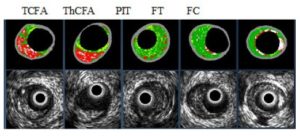
The aim of this study is to investigate the lesion-related specific morphological characteristics of borderline coronary lesion plaques which are responsible for stable angina pectoris. 86 borderline coronary lesion plaques from stable angina pectoris patients were analyzed by using virtual histology-intravascular ultrasound (VH-IVUS). Patients’ characteristics were compared. In the laboratory findings, coronary artery disease distribution and virtual histologyintravascular ultrasound detected thin-cap fibroatheroma (TCFA) and thick-cap fibroatheroma (ThCFA) phenotype groups which were tested. Analysis of the borderline coronary lesion plaques indicate major ratio of fibroatheroma, pathological intimal thickening, and less fibrotic plaque. TCFA and ThCFA accounts for only 25% and 33% of the plaque lesions. Fibrofatty and dense calcium tissues improved in TCFA group (P<0.05), and VH-TCFA III, IV account for 45.9%, 43.3% repressively in subtypes. These findings suggest that for angina pectoris with borderline coronary lesion plaques, TCFA occupied only 1/4 proportion of the plaque lesions and the clinical characteristics were similar to ThCFA patients, which may be responsible for the cardiovascular events.

Full Article: HERE

Go through the Journal: http://www.enlivenarchive.org/clinical-cardiology-and-research/

Contact Us: clinicalcardiology-research@enlivenarchive.org