Dear Global Researchers in the disciple of Genetics, Molecular, Cellular Biology and related sciences

It would be my pleasure to invite you and your colleagues for submission of a manuscript (review, original research article based on
scientific/clinical research or computational in silico study, case studies, editorials, books review and letters to the editor) in our new Journal


View Full Article: HERE

Go through the Journal: http://www.enlivenarchive.org/genetic-molecular-and-cellular-biology

Contact Us: genetics@enlivenarchive.org


Synucleins: What do they do in the Nucleus?

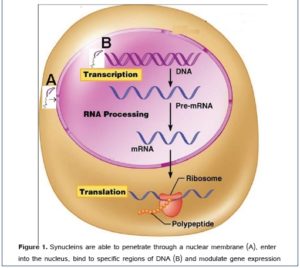
Synucleins are small (113–143 amino acids) proteins expressed primarily in neural tissue. The family consists of three proteins: α -synuclein, β -synuclein,
and N-synuclein with high amino acid sequence similarity at the N-termini and variable C-termini. All synucleins have in common a highly conserved
alpha-helical lipid-binding motif.

View Full Article: HERE

Go through the Journal: http://www.enlivenarchive.org/genetic-molecular-and-cellular-biology

Contact Us: genetics@enlivenarchive.org

Future Challenges to Target Cancer Stem Cells

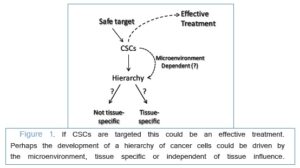
The experimental information indicates that effective cancer treatment requires targeting of the tumor initiating cells. The initiating cells share molecular and functional properties with stem cells; hence their designation cancer stem cells (CSCs). The CSCs maintain tumor growth and are responsible for cancer resurgence. Also, there is evidence that the CSCs could be responsible for tumor dormancy and drug resistance. The functional and molecular similarities of CSCs and healthy stem cells pose challenges when considering the development of methods to target CSCs without harm to the endogenous stem cells. The review focuses on the potential challenges to target CSCs within the bone marrow niche.


View Full Article: HERE

Go through the Journal: http://www.enlivenarchive.org/challenges-in-cancer-detection-and-therapy

Contact Us: cancer@enlivenarchive.org 
 

Country Cancer Report

Cancer is currently an important public health issue for Chinese government. Statistically cancer is rated as the leading cause of death and with high disease burden in China. According to the data from the government, there are 3.5 million new cancer cases ever year in China. Several reasons could explain the growing numbers of cancer incidences. First of all, China aging population contributes to increasing cancer prevalence. For example, National Bureau of Statistics of China of 2010 showed that the people aged 65 year or above constitutes 8.87% of china population in 2010. Moreover, environmental risk factors also associated with the cancer.


View Full Article: HERE

Go through the Journal: http://www.enlivenarchive.org/challenges-in-cancer-detection-and-therapy

Contact Us:cancer@enlivenarchive.org


Cancer Stem Cells (Csc’s): Emerging Concept and Strategy for Targeting Progression of Epithelial Ovarian Cancer

The estimated new cases of ovarian cancer in the United States of America (USA) in 2014 is 21, 980, and the estimated deaths is 14,270. It ranks 5th overall for cancer death in women, counting for 5% of all cancer deaths in women (lung, breast, colorectal, pancreatic are 1-4 respectively). At time of diagnosis, 15% of the total cases are localized, 18% are regional, and 61% are distant. In 2011, there were an estimated 188,867 women living with ovary cancer in the United States. The Standard treatment of ovarian cancer consists of surgical resection of disease followed by taxane and platinum-based chemotherapy which yields a partial response rate of about 80% and a complete response rate of 40%-60% in patients with advanced disease.


View Full Article: HERE

Go through the Journal: http://www.enlivenarchive.org/challenges-in-cancer-detection-and-therapy

Contact Us: cancer@enlivenarchive.org


Angiotensin (1-7) Antagonist Diminished the Anti-Tumor Effect of Olmesartan in Tumor Cell Lines Grown In-vitro and In-vivo

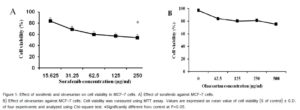
Olmesartan is a selective angiotensin II type 1 receptor (AT1R) antagonist. It achieves blood pressure reduction in a dose-dependent manner through arterial vasodilation and reduced sodium retention. Secondly, olmesartan exhibits anti-angiogenic activity through inhibition of Insulin growth factor, vascular endothelial growth factor and their receptors and this effect was mediated through the Ang (1-7). The current study was to investigate the anti-tumor effect of olmesartan; first, the cytotoxic activity of olmesartan and/or Ang (1-7) antagonist on MCF-7 cell line using 3-[4, 5-dimethylthiazole-2-yl]-2, 5-diphenyltetrazolium bromide (MTT) assay was explored. Then EAC solid tumor grown in vivo was employed to determine the impact of concurrent administration of an Ang (1–7) agonist or antagonist on the anti-tumor effect of olmesartan. In addition, the impact of concurrent administration of olmesartan on the cytotoxic activity of sorafenib in MCF-7 cell line or its anti-tumor effect in EAC solid tumor grown in vivo was investigated. It was observed that the cell viability was reduced by approximately 40% after sorafenib (250 μg/ml) treatment. On the other hand, olmesartan did not show any cytotoxic effect except when higher concentrations were used. IC50 value for sorafenib in MCF-7 was 250.9 μg/ml, while the IC50 value for olmesartan was 674.8 μg/ml. Ang (1-7) antagonist increased the IC50 value of olmesartan from 674.8 μg/ml to 722 μg/ml. The high cytotoxic concentration of olmesartan in combination with sorafenib failed to enhance the cytotoxicity more than the sorafenib itself. Sorafenib (30 mg/kg/day), olmesartan (3, 10 or 30 mg/kg/day) or their combination significantly (P<0.05) reduced tumor volume and the relative tumor volume compared to EAC-Control group. Similarly, concurrent administration of the Ang (1-7) agonist with olmesartan (30 mg/kg) significantly (P<0.05) reduced tumor volume and the relative tumor volume compared to EAC-control group or olmesartan (30 mg/kg) group. Moreover, the administration of Ang (1-7) antagonist with olmesartan reduced the anti-tumor effect of olmesartan. In conclusion, olmesartan (30 mg/kg) posses anti-tumor activity. This anti-tumor activity did not depend on the direct cytotoxic activity but might be attributed to antiangiogenic activity as proven in a previous work from our lab. The anti-tumor effect of olmesartan was, at least in part, mediated through the Ang (1-7) receptor. In addition, the present results showed that olmesartan (30 mg/kg) potentiated the anti-tumor effect of sorafenib.


View Full Article: HERE

Go through the Journal: http://www.enlivenarchive.org/challenges-in-cancer-detection-and-therapy

Contact Us: cancer@enlivenarchive.org


Mesenchymal Stem Cell: A Hard Nut to Crack in Cancer Development

Tumors are surrounded by various types of cells, including mesenchymal cells, immune cells, and vascular and lymphatic endothelial cells. In this context, it has been recognized that cell-to-cell communication in the tumor microenvironment is a dynamic mechanism that exerts significant effects on progression of carcinogenesis. Over the last decade, the discoveries that mesenchymal stem cells (MSCs) can migrate to sites of inflammation and neoplasia have been the subject of a growing interest due to their potential application in regenerative medicine and gene delivery. In particular, based on the report that MSCs are incorporated into tumor tissues, the impact of MSCs on tumor growth has been extensively investigated. Despite intense research, it is highly debatable whether MSCs are friends or foes of tumor. In this mini-review, I will introduce the contradicting observations on the role of MSCs in tumorigenesis and discuss why this discrepancy has been reported.


View Full Article: HERE

Go through the Journal: http://www.enlivenarchive.org/challenges-in-cancer-detection-and-therapy

Contact Us:cancer@enlivenarchive.org


A Novel Pathway that Links Caveolin-1 Down-Regulation to BRCA1 Dysfunction in Serous Epithelial Ovarian Cancer Cells

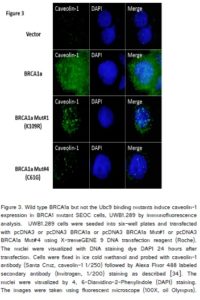
Ovarian cancer is the second most common gynecological cancer and the five-year survival rate is only about 40%. High-grade serous carcinoma is the pre-dominant histotype associated with hereditary ovarian cancer and women with inherited mutations in BRCA1 have a lifetime risk of 40-60%. BRCA1 and its isoform BRCA1a are multifunctional proteins that are the most evolutionary conserved of all the other splice variants. Our group has previously reported that BRCA1/1a proteins, unlike K109R and C61G mutants, suppress growth of ovarian cancer cells by tethering Ubc9. In this study we found wild type BRCA1/1a proteins to induce expression of caveolin-1, a tumor suppressor in BRCA1-mutant serous epithelial ovarian cancer (SEOC) cells by immunofluorescence analysis. The K109R and C61G disease associated mutant BRCA1 proteins that do not bind Ubc9 were not as efficient in up-regulation of caveolin-1 expression in SEOC cells. Additionally, immunofluorescence analysis showed BRCA1/1a proteins to induce redistribution of Caveolin-1 from cytoplasm and nucleus to the cell membrane. This is the first study demonstrating the physiological link between loss of Ubc9 binding, loss of growth suppression and loss of Caveolin-1 induction of disease-associated mutant BRCA1 proteins in SEOC cells. Decreased Caveolin-1 expression combined with elevated Ubc9 expression can in the future be used as an early biomarker for BRCA1 mutant SEOC.


View Full Article: HERE

Go through the Journal: http://www.enlivenarchive.org/challenges-in-cancer-detection-and-therapy

Contact Us:cancer@enlivenarchive.org


Study on Effect of Buqi-Tongluo-Jiedu Decoction on Protein Concentration of HIC1/SIRT1 of Pancreatic Cancer Model Mice

Objective: To observe the effect of protein concentration of HIC1/SIRT1 on pancreatic cancer model mice.

Method: 30 mice were randomly selected and divided into three groups, each group comprised 10 mice. Cancer cells were injected into model mice. Normal group and model group were given saline. The treatment group was given Buqi-Tongluo-Jiedu decoction. After 14 days, after administering euthanasia the tumor tissues were removed. To detect HIC1/SIRT1 protein concentration, the specimens of each group were examined by WB method.

View Full Article: HERE

Go through the  Journal: http://www.enlivenarchive.org/challenges-in-cancer-detection-and-therapy/

Contact Us: cancer@enlivenarchive.org