Understanding Insect Behaviors and Olfactory Signal Transduction

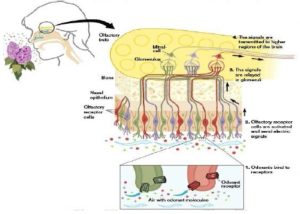
Olfaction is a molecular sense, in which information carried in airborne chemicals is transformed into patterns of brain activity that underlie odor
perception. It is probably the most important sense for survival of most animal species ranging from insects to mammals. Detection and localization of
food, avoidance of toxins and predators, and communication with cohorts and mating partners through volatile pheromones are examples of the range
of olfaction dependent behavior. Olfaction in insect, both medical and agricultural fields, is well documented today. That wide knowledge of insect
olfaction (behaviour), especially in agriculture, has contributed to the development of the Integrated Pest Management (IPM) strategies, especially the
use of semiochemicals for luring, trapping and killing of insect pests. The present literature review addresses the following general subjects: notion of
the pest, importance of the sensilla in insect life, general mechanism of chemical signals transduction, odor identification and discrimination in insects,
chemical messengers (pheromones and allelochemicals), insect-plant interactions, ratio-specific odor recognition, and evolution in pest-control strategies
and the use of plant extracts in protecting stored-products. The purpose is to contribute in helping beginners in the modern agricultural entomology field
for rapid familiarization with these terms frequently used in IPM strategies.


View Full Article: HERE

Go through the Journal: http://www.enlivenarchive.org/genetic-molecular-and-cellular-biology

Contact Us: genetics@enlivenarchive.org
Association of Genetic Polymorphism of Inflammatory Genes (IL-1? and IL-4) with Diabetes Type 2

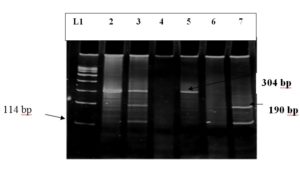
It is known that genetic and environmental factors may influence susceptibility to type 2 diabetes (T2D). Pancreatic inflammation of T2D patients
is associated with pathophysiology of diabetes type 2. In this study, we investigated role of polymorphism of IL-1β (rs16944) and IL4 gene and
environmental factors in susceptibility to diabetes type 2.


View Full Article: HERE

Go through the Journal: http://www.enlivenarchive.org/genetic-molecular-and-cellular-biology

Contact Us: genetics@enlivenarchive.org
Evolving Research in the Relationship Between Beta2-Glycoprotein I and Liver Diseases

Beta2-glycoprotein I (β2GPI) is a highly abundant glycoprotein in plasma. To date, most studies have focused on the relationship between β2GPI and
antiphospholipid antibody syndrome (APS). Recent clinical trials indicated that the expression of and antibody titers against β2GPI are altered in various
liver diseases. This article outlines the role of β2GPI and anti-β2GPI antibodies in liver diseases.

View Full Article: HERE

Go through the Journal: http://www.enlivenarchive.org/genetic-molecular-and-cellular-biology

Contact Us: genetics@enlivenarchive.org


Peri-implant Alveolar Bone Augmentation Using Allogeneic Marrow-Derived Stem Cells; A Pilot Study in the Canine Mandible

Vertical bone augmentation at endosseous implants is a technically challenging procedure that, when successful, can contribute to the biomechanical and esthetic value of implant-supported dental rehabilitations. One approach is the creation of a protected space for host cell ingrowth and subsequent bone formation. The aim of this pilot study performed in the beagle dog model was to examine the feasibility of an alternative approach for concurrent implant placement and vertical bone augmentation using an allogeneic marrow-derived stem cell-based construct without a barrier membrane. Allogeneic marrow-derived stem cells were obtained from iliac crest aspirations from donor animals and subsequent cell culture expansion. Alveolar defects (7 mm long x 4 mm deep) were created six weeks following tooth extraction. Central to the defects, 3.5 x 8 mm endosseous implants were placed at a depth of 4.5 mm. The 3.5 mm of exposed implant was either a) left exposed to the forming blood clot, b) covered with a HA/TCP matrix, c) covered with an allogeneic-stem cell-loaded matrix or d) covered with an autogenous bone graft. After 6 weeks, block sections of the mandible were prepared for histological evaluation of healing. For each implant (2 per test group), three sections were made parallel with the long axis of the implants. The histological appearance of bone was scored for each dental implant at both the implant-host bone interface and the implant-regenerated bone interface. The results demonstrated that allogeneic stem cell-loaded devices supported the formation of a bone-to-implant interface along the entire vertical augmentation surface of the implants and along the bone-to-graft interface. Vertical augmentation was also achieved using autogenous bone. However, in the absence of allogeneic stem cells or in the absence of any matrix graft, bone regeneration failed to occur. This initial success with vertical alveolar bone augmentation at dental implants using an MSC-based tissue engineering approach suggests a number of avenues to improve or simplify current regenerative therapies in dentistry.


View Full Article: HERE

Go through the Journal: http://www.enlivenarchive.org/genetic-molecular-and-cellular-biology

Contact Us: genetics@enlivenarchive.org
Possible Cytogenetic Effect of Capsicum frutescens (Solanaceae) Extracts on Meiosis in the Grasshopper Taphronota thaelephora Stal. (Orthoptera: Pyrgomorphidae)

Pepper, Capsicum frutescens is an important Solanaceae species used as a common spice for food in many countries and in particular Cameroonian
households. The aim of this study was to investigate the cytogenotoxic effect of the aqueous extract from C. frutescens fruits on the pest grasshopper
Taphronota thaelephora (Orthoptera: Pyrgomorphidae) germ line cells by cytogenetic studies that have never been done before for pepper extracts. For
this, adult individuals of T. thaelephora were treated for 72 hours with different concentrations of pepper extracts (0%, 10%, 25%, 40%, 50% & 60%).
Chromosome number and the meiotic behaviour of chromosomes were analyzed. The results revealed that the extract did not induce chromosome breaks
but could induce laggards and bridges in meiotic anaphases 1 &2 and metaphase -2 in the male germ cells of T. thaelephora. Increasing the concentration
of the extract also significantly increased (P<0.05) meiotic abnormalities in the germ line of T. thaelephora. Chiasma frequency significantly increased
when the concentration of the aqueous extract of C. Frutescens was increased.


View Full Article: HERE

Go through the Journal: http://www.enlivenarchive.org/genetic-molecular-and-cellular-biology

Contact Us: genetics@enlivenarchive.org
 

Genetic Control of pre-mRNA Splicing and Diseases

What Is Alternative Splicing?
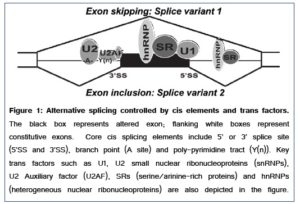
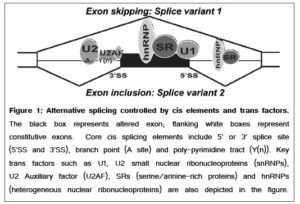
Eukaryotic genes, primarily in multi-cellular organisms, have mRNAencoding regions called exons that are interrupted by non-coding regions named introns. This split gene structure provides a fertile ground of posttranscriptional regulation which expands transcript repertoire through usage of various exon-exon combinations (i.e. alternative splicing) resulting in multiple mRNA isoforms (i.e. splice variants) produced from a single gene. High-throughput RNA sequencing (RNA-seq) indicates that > 90% of multi-exon human genes undergo alternative splicing (AS) . More importantly, AS can change a final protein’s binding properties, modify enzymatic activity, and even reverse roles of its gene in cellular processes (e.g. two isoforms of Bcl-x through AS, the long form is anti-apoptotic, while the short one is pro-apoptotic) [4]. Besides the role of AS in normal development, evidence of pathogenesis and clinical relevance of aberrant splicing variants is growing exponentially [5], with an estimated 10% of splice site mutations (exon intron boundary) causing human inherited diseases [6-8]. Deciphering the pre-mRNA splicing code and functional characterization of splice variants will provide us new insights of pathogenesis of human diseases.


View Full Article: HERE

Go through the Journal: http://www.enlivenarchive.org/genetic-molecular-and-cellular-biology

Contact Us: genetics@enlivenarchive.org

In Lncap Cells Inhibition of Bcl-2 by Antisense Oligonucleotides Results in Compensatory Changes Involving Apoptosis, Transcription and Immunoregulation

Antisense oligonucleotides (oligos) have been evaluated for treating prostate cancer in both in vivo and in vitro models. Although most oligos contain
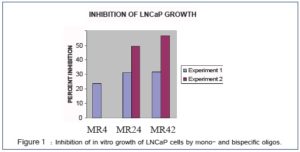
a single mRNA binding site, our laboratory evaluates bi-specifics directed towards two proteins. This study evaluates the growth inhibition of in vitro
propagating LNCaP cells employing mono- and bi-specific oligos directed against BCL-2 [the second binding site was directed against the epidermal
growth factor receptor (EGFR)]; and employing RT-PCR, the expression of five apoptosis regulatory proteins (BCL-2, bax, caspase-3, clusterin, AKT-
1), a tumor associated transcription factor (MED-12) and an immune blockade associated regulatory marker (PD-L1) were evaluated.

LNCaP prostate tumor cells were incubated in the presence of oligos specifically directed against BCL-2 (entering the cells through a form of
nanodelivery) and compared to lipofectin containing controls. Significant, but comparable, growth inhibition was produced by both mono- and bispecific
forms. Employing RT-PCR to determine BCL-2 expression, we found that the greatest amount of mRNA suppression approached 100% for
each type of oligo: mono-specific MR4 (directed only against BCL-2), 100%; and bispecifics MR24 and MR42, 86% and 100% respectively. Based upon
both inhibition of in vitro growth and BCL-2 expression, bi-specific antisense oligos directed against EGFR and BCL-2 mRNAs are at least as effective
as a mono-specific directed solely towards BCL-2.

The objective of these experiments was to determine a compensatory response by cells to (again) evade apoptosis in the presence of BCL-2 suppression. Levels of mRNA encoding non-targeted bax, caspase-3, clusterin and AKT-1 were initially evaluated, while additional experiments sought to identify additional mechanisms of tumor adaptability and resistance. Suppression of the apoptosis inhibitor (BCL-2) in LNCaP cells did not alter either bax or clusterin expression. However, non-targeted caspase-3 (an apoptosis promoter) was suppressed and non-targeted AKT-1 (an apoptosis inhibitor) was enhanced. This suggests that tumor variants can resist apoptosis through the altered expression of non-targeted regulators of apoptosis. Additional
experiments identified other mechanisms of compensation involving transcription and immune regulation suggesting further studies are needed.

View Full Article: HERE

Go through the Journal: http://www.enlivenarchive.org/genetic-molecular-and-cellular-biology

Contact Us: genetics@enlivenarchive.org