Prevalence of Smoking, and its Relationship with Depression, and Anxiety in a Sample of Iranian High School Students

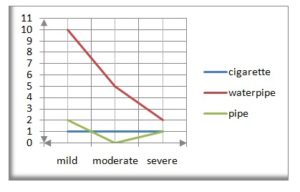
Psychiatric disorders, like anxiety and depression, are risk factors for drug abuse and smoking behavior. The purpose of this survey was to determine the prevalence of smoking, depression and anxiety and their relationship among school age students. This cross-sectional survey was done on 1020 high school students (male and female) recruited randomly and DSM-IV interview was done by researchers. A psychiatry resident accompanied by 3 last year medical students interviewed with students and a questionnaire containing demographic , anxiety and depression questions was filled simultaneously. The obtained data were analyzed using SPSS16. 50% of the students were female and the remainder male. 277 students (27.2%) were in the first year, 242 (23.7%) in the second year and 501 (49.1%) in the third year of high school. 55 students (5.4%) were smoker and used cigarette , water pipe (hobble bobble) and pipe.183 students (18%) had anxiety and stress symptoms (mild, moderate , sever). The 29 smoker students (2.84%) had anxiety. 144 students (14.1%) had depression (mild, moderate, sever) and 23 smoker students (2.25%) had depression symptoms. There was no significant correlation between smoking and anxiety and depression symptoms among school age students. As conclusion, we hypothesized that smoking may increase the tendency to depression and anxiety in high school students. Although the above results didn’t demonstrate any significant correlation between these three issues, school counselors and teachers need to be informed about the prevalence of problematic behaviors associated with smoking and it would be necessary to develop smoking prevention programs for adolescents, while taking the psychological factors such as depression and anxiety and school and family atmosphere into account.


View Full Article: HERE

Go through the Journal: http://www.enlivenarchive.org/pharmacovigilance-and-drug-safety-open-access

Contact Us: pharmacovigilance-drugsafety@enlivenarchive.org


Assessment of Nevirapine-Related Adverse Reaction Reports Received from 2008 to 2011 in Namibia

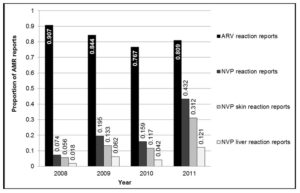
Nevirapine’s (NVP) pharmaceutical manufacturer recommended the avoidance of NVP in females and males with baseline CD4 counts >250 and >400, respectively. This safety measure was challenged by research results that showed similar proportions of adverse events in high and low baseline CD4 count patients. WHO’s antiretroviral therapy guidelines recommended the use of NVP in patients with CD4 counts < 350. Whether this recommendation would result in increase of NVP-related adverse reaction reports in Namibia was not known. Consequently, the pharmacovigilance centre monitored the NVP-related reaction reports for change in number and severity.


View Full Article: HERE

Go through the Journal: http://www.enlivenarchive.org/pharmacovigilance-and-drug-safety-open-access

Contact Us: pharmacovigilance-drugsafety@enlivenarchive.org
 

TNF? and IL-1? have Dose Dependent Effects on Differentiation of CD4+CD127-CD25highFoxP3high T cells

Regulatory T cells (TRegs) are critical for the maintenance of balanced human immune responses. The innate immune system plays a significant role in the pathogenesis of autoimmune diseases. However, its role in the differentiation and function of human CD4+ induced TRegs (iTRegs) is currently unclear. In this study we investigated the effect of the pro-inflammatory cytokines tumor necrosis factor alpha (TNFα) and IL-1β upon the differentiation and function of human CD4+FoxP3+ iTRegs.

Naïve human CD4+CD25- T cells, isolated from both cord blood (CB) and adult peripheral blood (PB) were cultured under various stimulatory conditions with/without TNFα and IL-1β. The CD4+FoxP3+ iTRegs were characterized as CD4+CD127-CD25highFoxP3high iTRegs and their suppressive function evaluated.

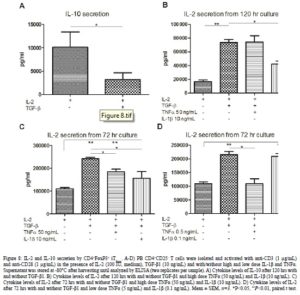
TNFα and IL-1β significantly affected the differentiation of human CD4+FoxP3+ iTRegs in a dose and time dependent manner. Low dose and short term conditions promoted their differentiation while high dose and long term conditions were inhibitory. In addition, the suppressive function of the CD4+FoxP3+ iTRegs was inhibited by TNFα and IL-1β. This inhibitory effect of TNFα and IL-1β was associated with a significant reduction of the transforming growth factor β receptor type II (TβRII) expression and IL-2 secretion. However, their IL-10 secretion was not affected and no IL-35 secretion was observed in any of the culture conditions tested.

We conclude that the in vitro induction of human CD4+FoxP3+ iTRegs is mediated through TβRII and IL-2 dependent mechanism. The regulatory effect of TNFα and IL-1β on CD4+FoxP3+ iTReg differentiation is dynamic and may to some extent reflect the magnitude and persistence of the initial pro-inflammatory response.


View Full Article: HERE

Go through the Journal: http://www.enlivenarchive.org/immunology-and-immunotechniques

Contact Us: immunology-immunotechniques@enlivenarchive.org

Augmentation of Lipopolysaccharide (lps) Receptor Expression by Interferon y Correlates with Susceptibility to lps-Induced Apoptosis in Human Monoblastic Cell Line u937

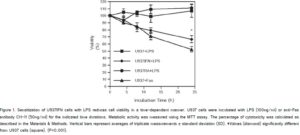
Apoptosis, accompanied with cytoplasmic shrinkage, nuclear condensation and caspase activation induced by LPS, is thought to proceed via activation of LPS receptor, which is comprised of the toll-like receptor (TLR) 4 and MD-2. We report that LPS induced apoptosis in the human monoblastic cell line U937 that was pretreated with interferon γ(U937IFN), but not in cells that were untreated or treated with retinoic acid (U937RA). To reveal the reason why interferon LipoPolySaccharide (LPS); Apoptosis; LPS receptor; Differentiation; Monocyte LipoPolySaccharide (LPS); Apoptosis; LPS receptor; Differentiation; Monocyte γ(IFN) confers apoptotic susceptibility to U937 cells, we focused on the LPS receptor. IFN stimulated the expression of cell surface TLR4 and the transcription level of MD-2 mRNA. By transfecting a designed antisense oligonucleotide (ASO) into U937IFN cells before exposing to LPS, the expression level of TLR4 was lowered to levels comparable to those in U937 cells; ASO transfected-cells showed no cleavage of poly (ADP-ribose) polymerase (PARP) and exhibited no morphological changes. Addition of an anti-TLR4 monoclonal antibody to the cultures of U937IFN cells along with LPS resulted in reduction of the Ac-DEVD-MCA hydrolysis and inhibition of the PARP cleavage. Neither a loss of function form of FADD, an adaptor molecule for death receptor signaling, nor a neutralization antibody against TNF-α or Fas prevented LPS-triggered apoptosis, indicating that the death ligand and death receptor were not activated. These results suggest that IFN induces expression of the LPS receptor, resulting in increased susceptibility to LPS-induced apoptosis.


View Full Article: HERE

Go through the Journal: http://www.enlivenarchive.org/immunology-and-immunotechniques

Contact Us: immunology-immunotechniques@enlivenarchive.org

Development and Validation of Spectrophotometric Method for Determination of Thiamine (VB1) in Pharmaceutical Formulations using 1,2-Naphthoquine-4-Sulphonate (NQS)

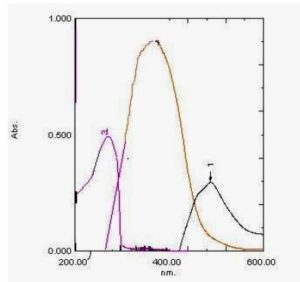
Simple and sensitive spectrophotometric method for the determination of thiamine (VB1) in pharmaceutical formulations has been reported. The proposed method is based on the reaction between the (VB1) and sodium 1,2-naphthoquine-4-sulphonate (NQS) at alkaline medium (pH 11) to form deep brown product. Beer’s law is obeyed in the range 10-40 µg/ml of thiamine at maximum wavelength of 487 nm. Under optimized reaction conditions, linear regression equation of the calibration curve is: A= 0.022x + 0.171 (µg/ml) with a linear correlation coefficient of 0.997. The limit of detection (LOD) and limit of quantification (LOQ) were found to be 1.71 µg/mL and 5.18 µg/ml respectively. The method has been successfully applied to the determination of thiamine (VB1) in pharmaceutical formulations, and can be used as a replacement of the existing sophisticated method used in quality control laboratories.


View Full Article: HERE

Go through the Journal: http://www.enlivenarchive.org/bioanalytical-techniques-open-access

Contact Us: bioanalyticaltechniques@enlivenarchive.org

Highly Sensitive Analysis of Endocrine Disrupting Chemicals in Pharmaceutical Wastes using Molecularly Imprinted Polymer Extraction hyphenated with Liquid Chromatography-Mass Spectrometry

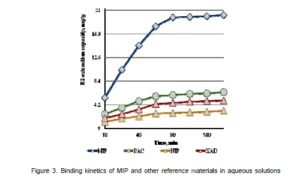
Environmental loading of endocrine disrupting chemicals (EDCs) that originate from pharmaceutical wastes are known to cause adverse impacts on aquatic life and public health. In this article, a new sensitive method has been proposed for quantification of EDCs in complicated pharmaceutical wastes using a molecularly imprinted polymer (MIP) extraction followed by liquid chromatograph-mass spectrometer (LC-MS) analysis. The calibration curves of EDCs showed linearity in the concentration range of 1-100 µg L-1 (r>0.996) with a 10 mL loading of pharmaceutical waste samples. The EDCs recoveries obtained by the MIP for pharmaceutical effluents, air particulates and treated sludge were 91%, 89% and 84%, respectively; and the recovery values were better than the conventional SPE materials such as powdered activated carbon and resin. The quantification of 17β-estradiol, a model EDC molecule, using LC-MS showed an excellent lower limits of detection in the pharmaceutical effluents, air particulates and solid waste in the order of 0.19 µg L-1, 0.13 µg g-1, 0.12 µg g-1, respectively.


View Full Article: HERE


Go through the Journal: http://www.enlivenarchive.org/bioanalytical-techniques-open-access


Contact US: bioanalyticaltechniques@enlivenarchive.org


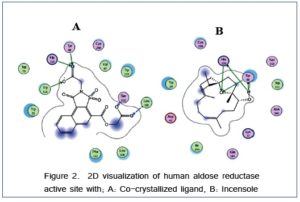
Isolation of Incensole and Molecular Docking on Human Aldose Reductase

The objective of this work is the docking of incensole isolated from Boswellia carterii. The molecular target is human aldose reductase (ALR2) whose crystallographic structure was obtained from protein data bank with access code 2NVC. Docking analysis was performed using the MOE, 10.2009. The docking studies of the ligand incensole with ALR2 showed that this is a good inhibitor molecule. Therefore, incensole can be considered for developing into a potent ALR2- inhibitor drug.


View Full Article: HERE

Go through the Journal: http://www.enlivenarchive.org/bioanalytical-techniques-open-access

Contact Us: bioanalyticaltechniques@enlivenarchive.org

SNPs of ASPM Suggested Population Differentiation and Genographic Patterns among Diverse Population

Signatures of positive selection in ASPM across human lineage suggest a rich pool of genetic variation. SNPs are one of the most common types of genetic variations and essential for deeper understanding of population differentiation.


View Full Article: HERE

Go through the Journal: http://www.enlivenarchive.org/genetic-molecular-and-cellular-biology

Contact Us: genetics@enlivenarchive.org

The Role of MTHFR C677T Polymorphism on Blood Homocysteine Concentration and the Effect of Both of this on Susceptibility to Stroke

Overproduction of homocysteine exerts toxic effect on endothelial linage of blood vessels supplying blood into the brain and developing condition of Stroke. Methylenetetrahydrofolatereductase (MTHFR) plays a central role in regulation of homocysteine concentration in the cell. The (677C>T) polymorphic variant of MTHFR gene is known to hyperhomocysteinemia and hens 677C<T MTHFR variant may be a factor for stroke susceptibility. This study investigated whether the genetic variability in the MTHFR gene is related with overproduction of homocysteine as well as susceptibility for Stroke in the central Indian population. A total of 100 medically certified Stroke patients (case) and 223 healthy subjects (control) were recruited from central India as a sample for this investigation. We found a significant (P<0.0001) deference in mean values of tHyc between case and control. ‘T’ allele was present in higher proportion in Stroke patients (P=0.06) as compared with Healthy control group. We concluded that the homozygous MTHFR 677T condition made moderate susceptibility for hyperhomocysteinemia and Stroke.


View Full Article: HERE

Go through the Journal:http://www.enlivenarchive.org/genetic-molecular-and-cellular-biology

Contact Us: genetics@enlivenarchive.org


Safety of Mesenchymal Stem Cells Therapy in Patients with Inflammatory Bowel Diseases – 5 Year Follow-up

To compare safety profile of therapy in patients with ulcerative colitis (UC) and Crohn disease (?D), receiving anti-inflammatory therapy, using
bone marrow-derived mesenchymal stromal cells (MSC) and standard therapy with 5-aminosalicylic acid (5-ASA), glucocorticosteroids (GCS) and
immunosuppressive agents (IS).


View Full Article: HERE

Go through the Journal: http://www.enlivenarchive.org/genetic-molecular-and-cellular-biology

Contact Us: genetics@enlivenarchive.org