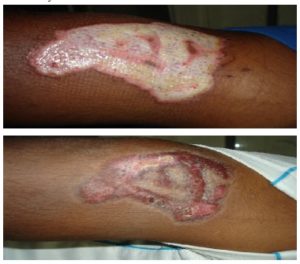
Efficacy of Tattoo Removal with Dermabrasion versus Radiofrequency Ablation in a Resource Limited Setting

Cosmetic tattoos have become increasingly popular these days.There are many methods of tattoo removal including dermabrasion, radiofrequency ablation, surgical methods, chemical peels and Qswitchedlasers.In a resource poor setting or in patients who cannot afford lasers, both dermabrasion and radiofrequency ablation work well.


View Full Article: HERE

Go through the Journal: http://www.enlivenarchive.org/clinical-dermatology

Contact Us: dermatology@enlivenarchive.org

Echocardiographic Predictors of Alveolar Capillary Dysplasia: A Case-Control Study

Objective

To evaluate early echocardiographic variables of neonates with alveolar capillary dysplasia (ACD).

Study Design

A case-control study of five neonates with ACD and their matched controls on extracorporeal membrane oxygenation from 2000-2011. Two cardiologists prospectively reviewed first admission echocardiograms. Statistical tests included Kappa, T-test, Mann-Whitney, Fisher’s exact, and Chi-square analysis.

Results

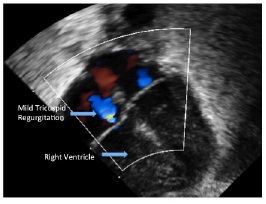
Excellent inter-rater reliability readings were achieved (Kappa 0.75-1). Tricuspid regurgitation (TR) velocities between the groups were not statistically significant; all ACD cases and 75% of the controls had TR velocities ≥ 3.2 m/sec. More ACD cases had moderate-severe TR jet (80% vs. none, p<0.01); moderate-severe right atrial enlargement (RAE) (100% vs. none, p<0.01); moderate-severe right ventricular (RV) dilatation (100% vs. none, p<0.01); and moderate-severely depressed RV function (60% vs. none, p<0.01). ACD patients were 12 times more likely to have a combination of moderate-severe RAE and moderate-severe TR jet compared to controls (OR = 11.6 [2-68]).

Conclusion

The combination of moderate-severe RAE and TR jet unresponsive to maximal interventions should alert clinicians of the possibility for ACD. We speculate that early echocardiographic predictors may identify at-risk neonates with fatal ACD and lead to early consideration of lung transplant.

View Full Article: HERE

Go through the Journal: http://www.enlivenarchive.org/anesthesiology-open-access/

Contact Us: anesthesia@enlivenarchive.org

The Effect of Preemptive Oral Celecoxib on Pain Reduction and Opioid Consumption during Elective Herniorrhaphy

Introduction: Pain control is an important aspect in postoperative care. While opioids proved excellent analgesia undesirable side effects such as respiratory depression, nausea and vomiting, constitute major limitation. As a result, many surgical centers used NSAIDs for controlled acute pain of surgery. Celecoxib is NSAIDs that inhibits cox2, but it does not have GI side effect and coagulopathy disorder. The aim of this study was to determine the effect of preemptive celexib on pain score reduction and opioid consumption after herniorrhaphy.

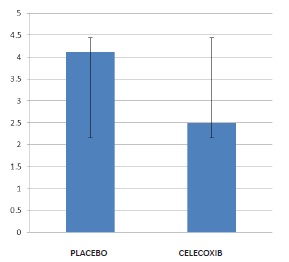
Material and Method: This is a randomised double blinded clinical trial study which performed in Imam Ali and Khatam hospital in zahedan. 76 patients scheduled for elective herniorrhaphy were enroled in this study. Patients were divided into 2GROUPS; celexib group (n=38) and placebo group (n=38). Drugs (placebo or 200mg celexib) were given (oraly) 2 hours before operation to patients. All patients general anesthetized with midazolam (1-2mg), fentanyl (1-2μg/kg) for premedication; nesdonal (4-6mg/kg) and atracorioum (0.5mg/kg) for induction and propofol (100-200 μg/kg) for maintenance. Then pain score (vas score), heart rate, blood pressure was recorded in 2nd, 6th, 12th and 24th hours after tracheal extubation. Pain was treated with morphin 0.1 mg /kg in patients with vas score >4. Total Opioid consumption was recorded for 24hours.

Results: Mean painless time in celexib group was higher than placebo group {12.7±9.8 to 5.38±8.3 (p=0.04)} and mean pain score of 2nd hour in the celexib group was lower than placebo {2.2±2.2 to 5.7±3.5 (p=0.003)}. The mean opioid used in celexib group was lower than placebo group {5.33±6.1 to 11.15±7.1 (p=0.02)}. But difference in mean of HR and BP between two groups wasn’t significant.

Conclusion: Preemptive clexib to be able to reduce pain score and consumption of opioid after hernirrhaphy.

View Full Article: HERE

Go through the Journal: http://www.enlivenarchive.org/anesthesiology-open-access/

Contact Us: anesthesia@enlivenarchive.org

Stellate Ganglion Block Reduces the Radicular Pain and Salivary Alpha-Amylase Activity in Patients with Cervical Spondylosis

Background: The effects of stellate ganglion block (SGB) on radicular pain associated with cervical spondylosis remain to be clarified. So we measured salivary alpha-amylase which reflects sympathetic nerve activity under psychological stress after SGB block or trigger points injection (TPI).

Study Design: A randomized, prospective, controlled trial.

Setting: After institutional approval and informed consent, 40 patients who was suffered from neck-shoulder pain associated with cervical radiculopathy were randomly divided into two groups according to nerve block treatment. Group A (n=20, male 10 patients, female 10 patients, 50±8yr, mean±SD) received SGB and group B (n=20, male 10 patients, female 10 patients, 52±6yr) received TPI. SGB or TPI was produced by 6 ml of 1% mepivacaine a total of 5 times (twice per week). Visual analogue scale (VAS) and the concentration of salivary alpha-amylase were measured before (T0) each nerve block and 3 days (T1), 6 days (T2), 9 days (T3), 12 days (T4) and 15days (T5) after each nerve block. The consumption of non-steroidal anti-inflammatory drug (NSAID) was measured at T0 and T5 in each group.

Results: In group A, VAS was median 74 (range 60, 78) at T0 and showed a significant decrease at T3 [53 (48, 65), p<0.05], T4 [50 (42, 66), p<0.05] and T5 [48 (26,57), p<0.05]. The concentration of salivary alpha-amylase was median 116 (range 96, 144) KU/ml at T0 and showed a significant decrease at T3 [86 (79, 105), p<0.05], T4 [79 (68, 88)] and T5 [70 (55, 84), p<0.05]. In group B, VAS and the concentration of salivary alpha-amylase showed no change throughout the time course. VAS in group A was significant lower than that in group B at T3, T4 and T5. The concentration of salivary alpha-amylase was significant lower than that in group B at T4 and T5. The consumption of NSAID in group A was significantly lower than that in group B at T5.

Limitations: Subjects are out patients. Patients include radicular pain due to different pathogenesis, e.g., cervical herniated intervertebral disc, disc bulging, and neuro-foramen narrowing.

Conclusion: The results indicate that SGB shows the reduction of VAS scale and the concentration of salivary alpha-amylase in patients with cervical spondylosis. These results show that salivary alpha-amylase activity could reflect the physical stress with radicular pain.

View Full Article: HERE

Go through the Journal: http://www.enlivenarchive.org/anesthesiology-open-access/

Contact US: anesthesia@enlivenarchive.org
 

Comparative Study between Levobupivacine versus Levobupivacaine Plus Dexmedetomidine for Transversus Abdominis Plane Block ?TAP? in Post-Operative Pain Management after Abdominoplasty

Transversus abdominis plane “TAP’’ block has been reported to be effective for post-operative analgesia for patients undergoing surgery involving abdominal wall incision by blocking anterior branches of thoracolumbar nerves originating from T6 – L1 , which innervates anterior abdominal wall.

Dexmedetomidine has a well – known benefit in the relief of postoperative pain. The objective of this study is to evaluate effect of adding dexmedetomidine to levobupivacaine for preemptive TAP block in the post-operative pain management after abdominoplasty surgery.


View Full Article: HERE

Go through the Journal: http://www.enlivenarchive.org/anesthesiology-open-access

Contact Us: anesthesia@enlivenarchive.org

Degree of Motor Block Measured by Bromage Scale is not Correlated with Muscle Relaxation

Achieving adequate motor and sensory blockage in spinal anesthesia allows the comfortable performance of surgical interventions. However, in certain operations on the lower extremities, surgeons report that adequate muscle relaxation is not achieved. The purpose of this study was to evaluate muscle relaxation subsequent to the administration of spinal anesthesia in orthopedic cases of the lower extremities, using muscle monitoring (Train-of-four) (TOF) and comparing these values with motor and sensory block levels.


View Full Article: HERE

Go through the Journal: http://www.enlivenarchive.org/anesthesiology-open-access

Contact Us: anesthesia@enlivenarchive.org

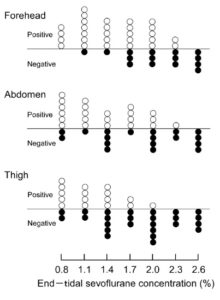
Minimum Alveolar Concentration Needed to Block Adrenergic Response of Sevoflurane with Nitrous Oxide Varies Depending on the Stimulation Sites in Adult Surgical Patients

We examined whether minimum alveolar anesthetic concentration needed to block adrenergic response (MAC-BAR) of sevoflurane with nitrous oxide (N2O) varies depending on body surface sites to which noxious stimuli are applied.

View Full Article: HERE

Go through the Journal: http://www.enlivenarchive.org/anesthesiology-open-access

Contact Us: anesthesia@enlivenarchive.org

Ultrasound guided Transverses Abdominal Plane Block versus Ilioinguinal/iliohypogastric Nerve Blocks for Postoperative Analgesia in Children Undergoing Lower Abdominal Surgery

Pediatric patients undergo a variety of lower abdominalsurgical procedures that need adequate pain relief perioperatively. Ultrasound guided lioinguinal/iliohypogastric nerve blockade and TAB block are common peripheral nerve block techniques used to alleviate pain in pediatric anesthesia. Ultrasound guidance, promote the visualization of important anatomy and can help overcome many of the traditional obstacles of in advert important structures injury in infant’s delicate soft tissues when performing these blocks.


View Full Article: HERE

Go through the Journal: http://www.enlivenarchive.org/anesthesiology-open-access

Contact Us: anesthesia@enlivenarchive.org