Quantification of the Molecular Species of Tetraacylglycerols in Lesquerella (Physaria fendleri) Oil by HPLC with ELSD and MS

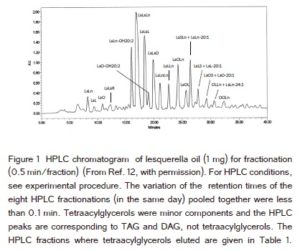
Thirteen molecular species of tetraacylglycerols in the seed oil of Physaria fendleri were recently identified. We report here the quantification of the molecular species of these tetraacylglycerols using HPLC with evaporative light scattering detector and the MS of the HPLC fractions. The ion signal intensities of MS1 from the molecular species of acylglycerols with different m/z in HPLC fractions were used to estimate the ratios of the molecular species. The ratios of the molecular species of acylglycerols with the same mass were estimated by the total ion signal intensities of the fragment ions of MS2, [M + Li ? FA]+ and [M + Li ? FA-FA]+. The content of tetraacylglycerols was about 1%. The highest contents of the molecular species of tetraacylglycerols were from those containing one normal FA (non-hydroxylated fatty acid) and they were LsLsLsO (0.25%), LsLsLsL (0.24%), LsLsLsLn (0.21%) and LsLs-OH20:2-O (0.19%). The contents of the tetraacylglycerols containing two normal FA were lower than those containing one normal FA. Among them the highest were LsLsOL (0.10%), LsLsOO (0.06%) and LsLsOLn (0.06%).


View Full Article: HERE

Go through the Journal: http://www.enlivenarchive.org/bioanalytical-techniques-open-access

Contact Us: bioanalyticaltechniques@enlivenarchive.org
 

Quantitation of Amino Acids in Human Hair by Trimethylsilyl Derivatization Gas Chromatography/Mass Spectrometry

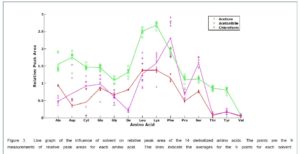
The distribution of amino acids in hair can divulge information regarding the health (e.g., diabetes) and provide a means for detecting the history of the disease by segmentation of the hair as well as attributes of an individual (e.g., sex and age). Therefore, an nonenzymatic method of hair digestion and profiling is required. In addition to optimizing and validating a method for measuring the distribution of amino acids in human hair, a robust and comprehensive approach to objectively compare the most effective means of extracting and manipulating chromatographic data to obtain the best limits of detection, linearity, and sensitivity are provided.


View Full Article: HERE 

Go through the Journal: http://www.enlivenarchive.org/bioanalytical-techniques-open-access

Contact Us: bioanalyticaltechniques@enlivenarchive.org
Predicting DI Acceptance: The Role of Service Learning

Statistics from the Accreditation Council for Education in Nutrition and Dietetics (ACEND) reflect that from 2001 until 2009, an average of 66% of didactic program in dietetics (DPD) students successfully match to a dietetic internship (DI). However since 2007, the percent of students who successfully match to a DI has declined. According to the 2014 data, there were 5140 total applicants for 2,836 available positions. In that same year, there were 2491 matched and preselected applicants for a 51% nationwide match rate. An increased emphasis on disease prevention, a growing and aging population, and public awareness of diet and disease implications point to an expected increase in the need for CDR-credentialed dietetics practitioners. Previous studies indicate cumulative and sophomore grade point average (GPA) and work experience are predictive of acceptance into a Dietetic Internship. This article aims to identify current predictors of success and strategies to improve student outcomes by surveying DI and DPD Directors and educators. The intent is to arm students with the information and experiences they need as DPD students to position themselves for success in their dietetics careers. Service learning experiences at the undergraduate level can potentially increase competitiveness in a dietetic internship match. The importance of service learning in relation to successful student outcomes will be discussed.

Full Article: HERE

Go through the Journal:  http://www.enlivenarchive.org/dietetics-research-and-nutrition/

Contact Us: nutritiondietetics@enlivenarchive.org


Fibroatheroma Morphological Features of Borderline Coronary Lesion Plaques on Stable Angina Pectoris Patients

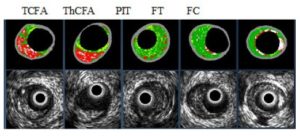
The aim of this study is to investigate the lesion-related specific morphological characteristics of borderline coronary lesion plaques which are responsible for stable angina pectoris. 86 borderline coronary lesion plaques from stable angina pectoris patients were analyzed by using virtual histology-intravascular ultrasound (VH-IVUS). Patients’ characteristics were compared. In the laboratory findings, coronary artery disease distribution and virtual histologyintravascular ultrasound detected thin-cap fibroatheroma (TCFA) and thick-cap fibroatheroma (ThCFA) phenotype groups which were tested. Analysis of the borderline coronary lesion plaques indicate major ratio of fibroatheroma, pathological intimal thickening, and less fibrotic plaque. TCFA and ThCFA accounts for only 25% and 33% of the plaque lesions. Fibrofatty and dense calcium tissues improved in TCFA group (P<0.05), and VH-TCFA III, IV account for 45.9%, 43.3% repressively in subtypes. These findings suggest that for angina pectoris with borderline coronary lesion plaques, TCFA occupied only 1/4 proportion of the plaque lesions and the clinical characteristics were similar to ThCFA patients, which may be responsible for the cardiovascular events.

Full Article: HERE

Go through the Journal: http://www.enlivenarchive.org/clinical-cardiology-and-research/

Contact Us: clinicalcardiology-research@enlivenarchive.org

Patent Foramen Ovale and Atrial Septal Defect: Diagnosis and Therapy

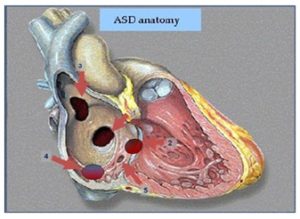
Patent foramen ovale (PFO) and atrial septal defect (ASD) are frequent congenital heart defects in adults. While the indication for surgical or interventional closure of an ASD is sufficiently evaluated, the necessity of closing a PFO remains a topic of academic discussions. In this article we present epidemiological data, show the actual anatomic classification, highlight relevant aspects of periinterventional imaging and review the latest trials. Moreover, we present the actual evidence relating to antiplatelet medication following device closure.

Full Article: HERE

Go through the Journal: http://www.enlivenarchive.org/clinical-cardiology-and-research/

Contact Us: clinicalcardiology-research@enlivenarchive.org


Analysis of Soluble Factors During Percutaneous Coronary Intervention in ST Elevated MI

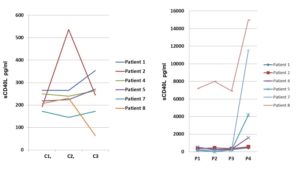
Aims/Objective: To analyze soluble thrombotic and inflammatory factors responsible for reperfusion injury followed by PCI in patients of ST elevated Myocardial Infarction (STEMI).

Material and Methods: Ten patients with STEMI who were also thrombolysed and came for routine PCI from 24 hours and after were recruited in the study. Peripheral and coronary sinus blood samples before angioplasty, after balloon dilatation, after stenting and a peripheral blood sample at 24 hours were collected successfully for 6 patients out of 10 recruited. The components analyzed were sCD40L, P-selectin, MCP-1, MMP-9, CKMB and Troponin I.

Results: There was not much variation in the components analysed in the peripheral and coronary blood samples before angioplasty, after balloon dilatation and after stenting. However, in peripheral blood sample at 24 hours significant increase (p<0.05) in soluble (s) CD40L, MCP-1, MMP-9, and sP-Selectin was observed as compared to the peripheral samples before angioplasty.

Conclusion: The present study demonstrated elevated levels at 24 hours of increased soluble inflammatory and thrombotic components following reperfusion by intervention. Modulation of these components may protect the heart from reperfusion injury over and above the conventional management of reperfusion injury for insoluble particulate matter.

Full Article: HERE

Go through the Journal: http://www.enlivenarchive.org/clinical-cardiology-and-research/

Contact Us:  clinicalcardiology-research@enlivenarchive.org

Figure: Soluble levels of MCP-1

Inflammation and Oxidative Stress in Acute Coronary Syndromes: A Continuum from Plaque Vulnerability to Thrombus Formation

Acute coronary syndromes are caused by plaque rupture and thrombus formation. Inflammation and oxidative stress play a pivotal role in atherosclerosis progression and plaque instability. Recruited inflammatory cells produce several cytokines, chemokines and adhesion molecules stimulating the biosynthesis of further pro-inflammatory factors. Mediators of inflammation are able to trigger several pathophysiological processes involved in plaque vulnerability such as neoangiogenesis, MMPs activity, extracellular matrix degradation, ROS production, lipid peroxidation and others. Several studies investigated the role of markers of inflammation and oxidative stress in the pathophysiology of plaque formation and progression, basis of clinical epiphenomena.

Full Article: HERE

Go through the Journal: http://www.enlivenarchive.org/clinical-cardiology-and-research/

Contact Us: clinicalcardiology-research@enlivenarchive.org


Tissue Doppler Imaging in the Early Detection of Diastolic Dysfunction in Asymptomatic Diabetic Patients

Introduction: Tissue Doppler Imaging (TDI) is a new technique, able to record early changes of subclinical ventricular diastolic dysfunction and potentially identifies diabetic patients who may benefit from earlier treatment in order to prevent heart failure.

The Aim: To assess the role of TDI in early detection of diastolic dysfunction in asymptomatic diabetic patients (free of dyspnoe, fatigue, exercise intolerance, increased extracellular volume, angina).

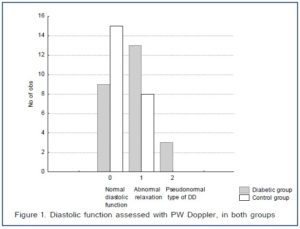
Methods and Materials: Twenty-five asymptomatic diabetic patients and 23 healthy subjects underwent echocardiography (Pulsed-wave Doppler and TDI) to assess diastolic function. We compare the results from both echo-techniques and analyzed the relation of echo cardiographic parameters of diastolic dysfunction (DD) with different risk factors.

Results: We found statistically significant difference between TDI and PW Doppler (E/E´ vs E/A) in diabetic (Z=-3.17, p<0.001) and control group (Z=-2.4, p<0.003). There was no significant difference in E/A between the groups (Z=0.0, p<1.0). But, TDI identified significantly lower E´ (Z= 2.11, p<0.03) and higher E/E´(Z= -2.12, p<0.03) in diabetic vs control group (Z= -2.12, p<0.03). Also, there is statistically significant difference between the two echocardiographic techniques, TDI vs PW Doppler, in terms of detection of DD in both groups (p<0.00 for diabetic and p<0.01 for control group).

Diastolic dysfunction strongly correlate with duration of DM (p<0.00001), age (p<0.00001), female gender (p<0.0001) and obesity indices (BMI, BSA) (p<0.00001, p<0.00001), in both groups.

Conclusion: TDI identifies DD more frequently than transmitral PW Doppler in asymptomatic patients with or without diabetes.

Full Article: HERE

Go through the Journal: http://www.enlivenarchive.org/clinical-cardiology-and research/

Contact Us: clinicalcardiology-research@enlivenarchive.org 


Coronary Artery Disease and Carotid Artery Disease Progress Despite Normal Lipid Levels by Standard Statin Therapy in Asymptomatic Patients without Known Coronary Artery Disease: Implications for Statin Therapy

Many mega-trials of statin therapy demonstrate that a 28% drop in LDL-cholesterol (LDL-C) in 5-year statin trial is associated with a 25% to 35% drop in CAD risk, leaving a substantial residual risk. We studied whether standard statin therapy would prevent progression of coronary artery disease (CAD) and carotid artery disease in asymptomatic patients without known CAD. We retrospectively selected 45 patients who continued statin therapy for one year and underwent multidetector computed tomography and carotid ultrasound measurement one year apart. Follow-up period was 1.37±0.49 (1.0 to 2.5) years. Total cholesterol changed from 213.2±46.2mg/dl to 196.0±34.3mg/dl (p=0.045). Triglyceride changed from 125.5±72.3mg/dl to 107.1±58.2mg/dl (p=0.184). HDL-cholesterol changed from 60.8±15.8mg/dl to 60.0±12.3mg/dl (p=0.789). LDL-cholesterol changed from 101.7±25.2mg/dl to 102.7±23.0mg/dl (p=0.844). However coronary calcium score significantly increased (230.1±414.5 to 298.3±479.2, p=0.009) and the number of coronary plaques significantly increased (2.5±1.7 to 3.0±1.7, p=0.001). Also carotid IMT significantly increased (1.42±0.81 to 1.78±0.92, p=0.049) and the number of carotid plaques significantly increased (0.5±1.1 to 1.1±1.5, p=0.001). In conclusion, our results showed that CAD and carotid artery disease progressed significantly despite normal lipid values using standard statin therapy in asymptomatic patients without known CAD. This suggests that more intense lipid lowering will be needed to prevent progression of CAD and carotid artery disease.

Full Article: HERE

Go through the Journal: http://www.enlivenarchive.org/clinical-cardiology-and-research/

Contact Us: http://www.enlivenarchive.org/contact.php


Gender-Related Differences in Risk Profile in Young Patients with St-Elevation Myocardial Infarction a 7-Year Single Centre Experience

Few studies have focused on acute ST-elevation myocardial infarction (STEMI) in young patients. We aimed to analyze the incidence, risk factors, management, and prognosis of STEMI in 182 consecutive young patients (age </= 50 years) (2004 to 2012), focusing on gender-related differences.

Males (87.4%) showed higher BMI values (p=0.004), a higher incidence of overweight and obesity (p=0.016). Diabetes was more frequent in females (p=0.02).

The main findings of your investigation are as follows: a) over the 7 year-study period the percentage of young STEMI patients did not change; b) the risk profile of males was different from that of females who showed a higher incidence of diabetes, while the frequency of smoking and hypertension was comparable between the two subgroups; c) no gender-related difference was detectable in management also in regard to medical therapy at discharge; d) young STEMI patients showed a good prognosis at short and long term.

Full Article: HERE

Go through the Journal: http://www.enlivenarchive.org/clinical-cardiology-and-research/

Contact Us: clinicalcardiology-research@enlivenarchive.org