Dynamic Reprogramming of Signalling Networks – A New Challenge in Cancer Therapy

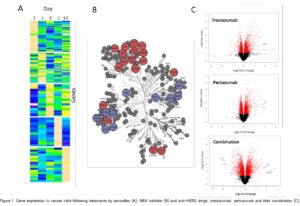
The reprogramming of cellular signalling networks that leads to new phenotypes is a common phenomenon in morphogenesis, stem cell transformation, and tissue remodelling and cancer progression. Research in this area seeks to discover those newly activated and deactivated pathways, and in doing so obtain key drivers and biomarkers of the signalling network reprogramming and attendant cell transformation. This reprogramming of signalling networks is of growing importance in anti-cancer therapy design. The effects of reprogramming on cancer cell function can lead to oncogene addiction, aberrant epithelial–mesenchymal transitions, remodelling of tumor bioenergetics, changes in response to hypoxia, tumor invasion and others. Following substantial investigation into the genetic and epigenetic mechanisms of network reprogramming, key biomarkers for the majority of these transformations have been obtained and applied to cancer diagnostics, grading and prediction of therapeutic response to cancer therapy. An emerging issue in this field of research, stimulated by clinical observations of adaptive resistance to monotherapy regimes, is signalling network reprogramming induced by targeted drug therapy in cancer.


View Full Article: HERE

Go through the Journal: http://www.enlivenarchive.org/bioinformatics-open-access

Contact Us: bioinfo@enlivenarchive.org
The Power of Biological Analysis

Bioinformatics a multidisciplinary field brings together people from different walks of biological science to address a problem leading to quick solutions. With the advent of state-of the art technologies chasing the time factor, this field has emerged to be pivotal both in the academia and in the industry as well. Enliven: Bioinformatics is a landmark of the highest quality peer reviewed publishing platform, thanks to genuinely collaborative interactions between authors and editors, who include some of the world’s best academicians. Our journal is well aware of the potential impact of published research both on future research and on society and hence, supports review, research works, short communications and research publishing models. Research must be certified by peers before entering a stream of knowledge that may eventually reach the public – and shape society. Therefore, Enliven: Bioinformatics applies the most rigorous and unbiased publications establishing high standards by being gentle on the platform.

View Full Article: HERE

Go through the Journal: http://www.enlivenarchive.org/bioinformatics-open-access

Contact Us: bioinfo@enlivenarchive.org


Enliven: Clinical Dermatology – Just Another Journal?

The maiden edition of a journal should always be one full of hope and expectation. It brings the promise of another avenue whereby knowledge of the nature of disease and its treatment would be disseminated. But are there not already enough journals to serve the needs of the dermatologic community?


View Full Article: HERE

Go through the Journal: http://www.enlivenarchive.org/clinical-dermatology

Contact Us: dermatology@enlivenarchive.org


Left Ventricular Assist Device and Resident Cardiac Stem Cells in Heart Failure: Human Heart’s Potential Matter

Heart disease is the leading cause of mortality in Western countries, accounting for 17.3 million deaths per year. The impact of cardiovascular diseases is influenced by the ability to treat and assist patients surviving acute myocardial infarction (AMI), which has resulted in a nearly epidemic of chronic heart failure (HF), with roughly 5.8 million people with this diagnosis and about 500,000 new cases every year in the U.S.A. Irrespective of the etiology and despite the fact that recent advances in medical and surgical treatments of HF have led to better treatments, 50% of patients die within a month after AMI, and 50% of those with severe HF die within a year. From a pathophysiologic point of view the hemodynamic overload generated by AMI imposes mechanical and neurohormonal challenges on cardiac walls, initially triggering compensatory left ventricular hypertrophy, but eventually activating complex biological responses evolving into maladaptive remodeling, untreatable with conventional therapy.

View Full Article: HERE

Go through Journal: http://www.enlivenarchive.org/anesthesiology-open-access/

Contact Us: anesthesia@enlivenarchive.org


Biosimilars – Hype or Hope?

The hope of biosimilars is to provide therapeutically equivalent biologics at a reduced cost. The annual cost for patients with cancer, Crohns or rheumatoid arthritis can run in the tens of thousands of dollars and any cost savings on these therapies would benefit the health care systems. However, the hype assumes a “switch” from the brand to the biosimilar product. At this point, switching is not an option. Substitution of the biosimilar product for the reference biologic is the key driver in the cost reduction associated with biotechnology derived therapies. However, European practice typically does not allow biologic substitution. The BPCI allows the FDA to make the determination of interchangeability in a 351(k) application, assuming the interchangeable substitutable product is shown to be biosimilar to the reference product and meet the other standards described in section 351(k)(4) of the PHS Act. It is not clear the type of additional information (or costs) required by the FDA for interchangeability but may include extensive immunogenicity assessments between the reference and test products. Will the hope of interchageability be thwarted by the costs, time to market and return on investment?

View Full Article: HERE

Go through the journal: http://www.enlivenarchive.org/biosimilars-and-bioavailability

Contact Us: biosimilars-bioavailability@enlivenarchive.org


Patient-Derived iPSCs as a Model for Schizophrenia

The advent of somatic cell reprogramming has provided a remarkable opportunity for neuropsychiatric research. Acquiring biological data on disorders of the central nervous system was previously restricted to studies on postmortem tissue and animal models of questionable validity. Now that neurons can be formed in a dish starting from patient fibroblasts, it is possible to generate cell culture models that may capture the biology of psychiatric disorders. For genetically complex and heterogeneous disorders like schizophrenia (SCZ), this means that the genetic background of a patient may be captured without necessarily knowing exactly which genetic variants are contributing to that person’s illness.


View Full Article: HERE

Go through the Journal: http://www.enlivenarchive.org/stem-cell-research-regenerative-medicine

Contact Us: stemcell-research@enlivenarchive.org


World Kidney Day 2016 – Averting the Legacy of Kidney Disease – Focus on Childhood

World Kidney Day 2016 focuses on kidney disease in childhood and the antecedents of adult kidney disease that can begin in earliest childhood. Chronic
kidney disease (CKD) in childhood differs from that in adults, as the largest diagnostic group among children includes congenital anomalies and inherited disorders, with glomerulopathies and kidney disease in the setting of diabetes being relatively uncommon. In addition, many children with acute kidney injury will ultimately develop sequelae that may lead to hypertension and CKD in later childhood or in adult life. Children born early or who are small-for date newborns have relatively increased risk for the development of CKD later in life. Persons with a high-risk birth and early childhood history should be watched closely in order to help detect early signs of kidney disease in time to provide effective prevention or treatment. Successful therapy is feasible for advanced CKD in childhood; there is evidence that children fare better than adults, if they receive kidney replacement therapy including dialysis and transplantation, while only a minority of children may require this ultimate intervention Because there are disparities in access to care, effort is needed so that those children with kidney disease, wherever they live, may be treated effectively, irrespective of their geographic or economic circumstances. Our hope is that World Kidney Day will inform the general public, policy makers and caregivers about the needs and possibilities surrounding kidney disease in childhood.


View Full Article: HERE

Go through the Article: http://www.enlivenarchive.org/nephrology-and-renal-studies-open-access

Contact Us: nephrology-renalstudies@enlivenarchive.org


Developments and Breakthroughs in Urology during the Last Decade

Within a decade, the specialty of Urology developed at a rapid manner, taking advantage of the technological progress along with the clinical and laboratory research. In an effort to minimize postoperative morbidity, and to optimize the surgical outcome, Urology was marked by the entrance of robotic technology using the da Vinci Surgical System™. Urology is probably the only surgical discipline which adopted the robotic platform like no other, as shown by the global acceptance and penetration of the system.


View Full Article: HERE

Go through the Journal: http://www.enlivenarchive.org/nephrology-and-renal-studies-open-access

Contact us: nephrology-renalstudies@enlivenarchive.org


The Role of Induction Therapy in Heart Transplant. Is it Obligatory?

The first solid organ to be transplanted was a cadaveric kidney in 1933.
The immunosuppression used was total body radiation which was
unsuccessful. In 1960, 6-mercaptopurine and azathioprine, considered as
breakthrough drugs, had become the standard of care in pharmacological
immunosuppression. In the year 1960, Richard Lower and Norman
Shumway reported the survival of up to 3 weeks in dogs that were given a
heart transplant, at the University of Stanford. The development of donor and
recipient matching in 1962, in addition to the immunosuppressive regimens,
helped in performing successful organ transplants for the next 20 years. In
1964, the first heart to be transplanted to a human using a chimpanzee donor
heart was James Hardy. In 1967, Christian Bernard performed the human to
human heart transplantation, who died on the 18th post-operative day.


View Full Article : HERE

Go Through The Journal : http://www.enlivenarchive.org/surgery-and-transplantation

Contact Us : surgery-transplantation@enlivenarchive.org