Pectoralis Minor Nerve Block versus Thoracic Epidural and Paravertebral Block in Perioperative Pain Control of Breast Surgery – Mini Review

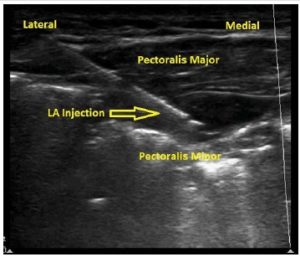
Pectoralis minor blocks are still relatively new and require further evaluation, but may have a place in peri-operative pain management for the appropriate cases. Still considered as less invasive procedure in comparison to thoracic epidurals and para-vertebral blocks. Complications of thoracic epidural and para-vertebral blocks like spinal cord injury and pneumothorax makes many anaesthetists interested in practising pectoralis minor block guided by ultrasound. Blanco first introduced the pectoralis minor block in 2011, he did study on 50 patients within 2 years. Results were very promising, all patients did not need any opiates but only paracetamol and non-steroidal anti-inflammatory (NSAID) drugs got used.


View Full Article: HERE

Go through the Journal: http://www.enlivenarchive.org/anesthesiology-open-access

Contact Us:anesthesia@enlivenarchive.org
Comparative Study between Levobupivacine versus Levobupivacaine Plus Dexmedetomidine for Transversus Abdominis Plane Block ?TAP? in Post-Operative Pain Management after Abdominoplasty

Transversus abdominis plane “TAP’’ block has been reported to be effective for post-operative analgesia for patients undergoing surgery involving abdominal wall incision by blocking anterior branches of thoracolumbar nerves originating from T6 – L1 , which innervates anterior abdominal wall.

Dexmedetomidine has a well – known benefit in the relief of postoperative pain. The objective of this study is to evaluate effect of adding dexmedetomidine to levobupivacaine for preemptive TAP block in the post-operative pain management after abdominoplasty surgery.


View Full Article: HERE

Go through the Journal: http://www.enlivenarchive.org/anesthesiology-open-access

Contact Us: anesthesia@enlivenarchive.org

Degree of Motor Block Measured by Bromage Scale is not Correlated with Muscle Relaxation

Achieving adequate motor and sensory blockage in spinal anesthesia allows the comfortable performance of surgical interventions. However, in certain operations on the lower extremities, surgeons report that adequate muscle relaxation is not achieved. The purpose of this study was to evaluate muscle relaxation subsequent to the administration of spinal anesthesia in orthopedic cases of the lower extremities, using muscle monitoring (Train-of-four) (TOF) and comparing these values with motor and sensory block levels.


View Full Article: HERE

Go through the Journal: http://www.enlivenarchive.org/anesthesiology-open-access

Contact Us: anesthesia@enlivenarchive.org

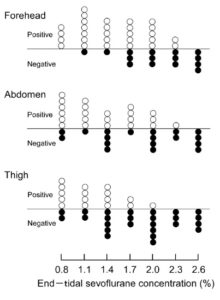
Minimum Alveolar Concentration Needed to Block Adrenergic Response of Sevoflurane with Nitrous Oxide Varies Depending on the Stimulation Sites in Adult Surgical Patients

We examined whether minimum alveolar anesthetic concentration needed to block adrenergic response (MAC-BAR) of sevoflurane with nitrous oxide (N2O) varies depending on body surface sites to which noxious stimuli are applied.

View Full Article: HERE

Go through the Journal: http://www.enlivenarchive.org/anesthesiology-open-access

Contact Us: anesthesia@enlivenarchive.org

Ultrasound guided Transverses Abdominal Plane Block versus Ilioinguinal/iliohypogastric Nerve Blocks for Postoperative Analgesia in Children Undergoing Lower Abdominal Surgery

Pediatric patients undergo a variety of lower abdominalsurgical procedures that need adequate pain relief perioperatively. Ultrasound guided lioinguinal/iliohypogastric nerve blockade and TAB block are common peripheral nerve block techniques used to alleviate pain in pediatric anesthesia. Ultrasound guidance, promote the visualization of important anatomy and can help overcome many of the traditional obstacles of in advert important structures injury in infant’s delicate soft tissues when performing these blocks.


View Full Article: HERE

Go through the Journal: http://www.enlivenarchive.org/anesthesiology-open-access

Contact Us: anesthesia@enlivenarchive.org


Does Preoperative Carbohydrate Intake Reduces Postoperative Stress Response in Patients Undergoing Valve Replacement Surgeries

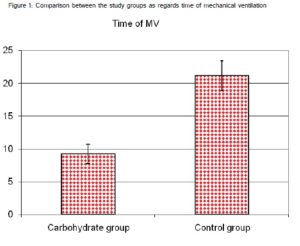
Cardiac surgery is a stress that causes insulin resistance leading to increased insulin requirements. The aim of our study was to evaluate whether preoperative oral intake of carbohydrate rich drinks could improve outcomes and reduce stress response post valve replacement cardiac surgeries.

View Full Article: HERE

Go through the Journal: http://www.enlivenarchive.org/anesthesiology-open-access

Contact Us: anesthesia@enlivenarchive.org

SMOFlipid versus Intralipid in Postoperative ICU Patients

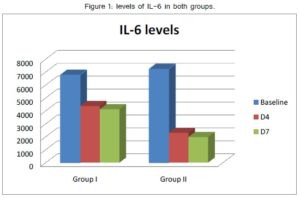
Lipids are important components of total parentral nutrition, especially for patients after major abdominal surgery. Traditionally used intralipid has many complications and can lead to increased infection rate and sepsis, that is why, it is not indicated in cases with low immunity and sepsis. So, in this study, we compared the effect of intralipid and SMOFlipid on the level of IL-6, in addition to lipid profile, liver enzymes, coagulation profile and renal functions.


View Full Article: HERE

Go through the Journal: http://www.enlivenarchive.org/anesthesiology-open-access

Contact Us: anesthesia@enlivenarchive.org

Fibromyalgia-Out of The Dark Tunnel

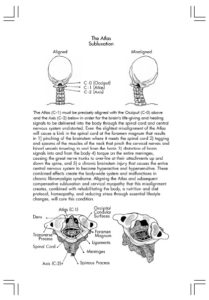
My name is Valerie Lumley, recovered fibromyalgic and author of “Curing Chronic Fibromyalgia – Choosing What Works.” The intension of my book first is to help fibromyalgia (FMS) sufferers regain their health, and secondly, create a paradigm shift in the way FMS is viewed. Contrary to popular belief, FMS is curable. Curing this condition led me to discover that FMS is a syndrome caused by a chronic brainstem injury, which over time distorts the signals from the brain into the body and back again that regulate all biological functions, and causes the entire central nervous system to become hyperactive and hypersensitive at the same time. This state leads to all symptoms of FMS, both common and uncommon. All stress, mild or overwhelming, exacerbates this condition.


View Full Article: HERE

Go through the Journal: http://www.enlivenarchive.org/anesthesiology-open-access

Contact Us: anesthesia@enlivenarchive.org

Patient Controlled Epidural Analgesia (PCEA) with or without Background Infusion using Fentanyl and Bupivacaine for Major Upper Abdominal Surgery

The aim was to compare, patient controlled epidural analgesia (PCEA) with demand bolus (Group A) versus demand bolus and continuous infusion (Group B) in terms of analgesic efficacy and side effects after major abdominal surgery. The primary outcome of the study was VAS score at rest and on coughing, number of demand and successful delivery of analgesia. The secondary outcomes evaluated were total fentanyl and bupivacaine doses, frequency of rescue analgesia, sedation scores and side effects.

No drug was given through epidural catheter passed preoperatively. Postoperatively, when VAS > 3, Patient Controlled Analgesia (PCA) pump was programmed to deliver on demand, 3.5 ml containing 10 mcg of Fentanyl and 2 mg of Bupivacaine in Group A with a lockout interval of 15 minutes. In Group B, continuous infusion of same solution at 3.5 ml/hr was also given. Patient was asked to rate the analgesia. Rescue analgesia was given with IV Tramadol 2mg/kg when VAS > 3 at rest despite three consecutive demands.


View Full Article: HERE

Go through the Journal: http://www.enlivenarchive.org/anesthesiology-open-access

Contact Us: anesthesia@enlivenarchive.org