Nipple Inflammation: An Unusual Adverse Effect from Vemurafenib, A V600E BRAF Inhibitor during Off-Lable Treatment for Anaplastic Thyroid Carcinoma

Anaplastic thyroid cancer is regarded as one of the most aggressive of all solid malignant tumors. Until recently the prognosis for patients with these cancers was almost universally bleak with an expected median life expectancy of about 5-months. Although traditional chemotherapy or radiation therapy offers little chance of cure, targeted therapy against mutant tyrosine kinase inhibitors such as BRAF-V600, may give some hope in treatment of these aggressive cancers. The following case report adds information to the well-known cutaneous adverse effects associated with targeted therapy with vemurafenib, an inhibitor of BRAF-V600.


View Full Article: HERE

Go through the Journal:  http://www.enlivenarchive.org/clinical-dermatology

Contact Us: dermatology@enlivenarchive.org
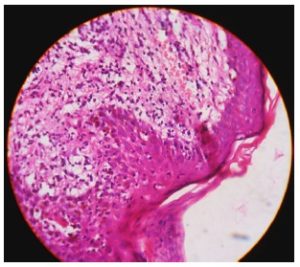
 

An Original Clinical Study on Photo-Sparing Pityriasis Rosea a?” A Rare Variant of this Exanthem

Background: The usual distribution of lesions in pityriasis rosea (PR) is on the trunk and proximal aspects of the limbs. Only two patients with photo-sparing PR, denoting that the sun-exposed skin regions bear much less or no lesions as compared to the skin regions sheltered from sunlight, have been reported.

Objectives: To investigate the proportional incidence, risk factors, clinical features, co-morbid associations, and complications of photo-sparing PR.

Methods: Our settings were skin clinics. We searched our clinical database, and retrieved clinical data of patients with PR and photo-sparing PR over eight calendar years.


View Full Article: HERE

Go through the Journal: http://www.enlivenarchive.org/clinical-dermatology

Contact Us: dermatology@enlivenarchive.org
Scientific & Clinical Evidence of Combining an Anti-Oedematous Solution with a Specific Pro-Inflammatory Cytokine Inhibitor is the Only Approach for the Treatment of Hemorrhoids

Hemorrhoids are dilated, oedematous and inflamed veins of the venous plexus of the anal opening. Treating hemorrhoids therefore requires reducing the oedema as well as the concentration of pro-inflammatory cytokines present on the hemorrhoidal surface. In the absence of any treatment designed to act on these causes, currently there is no satisfactory treatment for hemorrhoids.


View Full Article: HERE

Go through the Journal: http://www.enlivenarchive.org/clinical-dermatology

Contact Us: dermatology@enlivenarchive.org


Epidemiology and Prevention of Allergy in 94 Children

In this paper we present 94 children affected with atopic dermatitis (AD), aggravated by respiratory allergy, asthma and/or allergic rhinitis (AR). AD is a common disorder, frequently complicated by asthma-like symptoms, we debate either disorder and conclude that both AR and asthma can afflict most babies with AD, especially when both parents smoke. We confirm our previous statistics, according to which little children not fed breast milk may react to smallest doses of allergens.


View Full Article: HERE

Go through the Journal: http://www.enlivenarchive.org/clinical-dermatology

Contact Us: dermatology@enlivenarchive.org
 

Assessment of the Frequency of Gastrointestinal Symptoms in Patients with Acne in Dermatology Department of Bu-Ali-Sina Hospital in Qazvin from 2014 to 2015

Many years ago, two dermatologist named H. Stokes and Donald M. Pillsbury presented a mechanism to explain the pathophysiology of acne as the gut-brain-skin axis. In 2008 Hang Zhang In a study of 13,215 adolescents, represented gastrointestinal symptoms such as halitosis, gastric reflux, abdominal bloating and constipation in patients with sebaceous gland diseases such as acne, are more common than in healthy controls. He also noted that gastrointestinal dysfunction is an important risk factor for diseases of the sebaceous glands and is associated with their occurrence and progression. In a study conducted in 2014 by H. Ismaeili, a strong correlation between gastrointestinal dysfunction including bloating and constipation, and acne severity, was mentioned.

In this cross sectional, case-control study, we sought to evaluate the frequency of gastrointestinal symptoms in acne patients compared with healthy individuals. In this study, 221 person including 112 patients and 109 healthy for any skin disorder and acne disease, all referred to the dermatology department of Bu-Ali hospital in the city of Qazvin were randomly participated over a one year period (2014-2015) .The frequency of the severity of gastrointestinal disorders in patients were compared with controls. The relationship between the severity of acne in patients with severity of gastrointestinal disorders, and factors such as gender, age, education and marital status were examined. The two groups were matched for their member’s age, sex, education and marital status.


View Full Article: HERE

Go through the Journal: http://www.enlivenarchive.org/clinical-dermatology

Contact Us: dermatology@enlivenarchive.org


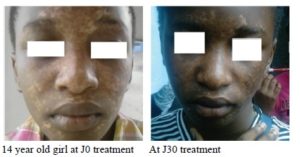
Epidemiological Profile of Childhood Vitiligo: Study of 77 Cases in Kinshasa/R.D.Congo

Vitiligo is a skin condition characterized by acquired complete epidermal depigmentation areas, it is the most common acquired hypomélanoses. This is a pathology, cosmopolitan, which affects about 1.5 to 2% of the world population, regardless of gender or ethnic origin [1].

Vitiligo usually starts in childhood or in young adults, about half to a third party develops the disease at age 20 and about 25% of them develops within 8 years with a mean age of onset between 4 and 5 years [2]. Vitiligo may also be hereditary, in fact, 20 to 30% of sufferers have a family member with the disease [3]. The controversy regarding its pathogenesis is still valid, several theories are used the most discussed of which are: autoimmune, neurogenic, autotoxique and oxidative stress. In its evolution, vitiligo may be associated with certain autoimmune diseases, including thyroid diseases, diabetes mellitus and may affect social life.


View Full Article: HERE

Go through the Journal: http://www.enlivenarchive.org/clinical-dermatology

Contact Us: dermatology@enlivenarchive.org

Dermatosis Papulosa Nigra

Dermatosis papulosa nigra is a common, benign skin condition characterized by multiple, asymptomatic, superficial, black or dark-brown, round, domeshaped or flat, macules or more often papules. The size of individual lesion usually ranges from 1 to 5 mm. Sites of predilection include the face, neck, and upper trunk. Dermatosis papulosa nigra occurs predominantly in darker-skinned individual. The incidence increases with age and is rare before puberty. The male to female ratio is approximately 1:2. There is a genetic predisposition. Ultraviolet irradiation may have a role to play. Activating point mutations of the FGFR3 and the PIK3CA genes are involved in the pathogenesis. Treatment is usually not necessary apart from reassurance about the benign nature of the condition. For those patients in whom treatment is desired mainly for esthetic reasons, treatment options most commonly include: curettage, ablative laser, excision, and electrofulguration. Liquid nitrogen cryotherapy can also be tried in some cases with great care due to higher risk of side effects.


View Full Article: HERE

Go through the Journal: http://www.enlivenarchive.org/clinical-dermatology

Contact Us: dermatology@enlivenarchive.org

Atopic Dermatitis Related to Anisakis Simplex Allergy

In 2013, Japanese traditional cuisine (Washoku) is an UNESCO Intangible Cultural Heritage of Humanity designation. One character of Japanese foods is using raw fish in cooking. With washoku becoming more popular around the world, the number of people consuming raw fish is increasing. Anisakis simplex (AS) parasite in sea creature and AS allergy is one potential causing urticaria, angioedema and itching. A traditional Japanese proverb says, “Eating blue or shiny fish sometimes may cause itching”. This meaning may be related with Anisakis simplex (AS) allergy. The custom of consuming raw fish is common in Japan and Spain, since some gastric anisakiasis and other anisakis-related diseases were reported in these countries. Since the 1980s, many cases of allergic reactions by anisakis and the results of specific IgE to anisakis have been reported.


View Full Article: HERE

Go through the Journal: http://www.enlivenarchive.org/clinical-dermatology

Contact Us: dermatology@enlivenarchive.org


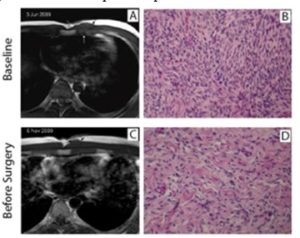
Treatment of Dermatofibrosarcoma Protuberans with Imatinib before Minimal Surgery could Prevent Local Relapses

Dermatofibrosarcoma protuberans (DFSP) is cutaneous soft tissue sarcoma affecting mainly young adults and characterized by an indolent slow dermal growth leading to late diagnosis when large tumours cause important aesthetics and functional impairments. Local relapses due to insufficient excision are common. Therefore, complete excision of the primary tumour with free margins is the cornerstone therapeutic option with subsequent potential mutilations decreasing the quality of life patients.

The genetic landmark of DFSP is a unique chromosomal translocation displacing the promoter of the collagen type1 α1 next to the platelet-derived growth factor (PDGF) gene. This leads to an unregulated production of PDGF activating the tumour growth after binding on its dedicated receptors. Based on the pathogenesis of this lesion, the option of treating DFSP patients with imatinib mesylate, a tyrosine kinase inhibiting this loop, has raised.

We have treated consecutively four patients affected by a dermatofibrosarcoma with imabinib mesylate in order to downsize the tumour before surgery. All of them responded and curative surgery was thereafter performed. No relapse was observed after a median follow up of 32 months. Therefore, our results assess the value of using Imatinib as neoadjuvant treatment of DFSP and we put into perspectives with the existing literature observations.


View Full Article: HERE

Go through the Journal: http://www.enlivenarchive.org/clinical-dermatology

Contact Us: dermatology@enlivenarchive.org

Measles Emergence at Adulthood after Implementation of Routine Vaccinations for Infants and Children

Childhood infectious diseases started to emerge at adulthood as a result of fading vaccine protection after long period of time, ineffective vaccine, or unvaccinated individuals. The vulnerability to infection at adult age group is due to decline or absence of protective immunoglobulin (seronegatives group). Many reports indicate outbreaks of mumps, measles, and whooping cough, at adults who were vaccinated at childhood. It was suggested that the reason for re-emergence of mumps or measles was poor efficacy of MMR vaccine. In Europe there is an increase in the incidence of measles among young adult age group in recent years that indicates a shift of the illness from childhood to adulthood.


View Full Article: HERE

Go through the Journal: http://www.enlivenarchive.org/clinical-dermatology

Contact Us:dermatology@enlivenarchive.org