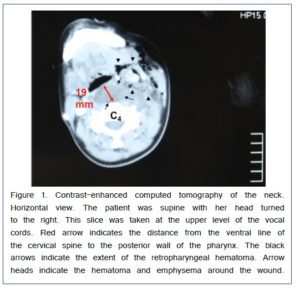
Difficult Airway due to Retropharyngeal Hematoma after Stabbing to the Neck

Reports of retropharyngeal hematoma have been scarce in the anesthesiology literature. We report a patient whose trachea was difficult to intubate due to retropharyngeal hematoma after stabbing to the neck. A woman with a knife injury to the common carotid artery required emergency carotid arterioplasty. When tracheal intubation was attempted, marked swelling of the posterior pharyngeal wall made the vocal cords impossible to visualize. Preoperative computed tomography showed a retropharyngeal hematoma. The patient required mechanical ventilation for 2 days.


View Full Article: HERE

Go through the Journal: http://www.enlivenarchive.org/anesthesiology-open-access

Contact US: anesthesia@enlivenarchive.org

Hemodynamic Assessment and Monitoring in the Intensive Care Unit: an Overview

The goal of hemodynamic monitoring in intensive care is to assess the adequacy of perfusion, specifically with regard to maintaining sufficient perfusion pressures and oxygen delivery. Precise volume management of peri-operative and critical care patients is crucial as under or over resuscitation is associated with adverse outcomes. Hemodynamic monitoring allows care to be individualized based on specific patient response to therapy and can provide early warning of impending perfusion deficits or instability. Physiologic monitoring aids determination of appropriate therapy.


View Full Article: HERE

Go through the Journal: http://www.enlivenarchive.org/anesthesiology-open-access

Contact Us: anesthesia@enlivenarchive.org

Red Blood Cell Distribution Width and Mortality in ICU Patients; A Cross Sectional Retrospective Analysis Red Blood Cell Distribution Width and Mortality in ICU Patients

Introduction

The red blood cell distribution width (RDW) is a predictor of mortality in many conditions. We investigated the prognostic value of RDW in the general ICU population.


Methods

Two hundred and seventy-four patients were enrolled into this retrospective, cross sectional study in general full range ICU. Patients with history of recent blood transfusion, hematologic disorder and length of stay (LOS) ≤ 48 hours in ICU were excluded. The identification of these patients was performed via the central medical database of our hospital retrospectively. The patients were classified according to their age, LOS and clinical outcomes. The RDW values were recorded upon ICU admission (RDW-0) on 4th, 10th, 20th and 30th days respectively in ICU. The RDW value of the last blood sample was termed as RDW-last, and RDW-last% was defined with the percentage of RDW-last/RDW-0.

We used Student’s t test and Mann Whitney U test to compare the groups. Repeated measures and parameters were analyzed using ANOVA and paired t tests. Logistic regression and ROC tests were also performed to determine the efficiency of the parameters for prognosis.


View Full Article: HERE

Go through the Journal: http://www.enlivenarchive.org/anesthesiology-open-access

Contact Us: anesthesia@enlivenarchive.org


Cuffed Endotracheal Tube Size and Leakage in Pediatric Tracheal Models

Cuffed endotracheal tubes are increasingly used in pediatric patients in the hope that they can reduce air leakage and tube size mismatch by just inflating the cuff. Authors compared influence of various tube sizes and different levels of cuff pressures to air leakage around the cuff, in artificial tracheal models.


View Full Article: HERE

Go through the Journal: http://www.enlivenarchive.org/anesthesiology-open-access

Contact Us: anesthesia@enlivenarchive.org

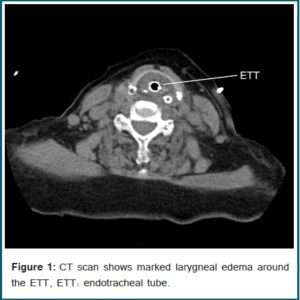
Delayed Intractable Postextubation Laryngeal Edema after General Anesthesia

We report a case of delayed intractable postextubation laryngeal edema after extubation in 78-year-old female patient who underwent uneventful operation. The patient had underwent tracheostomy 30 years ago. After 14 hours extubation, she developed postextubation laryngeal edema. Reintubation was done, and she was transferred to the intensive care unit. After this, tracheal intubation is repeated, postextubation laryngeal edema occurs again 48 hours after extubation the last, after all, the patient underwent a tracheostomy. postextubation laryngeal edema can happen any time after the extubation despite of intensive treatment, particularly in patients with history of previous tracheostomy. It seems ideal to avoid tracheal manipulation if other anesthetic plan is available and careful history taking and evaluation of airway will be helpful for these patients.

View Full Article: HERE

Go through the Journal: http://www.enlivenarchive.org/anesthesiology-open-access/

Contact US: anesthesia@enlivenarchive.org

New Therapeutic Strategies for Ventricular Remodeling in Acute Myocardial Infarction and Pressure Overload: The Long Way to Heaven

Despite the striking improvements recently achieved in the diagnosis and treatment of acute myocardial infarction (AMI), this condition remains a leading cause of death worldwide. The term “ventricular remodeling” refers to changes in ventricular geometry (dilation, sphericity, wall thinning) and stiffness, as well as molecular and functional changes including both cardiomyocytes , other cells of the heart and extracellular matrix.

View Full Article: HERE

Go through the Journal: http://www.enlivenarchive.org/anesthesiology-open-access/

Contact Us: anesthesia@enlivenarchive.org
 

Nefopam Vs Fentanyl in Female Patients Undergoing Laparoscopic Cholecystectomy

Nefopam is a non-opioid drug that inhibits reuptake of serotonin, norepinephrine, and dopamine. Nafopam is equipotent with opioids (morphine andmeperidine) and can decrease postoperative nausea and vomiting (PONV) by morphine sparing effect. So, we compared postoperative pain and PONV between female patients who received nefopam and fentanyl after laparoscopic cholecystectomy (LC).

Methods: Patients were randomly assigned to two groups: those who received fentanyl 1 μg/kg at skin closure (Group F, n=31) and those who received nefopam 30 mg mixed with normal saline 500 ml for 30 minutes during surgery (Group N, n=31). General anesthesia was induced with lidocaine 40 mg, propofol 2 mg/kg, and rocuronium 0.6 mg/kg and was maintained with desflurane and remifentanil 0.5 -1.5 μg/kg/min. Postoperative pain is assessed using visual analogue scale (VAS). VAS, rescue analgesics (fentanyl and ketorolac doses), and PONV were evaluated for 0-2 hr, 2-6 hr, 6-12 hr, and 12-24 hr after surgery.

Results: Age-adjusted VAS significantly decreased during the four assessment time periods in both groups (p< .0001). There were no significant differences between the two groups in fentanyl (p =0 .163) and ketorolac (p = 0.676) doses and PONV.

Conclusion: The analgesic effects of nefopam and fentanyl administered after LC in female patients were not significantly different. Nefopam is not inferior to fentanyl for pain control of LC.

View Full Article: HERE

Go through the Journal: http://www.enlivenarchive.org/anesthesiology-open-access/

Contact Us: anesthesia@enlivenarchive.org
 

Renal Artery Stenosis in Patients Undergoing Major Surgery or otherwise Critically Ill: The Short-Circuit between Association and Causality

Risk prediction is an intense field of research and there is an increasing need for an interest in being able to empirically estimate customized, patient-specific risks for virtually all surgical operations in a user friendly format. Surgical risk evaluation before major surgery should offer an opportunity to improve shared decision making and patient care. Yet, there is ongoing debate on how to better identify patients at risk in several important clinical scenarios and when weighing a given risk factor for decision making or when trying to amend it.

View Full Article: HERE

Go through the Journal: http://www.enlivenarchive.org/anesthesiology-open-access/

Contact Us: anesthesia@enlivenarchive.org
 

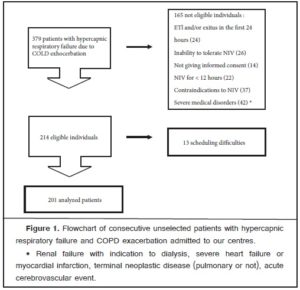
Predictors of Outcome in COPD Patients with Hypercapnic Respiratory Failure Requiring NIV

Background and Objectives:

Delay in identifying patients in whom NIV will be unsuccessful may postpone endotracheal intubation, increasing morbidity and mortality. Aim of this study was to determine factors associated with NIV failure in patients with COPD exacerbations.

Methods:

We retrospectively evaluated COPD patients with acute respiratory failure due to an acute exacerbation, undergoing NIV for at least 12 hours. Univariable analysis was performed on: age, gender, APACHE II, GCS, gas exchange at admission, during NIV and at discharge/death, length of stay. A ROC curve for the variable pH START (arterial pH value at admission) was performed and sensitivity,specificity, likelihood ratios and confidence intervals, were calculated.

Results:

Among 201 enrolled individuals, NIV failed in 50 subjects, leading to invasive ventilation and/or death. NIV succeeded in patients with: lower APACHE II (20.02±4.81 in succeeding group vs 24.84±6.35 in failing group, p<0.001) and PaCO2 at admission (93.10±15.08 vs 98.45±16.09, respectively, p=0.029) and after 2-4 hours of NIV (77.62±13.62 vs 82.12±15.24, respectively, p=0.044), and higher pH at admission (7.26±0.06 vs 7.23±0.08, respectively, p=0.033), and GCS (12.94±2.44 vs 11.24±3.32, respectively, p=0.001).

No variable was found to be able to predict NIV failure in patients with pH START >7.20 and ≤7.25, despite the high percentage of successes observed in this subset of individuals (81%).

Conclusion:

Further multicentric studies are needed to better define NIV indications, with special reference to pH thresholds.

View Full Article:  HERE

Go through the  Journal: http://www.enlivenarchive.org/anesthesiology-open-access/

Contact Us: anesthesia@enlivenarchive.org
 

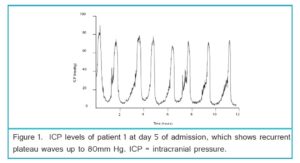
Plateau Waves, Intracranial Hypertension and Prognosis. How Identical Waves can Lead to Different Outcomes in Two Patients with Traumatic Brain Injury

Elevated intracranial pressure (ICP) can lead to secondary brain damage and is associated with worst outcome in patients with traumatic brain injury. We present two clinical cases of high ICP due plateau waves. This, frequently occurring cause of high ICP, can cause confusion at the bedside if not recognized. High ICP due to plateau waves has a different prognostic implication and treatment algorithm compared to other causes of high ICP. We describe the pathophysiology and management of this phenomenon.

View Full Article: HERE

Go through the Journal: http://www.enlivenarchive.org/anesthesiology-open-access/

Contact Us: anesthesia@enlivenarchive.org