Enliven: Clinical Dermatology – Just Another Journal?

The maiden edition of a journal should always be one full of hope and expectation. It brings the promise of another avenue whereby knowledge of the nature of disease and its treatment would be disseminated. But are there not already enough journals to serve the needs of the dermatologic community?


View Full Article: HERE

Go through the Journal: http://www.enlivenarchive.org/clinical-dermatology

Contact Us: dermatology@enlivenarchive.org


Patient with Eisenmenger’s Syndrome and Severe Progressive Kyphoscoliosis presents for Posterior spinal fusion

A fourteen year old male patient with Eisenmenger’s syndrome (ES) and severe, progressive kyphoscoliosis presented for posterior spinal fusion, T2-L2. A thorough, preoperative evaluation and multidisciplinary conference was completed to discuss patient management and the very high risk nature of this procedure. The patient underwent the procedure, but decompensated with reduction of the spinal curvature, which we believe produced right ventricular compression leading to an irreversible pulmonary, hypertensive crisis. The patient expired later the same day.

View Full Article: HERE

Go through the Journal: http://www.enlivenarchive.org/anesthesiology-open-access/

Contact Us: anesthesia@enlivenarchive.org
 

Awake Retromolar Bonfils Intubation in Patient with Very Low Mouth Opening

According to the Italian Society of Anesthesiology (SIAARTI) guidelines, an awake fiberoptic intubation is the gold standard to manage a predicted difficult airway. At our institution, we are experienced in the use of the Bonfils Fiberscope® (Karl Storz), a rigid fiber optic metallic stylet, to intubate patients with expected difficult airways as well as patients with unexpected difficult airways after failed direct laryngoscopic intubation. We performed an awake retromolar fiber optic intubation in a 42-yr-old man with a temporo-mandibular anchilosis, with a very low mouth opening, with a Mallampati class 4 and an interincisor distance of 1,2 cm. A conscious sedation was performed by the administration of i.v. midazolam 0.03 mg/kg and fentanyl 2 mcg/kg. The topical anesthesia consisted in the administration of lidocaine spray 10% puffs in the oral cavity, in particular in the right vestibule with the adjunct of an instillation of lidocaine 1 % on the glottis aditus through an atomizer (Optispray®) under endoscopic vision. The retromolar approach is the method of choice in patients with limited mouth opening compared to the paraglossic technique; since the device is introduced laterally in the vestibule of the oral cavity, it can be well tolerated by the patient.

View Full Article: HERE

Go through the Journal: http://www.enlivenarchive.org/anesthesiology-open-access/

Contact Us: anesthesia@enlivenarchive.org
 

Rapid Response System in the Recognising of the Deteriorating Patients: Respiratory Complaints are the Origins

Rapid response team (RRT) system is a structure that contains a set of clinical criteria for certain conditions to detect and intervene on any abnormal signs and symptoms that do not meet these criteria by a qualified expert team [1]. To date, as a professional respiratory therapist in Saudi Arabia, one of the most significant challenges for the Ministry of Health is to provide high standards of professional quality without harm. Notable examples of such a challenge are increasing numbers of patients with special care needs and a lack of a comprehensive team able to detect and manage acute symptoms of deteriorating patients before an emergency arises, and that specifically in wards areas. This is exemplified in a Saudi Arabian study conducted by Rehmani et al.[2] showing around 82% of ward patients who had cardiac arrests had deterioration signs in the previous 24 hours. Recently, several papers have been published reporting positive effects after implementations of RRT. Therefore, this article will review the literature in light of recent evidence to determine the implementation effectiveness of RRT system and role of respiratory therapists in improving serious conditions at the appropriate time for patients in hospital wards and decrease number of deaths.

View Full Article: HERE

Go through the Journal: http://www.enlivenarchive.org/anesthesiology-open-access/

Contact Us: anesthesia@enlivenarchive.org
 

Perioperative Fetal Monitoring during Acute Heart Valve Surgery in the 16th Week of Pregnancy: A Case Study with Follow up after Five Years

Cardiac surgery during pregnancy carries an extremely high fetal risk. When conducting anesthesia in the gravid patient care must be taken to avoid uterine contractions, and fetal hypoxia. Thus, in such cases, monitoring the fetal heart rate is of special importance, as early detection of fetal bradycardia can potentially prevent fetal harm.

We present a mother in the 16th week of pregnancy with endocarditis of the aortic valve associated with NYHA IV stage heart failure undergoing successful mechanical aortic valve implantation and reconstruction of the anterior leaflet of the mitral valve. The surgery was remarkable for an episode of serious maternal circulatory failure which was treated with several cycles of reperfusion and ephedrine. Perioperative fetal heart rate monitoring was carried out using Doppler ultra-sound technology. There was no critical fetal bradycardia encountered in the intra and perioperative period.

Birth was on term via vaginal delivery, with satisfactory weight and Apgar score. Dysmorphic face and multiple tarsal syndactylia were detected with accompanying partial dysgenesis of the corpus callosum on cranial ultrasound testing. These were attributed to an inherited gene mutation as a part of Pfeiffer syndrome, which, in fact, had familial aggregation on further investigation. Additionally, the newborn demonstrated symptoms of secondary hypadrenia possibly resulting from the serious maternal condition during the pregnancy, although the use of anesthetics in the 2nd trimester cannot be excluded as a cause.

During our follow up, both the somatic and mental development of the child remained unaffected. No cognitive or learning disabilities were apparent.

View Full Article: HERE

Go through the Journal: http://www.enlivenarchive.org/anesthesiology-open-access/

Contact Us: anesthesia@enlivenarchive.org


Echocardiographic Predictors of Alveolar Capillary Dysplasia: A Case-Control Study

Objective

To evaluate early echocardiographic variables of neonates with alveolar capillary dysplasia (ACD).

Study Design

A case-control study of five neonates with ACD and their matched controls on extracorporeal membrane oxygenation from 2000-2011. Two cardiologists prospectively reviewed first admission echocardiograms. Statistical tests included Kappa, T-test, Mann-Whitney, Fisher’s exact, and Chi-square analysis.

Results

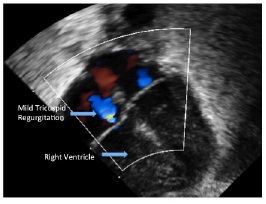
Excellent inter-rater reliability readings were achieved (Kappa 0.75-1). Tricuspid regurgitation (TR) velocities between the groups were not statistically significant; all ACD cases and 75% of the controls had TR velocities ≥ 3.2 m/sec. More ACD cases had moderate-severe TR jet (80% vs. none, p<0.01); moderate-severe right atrial enlargement (RAE) (100% vs. none, p<0.01); moderate-severe right ventricular (RV) dilatation (100% vs. none, p<0.01); and moderate-severely depressed RV function (60% vs. none, p<0.01). ACD patients were 12 times more likely to have a combination of moderate-severe RAE and moderate-severe TR jet compared to controls (OR = 11.6 [2-68]).

Conclusion

The combination of moderate-severe RAE and TR jet unresponsive to maximal interventions should alert clinicians of the possibility for ACD. We speculate that early echocardiographic predictors may identify at-risk neonates with fatal ACD and lead to early consideration of lung transplant.

View Full Article: HERE

Go through the Journal: http://www.enlivenarchive.org/anesthesiology-open-access/

Contact Us: anesthesia@enlivenarchive.org

The Effect of Preemptive Oral Celecoxib on Pain Reduction and Opioid Consumption during Elective Herniorrhaphy

Introduction: Pain control is an important aspect in postoperative care. While opioids proved excellent analgesia undesirable side effects such as respiratory depression, nausea and vomiting, constitute major limitation. As a result, many surgical centers used NSAIDs for controlled acute pain of surgery. Celecoxib is NSAIDs that inhibits cox2, but it does not have GI side effect and coagulopathy disorder. The aim of this study was to determine the effect of preemptive celexib on pain score reduction and opioid consumption after herniorrhaphy.

Material and Method: This is a randomised double blinded clinical trial study which performed in Imam Ali and Khatam hospital in zahedan. 76 patients scheduled for elective herniorrhaphy were enroled in this study. Patients were divided into 2GROUPS; celexib group (n=38) and placebo group (n=38). Drugs (placebo or 200mg celexib) were given (oraly) 2 hours before operation to patients. All patients general anesthetized with midazolam (1-2mg), fentanyl (1-2μg/kg) for premedication; nesdonal (4-6mg/kg) and atracorioum (0.5mg/kg) for induction and propofol (100-200 μg/kg) for maintenance. Then pain score (vas score), heart rate, blood pressure was recorded in 2nd, 6th, 12th and 24th hours after tracheal extubation. Pain was treated with morphin 0.1 mg /kg in patients with vas score >4. Total Opioid consumption was recorded for 24hours.

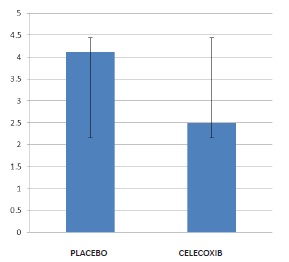
Results: Mean painless time in celexib group was higher than placebo group {12.7±9.8 to 5.38±8.3 (p=0.04)} and mean pain score of 2nd hour in the celexib group was lower than placebo {2.2±2.2 to 5.7±3.5 (p=0.003)}. The mean opioid used in celexib group was lower than placebo group {5.33±6.1 to 11.15±7.1 (p=0.02)}. But difference in mean of HR and BP between two groups wasn’t significant.

Conclusion: Preemptive clexib to be able to reduce pain score and consumption of opioid after hernirrhaphy.

View Full Article: HERE

Go through the Journal: http://www.enlivenarchive.org/anesthesiology-open-access/

Contact Us: anesthesia@enlivenarchive.org

Shoulder Pain Post-Laparoscopy Surgery: Ketoprofen-Tramadol Infusional Therapy

Introduction

Post-operative pain with difficult control, is a reality that can occur in patients undergoing laparoscopic cholecystectomy, it is good comprehensively assess the patient and give a painkiller scheme that ensures the absence of pain.

Objective

To compare the analgesic efficacy of tramadol-ketoprofen over a control group in three management schemes in infusional therapy; to control the painful entity (shoulder pain post-laparoscopy surgery).

Material and Methods

Clinical trial non-randomized; Group I (n = 15) managed with ketorolac 1mg/kg; Group II (n = 12) ketoprofen 100mg; Group III (n = 14) ketoprofen 50 mg plus tramadol 50 mg and Group IV (n = 15) ketoprofen 100 mg plus tramadol 100 mg. The variability analyzed was: Pain, pain bailouts, side effects and patient satisfaction.

Results

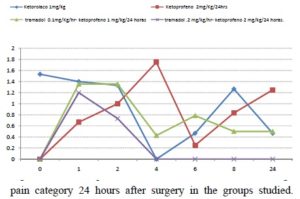
The highest intensity of pain was found in Group I (conventional) , unlike Group II and III where the predominant category was mild pain, the Group IV presents minimal pain events; 98% significance of p <0.01.

Conclusion

The analgesic efficiency of ketoprofen in infusional therapy is superior to the conventional administration of ketorolac; nevertheless the analgesic scheme handled with ketoprofen 100 mg plus tramadol 100 mg reaches the analgesic efficiency.

View Full Article: HERE

Go through the Journal: http://www.enlivenarchive.org/anesthesiology-open-access/

Contact Us: anesthesia@enlivenarchive.org

Postoperative Myocardial Infarction following Noncardiac Surgery; A Case Report

Postoperative myocardial infarction (PMI) is associated with mortality and morbidity in patients undergoing cardiac or noncardiac surgery. In this case report a patient with PMI and cardiac arrest with successful outcome is presented. Aspirin should not be routinely discontinued for elective noncardiac surgery, and the risks of stopping aspirin should be evaluated more seriously. Cardiac arrest in the postoperative care unit (PACU) may have better prognosis because diagnosis and apropriate cardiopulmonary resuscitation (CPR) can be performed immediately.

View Full Article: HERE

Go through the Journal: http://www.enlivenarchive.org/anesthesiology-open-access/

Contact Us: anesthesia@enlivenarchive.org