Got Crystals? Try Racemic Protein Crystallography

Verification of bioinformatics structure predictions depends heavily on the protein data bank. The best protein structures are generally acquired through X-ray crystallography, but the main difficulty of this technique is crystallization. One approach to generating crystals is to start with a solution containing one half the original protein and one half the mirror image protein, a racemic mixture. The mirror image protein can be directly synthesized from D-amino acids, up to 50 amino acids long. These molecules can be combined together with a technique called chemical ligation to create larger proteins. Racemic crystals generally form centrosymmetricachiral crystals which is a constraint that aids in the computation of the structure. Achiral racemic crystals are also energetically favored to crystallize relative to chiral crystals. Racemic protein crystallography is an essential approach for proteins that do not form a normal crystal.


View Full Article: HERE

Go through the Journal: http://www.enlivenarchive.org/bioinformatics-open-access

Contact Us: bioinfo@enlivenarchive.org


IABP: The Show Goes on but All that Glitters is not Gold

Despite remarkable improvements in early diagnosis and treatment of acute myocardial infarction (AMI), cardiogenic shock is still the most common cause of in hospital mortality and morbidity associated with AMI, which occurs in about 7% of these patients.

The intra-aortic balloon pump (IABP) has long been widely recognized as the most promising and effective mechanical haemodynamic support device . The IABP is a catheter-mounted balloon positioned in the descending aorta, usually through a percutaneous femoral approach. Counterpulsation is achieved by rapid inflation in the diastole and deflation in systole of the balloon synchronised to the cardiac cycle.

View Full Article: HERE

Go through the Journal: http://www.enlivenarchive.org/anesthesiology-open-access/

Contact Us: anesthesia@enlivenarchive.org


Mesenchymal Stem Cells and Cartilage Regeneration in Traumatic and OsteoarthriticCartilage Defects

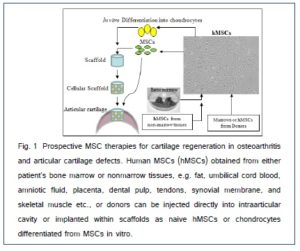
Osteoarthritis (OA) affects several hundred million people and is one of the leading causes of disability around the world. Aging is the most influential risk factor for developing OA. Cartilage has a limited ability to spontaneously heal; therefore, it needs surgical intervention in case of cartilage defects caused by traumatic injury or degenerative disease. Due to the shortage of autologous chondrocytes and autografts that require additional defects, adult human mesenchymal stem cells (MSCs), the precursors of chondrocytes, become possible options for cartilage regeneration in traumatic and Osteoarthritic cartilage defects.


View Full Article: HERE

Go through the Journal: http://www.enlivenarchive.org/stem-cell-research-regenerative-medicine

Contact Us: stemcell-research@enlivenarchive.org

Barth Syndrome and Left-Ventricular Non-Compaction: Case Report and Surveillance Plan Prior to Cardiac Transplantation

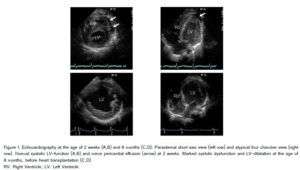
Barth syndrome, an X-linked disorder of cardiolipin metabolism, shows cardioskeletal cardiomyopathy, neutropenia, psychomotor and growth retardation. A limiting factor is heart function. We present a ten year old boy who underwent heart transplantation after bridging with an assist device at 8 months, and propose a surveillance plan prior to transplantation.


View Full Article : HERE

Go Through The Journal : http://www.enlivenarchive.org/surgery-and-transplantation

Contact Us : surgery-transplantation@enlivenarchive.org

Probiotics for Total Health : Better Today and Tomorrow

Probiotics are live bacteria and yeasts that are good for your health, especially your digestive system. We usually think of bacteria as something that causes diseases. But your body is full of bacteria, both good and bad. Probiotics are often called “good” or “helpful” bacteria because they help keep your gut healthy. Probiotics are naturally found in your body. You can also find them in some foods and supplements.


View Full Article : HERE

Go Through The Journal : http://www.enlivenarchive.org/pediatrics-and-neonatal-biology

Contact Us : pediatrics-neonatal@enlivenarchive.org


Endothelial Cell Survival under High Glucose Condition: Effect of Rivaroxaban

Background: Endothelial injury is regarded as a key early event in the development of atherosclerosis. High level of glycemic excursion has been reported to play an important role in the pathogenesis of atherosclerosis. Recently, proteinase-activated receptor-2 (PAR2), activated by factor (F) Xa, has been shown to play a pivotal part in diabetes-induced endothelial dysfunction. In the present study, we have investigated the effect of rivaroxaban, a direct FXa-inhibitor by analyzing cellular biological function of human umbilical vein endothelial cells (HUVECs) in a glycemic excursion-model.

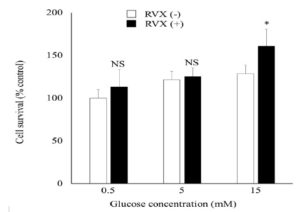
Methods: HUVECs were starved in 1% fetal calf serum media with 0.5% glucose for 4 hours and treated with or without rivaroxaban 0.1μg/mL, followed by stimulation of glucose in concentration of 0.5 mM, 5mM, 15mM and 30 mM. Cell viability was measured after 3 hours of stimulation by glucose using 3-(4, 5-dimethylthiazol-2-yl)-2, 5-diphenyltetrazolium bromide (MTT) assay. Cell without rivaroxaban treatment and then stimulated with 0.5mM glucose was used as control. The high glucose-induced cell apoptosis was also evaluated with or without pre-treatment of rivaroxaban based on TUNEL method, using fluorescein-dUTP to label DNA strand breaks. All TUNEL-positive HUVECs in whole mount slide were counted. The derivatives of reactive oxygen metabolites (dROMs) were measured 45 minutes after the glucose stimulation to evaluate the production of reactive oxygen species (ROS).

Results: In rivaroxaban treated group, there was a significant increase in cell viability in high-glucose condition (113% in 0.5mM, 103% in 5 mM, 125% in 15 mM compared with cells without rivaroxaban pre-treatment, respectively). There was a significant increase in TUNEL positive cells in a glucose concentration dependent manner without rivaroxaban treatment; however, rivaroxaban pre-treatment significantly inhibited cell apoptosis (75% decrease in 15 mM glucose-stimulated-cells). There was a significant increase in ROS production in glucose-stimulated HUVECs without rivaroxabantreatment, which was also inhibited when pre-treated with rivaroxaban (30% decrease compared without rivaroxaban-pretreatment) (p< 0.05).

Conclusions: Rivaroxaban increases endothelial cell viability and inhibits apoptosis induced by high level of glycemic excursion, possibility through ROS signaling. These results suggest that rivaroxaban may be effective in the prevention of atherosclerosis.

Full Article: HERE

Go through the Journal: http://www.enlivenarchive.org/clinical-cardiology-and-research/

Contact Us: clinicalcardiology-research@enlivenarchive.org
Got Crystals? Try Racemic Protein Crystallography

Verification of bioinformatics structure predictions depends heavily on the protein data bank. The best protein structures are generally acquired through X-ray crystallography, but the main difficulty of this technique is crystallization. One approach to generating crystals is to start with a solution containing one half the original protein and one half the mirror image protein, a racemic mixture. The mirror image protein can be directly synthesized from D-amino acids, up to 50 amino acids long. These molecules can be combined together with a technique called chemical ligation to create larger proteins. Racemic crystals generally form centrosymmetricachiral crystals which is a constraint that aids in the computation of the structure. Achiral racemic crystals are also energetically favored to crystallize relative to chiral crystals. Racemic protein crystallography is an essential approach for proteins that do not form a normal crystal.

View complete article HERE

Reach journal at bioinfo@enlivenarchive.com or bioinfo@enlivenarchive.org

Visit Journal at http://www.enlivenarchive.org/bioinformatics-open-access/