Nutritional risk and malnutrition in elderly patients recently hospitalized

Introduction:
High prevalence of malnutrition in the growing population of older adults makes nutritional screening mandatory for hospitalized elderly patients.

Objective:
Identify nutrition risk and the odds ratio of nutritional screening data of elderly (≥ 65 years old) to adult (21 to 64 years old) patients recently admitted to a tertiary hospital.

Casuistic and Methods:
We applied the Subjective Global Assessment (SGA) protocol in 2478 patients within 48 hours after admission to a public hospital. Subjects were divided into Elderly Group (n = 733) and Non-elderly Group (n = 1745). The data were submitted to Chi-Square test. The quantification of this association was measured using logistic regression models.

Results:
Elderly patients showed a high percentage of nutritional risk or mild/moderately malnourished (41 vs. 32%). The prevalence of severe malnourished was similar between the study groups (10 vs. 9%).

Results of logistic regression showed the odds ratio (OR) of elderly patients were greater for weight loss (OR=1.30), in quantity (OR=1.29) and consistency of food (OR=1.85) changes in the pattern of food intake, anorexia (OR=1.69) and dysphagia (OR=1.56), when compared to the adults. Besides that, elderly patients presented greater risk of diseases with increased metabolic demand and clinical signs of nutritional deficiencies.

Conclusions:
Prevalence of nutritional risk and malnutrition was high in the patients evaluated, and elderly subjects showed higher nutritional risk when compared to other hospitalized patients.These results can be attributed to changes in the pattern of food intake due to anorexia and dysphagia, associated with higher prevalence of diseases with increased metabolic demand.

Full Article: HERE

Go through the Journal: http://www.enlivenarchive.org/dietetics-research-and-nutrition/

Contact Us: nutritiondietetics@enlivenarchive.org
Polyphenols for an Increased Ability to Cope with Environmental Toxicants

Human exposure to environmental toxicants is inevitable, but there is evidence that certain pollutants (e.g. heavy metals and air particulate matter) contribute to major diseases, such as neurodevelopmental and metabolic disorders, cardiovascular disease and some cancer types.

Nutrition can be a means of reducing the disease vulnerability associated with environmental exposures. In this work, the potential of dietary polyphenols to modify environmental and occupational toxicant-induced pathologies is discussed. Published data on the effects of flavonoids, hydroxycinnamic acids, resveratrol and other polyphenols in in vitro and in vivo models show that different compounds can modulate key pathological processes implicated in those diseases. Polyphenols can attenuate oxidative stress, inflammatory response, cell death and carcinogenesis, and modulate other specific mechanisms triggered by toxic pollutants, including by the persistent polychlorinated biphenyls and polycyclic aromatic hydrocarbons.

The critical analysis of the current knowledge in this subject at the interface of nutritional and environmental sciences encourages further research. A deeper understanding of toxicants chronic effects and polyphenol protective mechanisms is expected to advise future nutritional intervention studies.

Full Article: HERE

Gothrough the Journal: http://www.enlivenarchive.org/dietetics-research-and-nutrition/

Contact Us: nutritiondietetics@enlivenarchive.org
 

Clinical Effect of Fibre Supplement in Patients with Ulcerative Colitis Treated with 5-ASA

Ulcerative colitis (UC) is frequently treated with 5-ASA in active disease or to maintain remission. As dietary fibres binds 5-ASA in vitro, we wanted to investigate if a daily supplement of 30 ml of Isphagula Husk in patients with UC in remission or relapse affects disease activity and urinary excretion of 5-ASA.

It is a paired intervention study (trial I) and randomised controlled trial (trial II). The participants with UC in remission received 30 ml of fibre/day (trial I). Participants with relapsing UC were randomised to either 30 ml of fibre or blended breadcrumbs for two-three months (trial II).

The main outcome measures is C-reactive protein and 24 hours’ urine collection of total 5-ASA (trial I). In trial II the disease activity was determined by Inflammatory Bowel Disease Questionnaire (IBDQ) and Simple clinical colitis activity index (SCCAI) questionnaires.

22 participants with UC in remission and 12 with relapsing UC were included. In trial I no significant effect of fibre on CRP or on disease activity was found, whereas a decreased urinary excretion by a median of 6.3 percentage point (range: -50.6-33.6; p=0.03) of total 5-ASA was found. No significant differences were found between fibre and placebo groups in trial II.

A decreased urinary excretion of total 5-ASA was seen in patients with UC in remission, but not in patients with relapsing UC. The number of patients was low and different factors could affect the results, but the results confirm that the in vitro results can be reproduced in patients.

Full Article: HERE

Go through the Journal: http://www.enlivenarchive.org/dietetics-research-and-nutrition/

Contact Us: nutritiondietetics@enlivenarchive.org


Patterns of Feeding Indicators of Children in Sana’a City, Capital of Yemen

Background:
Appropriate feeding practice is critical for the achievement of a healthy growth and development and mere survival of young children. Lack of appropriate
breastfeeding and complementary feeding practices are the main cause of malnutrition. An estimated In Sana’a, 31% of children under five years were
stunted, 11% were wasted, and 23% were underweight. Only 10 % of infants aged less than 6 months have been breastfed, 40% of children aged 0 – 24
months have been fed using bottle, and 58% of children aged 6 -24 months received complementary feeding.

Objective:
To compute and display the feeding indicators as WHO definition and to assess the factors associated with these indicators among children aged from 0
to 24 months living in Sana’a City, capital of Yemen.

Methods:
A sample study consisted of mothers who attended to the Primary Health Care Centers and Hospitals in Sana’a and who had babies less than 2 years of
age. It was conducted from April and June 2014 and 601 were randomly selected.

Results:
Out of 601 study participants, 96% of children have only breast milk in the first five months, 85% started complementary feeding practices at age (6-
9) months, 55% of mothers provide bottle foods with breast milk to their child, while 28% introduce at least 4 food groups from 7 to their children
at age recommended. Age of mothers is an important factor that is significantly associated with exclusive breastfeeding and bottle feeding, whereas
age of child is important factor which reveals significantly association both with complimentary feeding and minimum dietary diversity indicators.

Conclusion:
Dietary diversity practices were inadequate in Sana’a. Age of mothers and age of children were affecting feeding practices. Further researches on improving economic status, a habit of eating together, and exposure to media are important to improve infant feeding practices.

Full Article: HERE

Go through the Journal: http://www.enlivenarchive.org/dietetics-research-and-nutrition/

Contact Us: nutritiondietetics@enlivenarchive.org
 

Effect of Litramine (IQP-G-002AS) on Weight Loss in Overweight and Obese US Population: A Randomised, Double-Blind, Placebo-Controlled Study

Background:
Previous studies have shown that Litramine was effective in weight loss for overweight and obese subjects.

Objective:
To further validate the weight loss effect of Litramine compared to placebo in US population.

Methods:
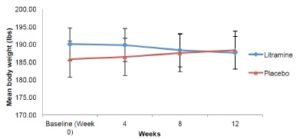
Double-blind, randomised, placebo-controlled study conducted over 14 weeks including 2 weeks run-in. Overweight and obese subjects were randomly
allocated to either Litramine™ or the placebo group. Primary endpoint was the comparison of the difference in body weight (lbs) at baseline and after 12
weeks of treatment with Litramine™ versus placebo.

Results:
The Litramine group lost significantly more weight in comparison to the placebo group who gained weight instead (-2.53 lbs vs 2.56 lbs, p<0.001).

Conclusion:
Litramine is safe and efficacious for body weight loss.

Full Article: HERE

Go through the Journal: http://www.enlivenarchive.org/dietetics-research-and-nutrition/

Contact Us: nutritiondietetics@enlivenarchive.org
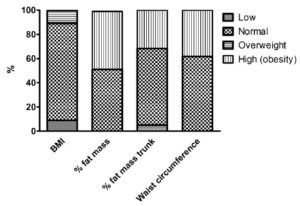
Nutritional Status, Lifestyle, and Risk Behaviors for Eating Disorders in Nutrition Students

Introduction: Health professionals have shown not only similar but actually higher cardiometabolic risk factors than those of their own patients. Moreover, health sciences undergraduate students have shown similar trends in eating behaviors and habits of physical activity and diet than general population. Nutrition students should be more aware of the importance of having a healthy lifestyle and have shown to have more dietary risk behaviors.

Objective: To assess body composition, lifestyle and dietary risk behaviors in Nutrition students. Material and Methods Body composition, physical activity, diet, body image perception, and dietary risk behaviors were assessed in a convenience sample of Nutrition students at a private University.

Results: 90% of the students were within the normal BMI range; however, fat percentage of 50% of the students was above the cut-off point. The only criterion of an adequate diet that was fulfilled by 100% of the students was safety (i.e., innocuous); the least fulfilled criterion was macronutrient balance with only 40%. 78% of the sample met the WHO criteria of physical activity. 5% presented dietary risk behaviors and 40% show body dissatisfaction. Students exceed the DRI for protein, fat and fiber.

Conclusion: Although most of the students have a healthy BMI, 50% of the students have a high percentage of fat; this shows the impact of not having a proper diet. The percentage of fat and muscle mass is not consistent with the results of physical activity. The percentage of students that practice dietary risk behaviors was lower than the national average.

Full Article: HERE

Go through the Journal: http://www.enlivenarchive.org/dietetics-research-and-nutrition/

Contact Us: nutritiondietetics@enlivenarchive.org
The Nutritional Indices Patterns of Children under 5 years Old in Sana’a City, Capital of Yemen

The aim of this study is to determine the Nutritional indicators by Districts and age groups of children in Sana’a City, Capital of Yemen. A sample of study was 1534 children aged under 5 years that was taken from the raw data of Household Budget Survey (HBS) 2005/2006 in Yemen. Height-for-age z score (HAZ), Weight-for-height z score (WHZ), and Weight-for-age z score (WAZ) indicators were used to measure the nutritional status of children. The prevalence of stunting was about 45.7%, and of them, 22.2% were severely stunting, 33.2% of children were considered as severely and moderately underweight, while 15.1% of children had wasting, of which 9.6% had severely wasting in Sana’a City.

The results of chi-square and analysis of variance revealed that highly significant stunting among children in Sanhan District when compared to others (P < 0.01), while risk of wasting among Snahan’s children was likely to be lower significant as compared to other districts. In addition, risk of wasting and underweight among children of Al-sabeen District was likely to be lower significant as compared to other districts. Risk of stunted significantly was higher more in old children (12 – 59) compared to youngest (0 – 11) (P < 0.01), underweight was more highly significant prevalent among (36 – 59) months old children, while risk of severe and moderate wasting were higher among (0 – 11) months youngest children as compared to (24 – 35) months old children (P < 0.01).

Full Article: HERE

Go through the Journal: http://www.enlivenarchive.org/dietetics-research-and-nutrition/

Contact Us: nutritiondietetics@enlivenarchive.org


Is the Desired Body Image can be a Driving Force for Light Food Consumption?

Background: Replacing light beverages and foods with ordinary products is a behavioral attitude to balance healthy weight. Body image is one of the driving affect for changing eating habit. Including the low calorie products in diet is one of the methods of lowering energy.

Objective: In present study we aimed to assess perception and consumption of light products by consumers and to evaluate whether the desired body image can be a driving force for light food consumption.

Design: A questionnaire including demographic parameters and body image of consumers, light-food perception, their awareness and consumption of low calorie products were applied to fifty participants participated in the study.

Outcomes Examined: The demographic and anthropometric data collected with a questionnaire. The perception and consumption of light foods were examined. Body images and desired body images were compared and related to light food consumption.

Statistical Analysis: The Statistical Package for Social Sciences (SPSS, version 18.0) was used to calculate the means ± standard deviation and percentages.

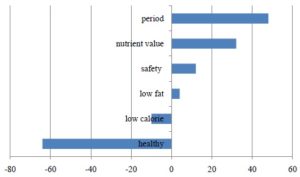
Results: Among 50 participants, the percent distributions were 12% underweights, 42% normal, 28% overweights and18% obese. Comparison of the current and desired body images of consumers indicated that the most desired body image figure was number 3(56%). The participants declared that light foods were mostly include low calorie and low fat. Limited number of consumers accepted the light foods as healthy foods. The amount and nutritive value of foods were the most important parameters that affected their decision when they bought light products.

Conclusions: The perception and consumption of light foods vary among participated population. Light foods mostly accepted as low calorie and low fat foods. The most controversial issue was whether the low calorie foods are good for health or not. Approximately half of the participants do not seem satisfied with their body images, and desire to be leaner. Consistently, sixtytwo percent declared to consume light products.

Full Article: HERE

Go through the Journal: http://www.enlivenarchive.org/dietetics-research-and-nutrition/

Contact Us: nutritiondietetics@enlivenarchive.org

Nutritional Needs and Attitudes Towards Having a Training Table: Insight from Players from a Division 1 Football Team

Objective: Assess the nutritional needs of, and attitude towards expanding the provision of nutrition services to a division 1 football team who does not have a sports dietitian or a training table.

Methods: A 26-item questionnaire was developed by two sports dietitians and administered to a football team from a small division 1 school. Demographic information, dietary fueling practices, and football players’ attitudes towards the provision of additional nutrition services was assessed. Descriptive statistics were used to summarize athlete demographic characteristics, and Chi squared analysis assessed differences in responses based on grade in school, position, and residence.

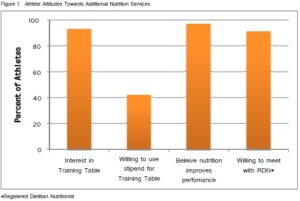
Results: Seventy-six football players (90% response rate) completed the questionnaire. Sixty-nine percent reported trying to change their weight. The majority reported not consuming pre-workout and/or game snacks (88% and 92%, respectively). Eighty percent of athletes reported consuming only water during exercise, and 75% reported a lack of energy during a workout. Most (93.4%) believed they would benefit from a training table; however, only 42% were willing to have funds reallocated from their stipends to finance it. Results from Chi Squared tests revealed no significant differences in the number of athletes willing to use their stipends for a training table based on year in school (p=0.957), position (p=0.54), or residence (on campus vs off-campus) (p=0.982). Most (97%) athletes believed proper nutrition would enhance their performance, and 91% were willing to meet with a dietitian.

Conclusion: These findings suggest that the football athletes’ fueling and hydration strategies are not sufficient to promote optimal performance and that the athletes believe they would benefit from an expanded provision of nutrition services. Further research is needed to determine effectiveness of training tables as well as the feasibility and sustainability in funding to support a sports dietitian nutritionist and/or training table.

Full Article: HERE

Go through the Journal: http://www.enlivenarchive.org/dietetics-research-and-nutrition/

Contact Us: nutritiondietetics@enlivenarchive.org