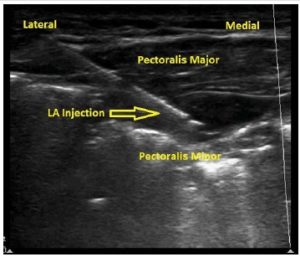
Pectoralis Minor Nerve Block versus Thoracic Epidural and Paravertebral Block in Perioperative Pain Control of Breast Surgery – Mini Review

Pectoralis minor blocks are still relatively new and require further evaluation, but may have a place in peri-operative pain management for the appropriate cases. Still considered as less invasive procedure in comparison to thoracic epidurals and para-vertebral blocks. Complications of thoracic epidural and para-vertebral blocks like spinal cord injury and pneumothorax makes many anaesthetists interested in practising pectoralis minor block guided by ultrasound. Blanco first introduced the pectoralis minor block in 2011, he did study on 50 patients within 2 years. Results were very promising, all patients did not need any opiates but only paracetamol and non-steroidal anti-inflammatory (NSAID) drugs got used.


View Full Article: HERE

Go through the Journal: http://www.enlivenarchive.org/anesthesiology-open-access

Contact Us:anesthesia@enlivenarchive.org
Renal Artery Stenosis in Patients Undergoing Major Surgery or otherwise Critically Ill: The Short-Circuit between Association and Causality

Risk prediction is an intense field of research and there is an increasing need for an interest in being able to empirically estimate customized, patient-specific risks for virtually all surgical operations in a user friendly format. Surgical risk evaluation before major surgery should offer an opportunity to improve shared decision making and patient care. Yet, there is ongoing debate on how to better identify patients at risk in several important clinical scenarios and when weighing a given risk factor for decision making or when trying to amend it.

View Full Article: HERE

Go through the Journal: http://www.enlivenarchive.org/anesthesiology-open-access/

Contact Us: anesthesia@enlivenarchive.org


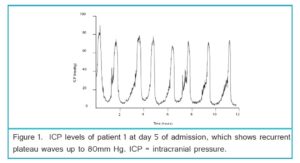
Plateau Waves, Intracranial Hypertension and Prognosis. How Identical Waves can Lead to Different Outcomes in Two Patients with Traumatic Brain Injury

Elevated intracranial pressure (ICP) can lead to secondary brain damage and is associated with worst outcome in patients with traumatic brain injury. We present two clinical cases of high ICP due plateau waves. This, frequently occurring cause of high ICP, can cause confusion at the bedside if not recognized. High ICP due to plateau waves has a different prognostic implication and treatment algorithm compared to other causes of high ICP. We describe the pathophysiology and management of this phenomenon.

View Full Article: HERE

Go through the Journal: http://www.enlivenarchive.org/anesthesiology-open-access/

Contact Us: anesthesia@enlivenarchive.org